Sacred Land Blog

January 4, 2008
Kahoʻolawe
Posted by: Toby McLeod

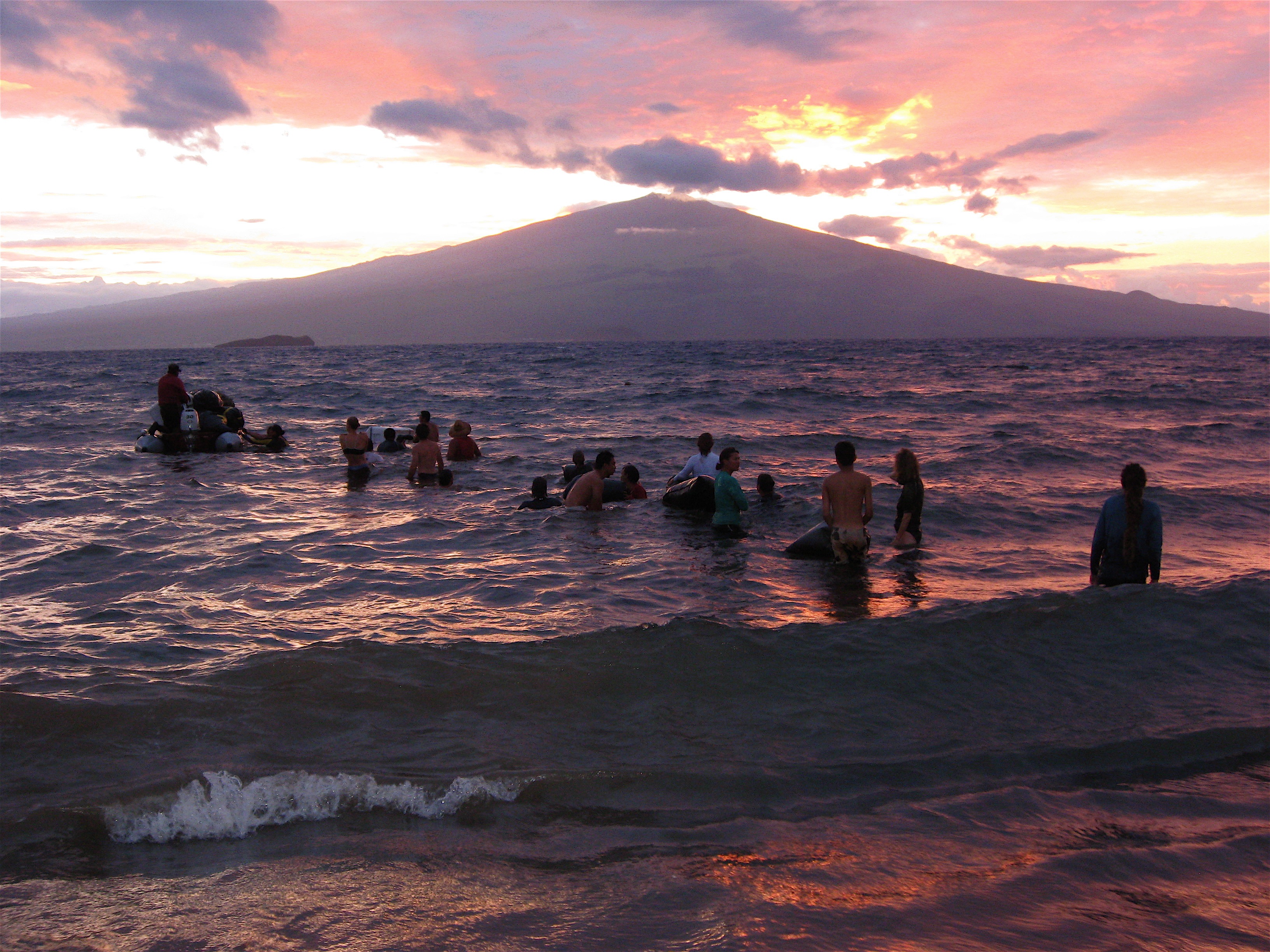
Kaho`olawe from Maui, Molokini at rightRising gracefully out of the ocean south of Maui is a presence everyone feels. It’s the island you cannot visit. Littered with “unexploded ordnance” courtesy of the U.S. Navy, access is restricted. Yet the island is the site of a cultural renaissance with international implications. Native Hawaiians control visitation to this sacred place and are working with the wounded land to bring it back to life while reviving spiritual traditions and healing a culture as abused as the island itself.

Kahoʻolawe is also known as Kanaloa, which makes this the only island in the Pacific that bears the name of a Polynesian god. Kanaloa is the deity of the ocean, and the power of the sea touches all who make the journey.

In 1979 I was visiting the home of my Hopi friend and mentor, the late Thomas Banyacya. You never knew who you were going to meet at Thomas’s house. One morning at the kitchen table I found myself listening to a young Native Hawaiian man describing how he and a group of eight others in January 1976 had occupied a small island that the U.S. Navy had been using for bombing practice since shortly after Pearl Harbor. Dr. Emmett Aluli of Molokai had been drawn to see what was on the assaulted island and the experience changed his life. The island spoke to him. It came to him in dreams. Emmett consulted his Hawaiian elders and they encouraged him onward. His quest led him to Hopi country in Arizona to consult with other native leaders about strategies to defend land, water, sacred sites and cultural beliefs and practices against determined, well-armed, and often violent adversaries.

Geothermal drilling in Wao Kele O Puna, 1990I crossed Emmet’s path again in 1990 when I went to film a demonstration in the Wao Kele O Puna rainforest on the Big Island of Hawaii. He and Palikapu Dedman had formed the Pele Defense Fund and they were fighting against geothermal drilling in the domain of the revered fire goddess Pele, who inhabits the active volcano at Kilauea. Roads were being bulldozed into the forest and drill rigs were probing for power. The activist movement spawned on Kaho`olawe was applying lessons learned to try to save another sacred place. One hundred and forty one people were arrested that day defending their culturally significant forest, and we edited a segment on Wao Kele O Puna into our 1991 film, Voices of the Land.

Pele Flowing in 1990During that shoot we talked a USGS scientist into taking us out to film the flowing lava. The sounds, the heat, the drama were unlike anything I have ever experienced. Earth flowing. Rivers of fire. Fear of getting too close proved unnecessary as I kept walking into a wall of air so hot I had to retreat. Our sound recordist, Andy Black, wearing stereo headphones, at one point had a total panic attack because hearing the crackling lava through both ears suddenly gave him the impression he had committed a fatal error and was surrounded by lava.

Emmett and I went our separate ways for another decade, until November 2006, when we found ourselves standing next to each other in a lunch buffet line at a conference on Stewarding Sacred Lands at the Kumeyaay Nation in the southern California desert. We each had more gray hairs on our heads, but we enjoyed catching up and the spirit of camaraderie was still strong. After I described our new Losing Sacred Ground film series, Emmett said, “You might be interested in what we are doing to restore the island of Kahoʻolawe, both ecologically and spiritually.”

He sure got that right…

Leave a Reply

Comment display may be delayed for moderation.

 
Search
Recent Comments
  • Marlo McKenzie: Thank you for your comment Stephen, that means a lot to us!
  • Stephen Ruppenthal: Inspiring and touching work, Toby. This three-minute short is very well articulate and has a lot...
  • Hoagy: This article on First Majestic and the Wirakuta might be of interest - http://lapoliticaeslapoliti...
  • Karl E. Rohrbaugh: I have been to both Paha Sapa and Paha Mota. I have looked accross the prarie from the summit of...
  • Ashton Cooper: This is our life, our culture, our traditions at stake here. Haven’t we (as Aboriginal People)...
Stay Connected,
Join the Sacred Land Defense Team!
Sign up to receive action alerts, reports from the field and newsletters. Protecting sacred places is our mission - we can't do it alone!
Post Archives
SLFP on Twitter