News & Blog
In a major victory for indigenous land rights, India’s environment minster on Aug. 24 struck down a controversial mining project in eastern Orissa state that would have threatened the survival of the 8,000-member Dongria Kondh tribe.
Citing violations of environmental and human rights laws, Jairam Ramesh denied permission for London-based Vedanta Resources to build an open-cast bauxite mine in the Niyamgiri Hill range. The company had set up an alumina refinery in Orissa in 2008 with the expectation that it would be allowed to annually extract three million metric tons of bauxite, the raw material for aluminum.
The Dongria Kondh consider the remote hills — home to their god, Niyam Raja — sacred, and they also depend on the hills for their livelihood. For the past eight years they have been fighting to protect their land and way of life. The tribe had gained the support of NGOs including Amnesty International and Survival International, which ran a successful global campaign comparing the Dongria Kondh’s plight to the Na’vi tribe in the award-winning James Cameron film “Avatar.” (Watch Survival’s film “Mine,” embedded below.)
Vedanta had claimed the mine would cause little disturbance to the hills and that, along with the refinery, it would help alleviate poverty in the region. However, in a report commissioned by Ramesh, a committee of experts found that the project would “drastically alter the region’s water supply, affecting both ecological systems and human communities,” and threaten “the very survival” of the Dongria Kondh. The committee found that Vedanta had acted illegally and with “total contempt for the law,” and that to allow the mine to go forward would be “illegal.”
Vedanta reportedly intends to push for an alternative mine site in the region. “There is no question of abandoning this project,” CEO Mukesh Kumar said. The alumina refinery, which has polluted rivers and damaged crops along with the livelihood of the local people, will also continue to operate.
SLFP Project Director Toby McLeod discussed his experiences filming Losing Sacred Ground and In the Light of Reverence and shared his thoughts on human relationships with sacred natural places on the July 27 edition of the weekly radio program “A World of Possibilities.”
The program, titled “Saving Sacred Lands,” also featured interviews with Gathuru Mburu, director of the Institute of Culture and Ecology in Kenya; Silvia GĂłmez a consultant for Gaia Amazonas Foundation in Bogota, Colombia; and
Liz Hosken, director and co-founder of the Gaia Foundation in London.
Listen to the full program here.
Widespread illegal harvesting of mahogany — bound for the United States and other world markets — continues inside a Peruvian reserve for uncontacted indigenous tribes, according to a report released this month by the nonprofit Upper Amazon Conservancy.
The UAC’s year-long investigation documented logging settlements and felled trees throughout the 1.2-million-acre Muruanahua Territorial Reserve for Indigenous People in Voluntary Isolation. The reserve and adjacent Alto PurĂşs National Park are part of the largest network of protected areas in Peru and home to at least three uncontacted groups, the largest concentration of isolated tribes in Peru and possibly the world.
UAC initially discovered a large logging operation in the headwaters of the Mapuya River, near the border with Alto PurĂşs, in March 2009. In April of this year, a flyover observation revealed large rafts of recently cut mahogany boards, indicating that the settlement continues to be used as a transport center for illegal wood. The group also identified a separate logging settlement on the lower Mapuya. Both sites, according to local people interviewed by UAC, have been in use for several years.
The report notes that loggers are also targeting titled indigenous community lands along the Yurua River, adjacent to the reserve. In recent years, logging companies have “aggressively pursued” logging agreements with these communities, which contain “some of the last commercially viable mahogany stands anywhere in Peru outside of protected areas.” Unfortunately, loggers often employ exploitative practices with the communities. According to the report, “a vast network of logging roads” crosses the area, “providing a fleet of over a dozen tractors with easy access to the forests all along the Yurua.”
Ironically, along the route out of this remote area, the wood passes a forestry control post constructed specifically to stop the transport of illegal wood. However, according to the report, “the wood is laundered with forestry permits intended for legal logging operations in registered timber concessions and community lands… thus, when the wood is finally trucked to Lima, it contains export documentation required by the United States.”
With the United States receiving more than 80 percent of Peru’s mahogany exports, the 2008 amendment to the Lacey Act — which outlaws the import, possession and sale of illegally sourced wood — is almost certainly being violated. The illegal logging means that Peru is also failing to uphold its forestry obligations under a 2009 U.S. free trade agreement, as well as violating the Convention on International Trade in Endangered Species.
Illegal logging harms uncontacted tribes by invading the lands that sustain them. The UAC report also notes that the encroachment of loggers into Murunahua homelands is likely driving some members of the tribe to join settled communities on the Yurua River. But what’s more, loggers bring diseases against which the tribes have no natural defenses. According to Survival International, after the isolated Murunahua tribe came in contact with loggers in the 1990s, more than half the population died, primarily from transmitted infections.
The UAC report urges Peruvian authorities to do more to combat illegal logging, but notes that the illegal activity, and resulting endangerment of vulnerable indigenous tribes, will likely continue “until the U.S. government unilaterally rejects questionable Peruvian mahogany.”
Likewise, Survival International’s David Hill, in an interview with Mongabay.com, said, “The only ways to stop this happening is for U.S. buyers to reject any Peruvian mahogany, or the U.S. government to ban exports temporarily. Until that happens, people in the U.S. have no idea where the wood they’re buying is actually coming from.”
Learn more about illegal mahogany logging and its impact on indigenous tribes in our Alto PurĂşs sacred site report.
After a two-day court hearing, the traditional custodians of Phiphidi Waterfall last week won an injunction to halt the construction of a tourist resort at their sacred site for 20 days, allowing them to prepare for further legal action.
The Ramunangi clan, in South Africa’s Limpopo Province, has been waging a years-long battle to protect the Phiphidi Waterfall area from tourism and other forms of development. The latest threat began on April 19 when bulldozers broke ground on a tourist complex that would include eight chalets, a restaurant and a bar at the head of the falls. (See June 22 story.)
After unsuccessfully seeking other remedies, the Ramunangi and members of Dzomo la Mupo, custodians of a larger network of sacred sites in the Venda region of which Phiphidi is a part, petitioned the Limpopo High Court for an injunction. Construction is being carried out by Tshivhase Development Foundation Trust, which is run by a relative of Venda king Kennedy Tshivhase.
According to the Ramunangi’s legal representative Roger Chennells, the judge, after hearing testimony from both sides, agreed to conduct an on-site inspection of the construction in response to the defendants’ claim that Phiphidi Waterfall was not a sacred site and that the Ramunangi were not the traditional custodians.
Dzomo la Mupo member Mpatheleni Mapaulule said that upon visiting the site and witnessing Ramunangi elders performing a ritual, “the judge said we must not disturb them.” She noted that the judge could see that the whole area, including the surrounding forest, was sacred: “He said the church is the yard, the altar is not only sacred but the whole surrounding.”
For background on this story, read our Phiphidi Waterfall sacred site report.
Update: Read more in this Aug. 1 article from BBC News.
Winnemem Wintu Tribal Leader Mark Franco is calling all supporters to sign a petition to Sen. Barbara Boxer (D-Calif.) asking for assistance in navigating federal bureaucracy so the tribe can hold their upcoming puberty ceremony without interruption or interference. The McCloud River is sacred to the Winnemem Wintu, who take their name from it: Winnemem or “middle water.” The ceremony is held on the McCloud, on what is now Forest Service land. The Forest Service is declining to allow the tribe exclusive access to the campground and the stretch of river where the ceremony takes place. Sign here to support the Winnemem. To learn more about the Winnemem and the McCloud River, read our sacred site report.
From Cultural Survival:
Defend Indigenous Rights and Protect Marine Life in Papua New Guinea
The government of Papua New Guinea doesn’t want to hear from us. It has authorized a Chinese mining company to dump toxic waste into the sea, and it is determined to stifle dissent from every quarter. It hired scientists to assess potential harm to marine life, but when the scientists warned that the damage could be widespread, it suppressed and ignored their findings. When coastal Indigenous land-owner clans challenged the mining company’s “deep submarine tailings placement” project in court, the government passed a law that denies citizens the right to appeal any permit granted by the Department of Environment and Conservation, no matter how it might affect their health, livelihoods, and cultures. PNG’s license to the Chinese Metallurgical Construction Company (CMCC) violates national laws and international agreements, but the PNG government isn’t listening – yet.
An international outcry is needed. Toxic mine tailings dumped into the Bismarck Sea could undermine the marine food chain at its source, potentially rendering all fish unsafe to eat and destroying the livelihoods of the Indigenous people who depend on the sea. Could thousands of letters from world citizens get the attention of the PNG government? Please send your letter today. We must try.
Read more at Cultural Survival’s website.
As tourists flock to South Africa this month for the World Cup tournament, a tribe in the north of the country is urgently struggling to save a sacred site from being destroyed by tourism development.
On April 19, bulldozers moved in on Phiphidi Waterfall, one of the sacred sites of South Africa’s vhaVenda people, breaking ground on a project to build a tourist-chalet complex. The move was the latest blow in the Ramunangi clan’s years-long struggle to assert their role as traditional custodians of Phiphidi and protect their sacred site from development.
For years visitors, lured by government tourism marketing, have been literally trashing the site — trampling vegetation and leaving litter in even the most sacred areas — while the Ramunangi have been denied full access to perform certain rituals. In addition, a road-building project recently destroyed one of Phiphidi’s most holy areas, a rock above the falls.
The current development scheme was undertaken without the legally required consultations. After members of the community notified the developer that it was building on a sacred site, activity temporarily ceased. However, work resumed on May 31. The site is now locked, and the required notice board about the nature of the development, the implementing agency and the name of the developer is absent. According to one Ramunangi elder who visited the site June 8, the damage to this sacred place is already serious.
Phiphidi is part of a network of sacred sites that are central to the traditional belief system of the vhaVenda people. These sites are the home of ancestral spirits, which protect the people, ensure health and well being, and bring rain. The Ramunangi regard themselves not as owners of Phiphidi but as its stewards, with a duty to protect the site and perform rituals there for the whole of Venda. The waterfall, river and surrounding forest are part of a savannah biome in a region known as a biodiversity hotspot.
What You Can Do
The Gaia Foundation is collecting statements of support to aid the effort to obtain a court injunction. Go to their website to sign on to their statement or submit one of your own.
For background on this story, read our Phiphidi Waterfall sacred site report.
You may have heard that Sacred Land Film Project was at the BAVC Producers Institute, an intense new digital-media boot camp leading to a project presentation before a packed house at the The Center in San Francisco.
For 10 days our team was immersed in learning about emerging new media technologies, how to harness them for social and environmental justice, how to nurture and grow communities, and how to motivate positive action using these exciting new tools. Topics ranged from alternate, augmented, virtual and hybrid digital reality, web 3.0, the “intelligent web,” data visualization, interactive mapping, to twitter strategy and crowd sourcing. We were surprised to learn that we are no longer filmmakers, we are “screen content producers!”

The project we developed and then presented at The Center is a global application made for mobile devices, like a smart phone, that will take you on a tour of sacred sites that are now maintained as national parks or, in the case of urban tours, to discover where sacred sites have been paved over.
We partnered with Dorothy FireCloud, the Superintendent of Devils Tower National Monument, to create a tour prototype. With Dorothy’s guidance and the help of our amazing mentors, Anselm Hook, a leading augmented reality specialist, and Paige Saez, a designer and strategist, we created a working prototype and a long-term vision for a mobile phone application that could have a profound impact on our collective understanding of sacred lands.
The tour tells the story of indigenous culture through indigenous voices using video, audio, photos and augmented reality so that a hidden history is unveiled. Augmented reality is when an image is overlaid onto a physical environment, as you can see in the video below.
GPS data triggers your hand-held device to play stories relevant to your exact location. For example, in our Devils Tower prototype, you will be able to look through your smart phone and see an Indian village overlaid onto the modern-day physical environment, then raise the phone to the sky, where you can learn about Lakota star knowledge and see it through the phone.
We love the way this technology encourages people to get out and experience nature while learning a history that is buried, lost, hidden, erased or literally underground, and in doing so recapture what it means to be in connection with the land.
The government of Papua New Guinea dealt a harsh blow to traditional landowners on May 28 when it passed a pair of amendments to the country’s Environment Act barring legal challenges to mining and other resource projects.
Rushed through Parliament on a Friday night, the amendments shelter resource projects from legal challenges over environmental damage, labor abuse and landowner exploitation, and grant the government wide-ranging power to exempt resource developers from state environmental requirements. Thus, the legislation effectively strips citizen’s traditional and constitutional land rights while giving developers greater power and protecting them from liability.
The legislation, passed by a vote of 73 to 10, came after intense lobbying by China Metallurgical Group Corporation, developer of the $1.4 billion Ramu nickel/cobalt mine. Ramu landowners had recently won an injunction to stop a pipeline that would slurry waste from the mine out to sea off Madang Province, once the mine is completed.
Tiffany Nonggorr, a lawyer representing the landowners, said the battle is not yet over, as the matter is already before the courts.
For more detail check out the June 1 blog post by SLFP Director Toby McLeod about his recent trip to Madang Province to document the Ramu nickel mine story for the upcoming Losing Sacred Ground film series.
Note: The SLFP crew went to Papua New Guinea in April, 2010 to film a segment of Losing Sacred Ground. We are posting a few stories from that trip. 
The woman selling bananas smiles at me, warmly, excited. I snap her picture, then, like so many times before, I spin my camera around so she can see herself in the camera’s LCD display. Onlookers gather round. They point at the photo and nod excitedly, give me the thumbs up, and go back to studying the screen. The banana woman reaches out to shake my hand. “Thank you.” She pushes a bunch of bananas into my hand.
Traveling through Papua New Guinea, this scene replays itself with construction workers, fishermen, betel-nut sellers, toddlers, teenage boys carrying machetes and wizened men wearing traditional wigs decorated with flowers. All reacted with wonder, curiosity, surprise and glee at seeing their own photos.
Especially in areas without electricity (or photo development labs, for that matter) possession of these photos was extremely valuable. My husband brought a small photo printer, and whenever it spit forth its diminutive image, the recipient would retreat without another word to study his or her likeness. Friends would gather and comment, point and laugh, and we would usually leave them still staring at the print as our boat pulled away.
Ownership and control of one’s own image is not a new issue for documentary filmmakers, but it’s especially important in places like Papua New Guinea, where most people have little or no access to cameras, video and other technology. Tellingly, in the places where we spent the most time, the thing people wanted most from us (after first aid) was copies of our photos and video.
“It doesn’t matter if it takes a long time,” the Huli men from our guest house told us. “Please send us our photos.”
Having just completed the BAVC Producer’s Institute for New Media, we newly realized how many issues there are in this new era of filmmaking. YouTube and Vimeo make global distribution possible at the click of a button, and online tools make it possible for people separated by thousands of miles to share footage and collaboratively edit a film. In many ways that’s revolutionary — a plurality of voices, people telling their own stories, sharing and pooling resources to reach as wide an audience as possible.
But this “democratization” of the means of production also means that filmmakers can easily lose control over the images they create. And that could be a problem. Giving up your own likeness makes you vulnerable in surprising ways. The people who allowed us to take their images trusted that we would not misuse them. It would be negligent and unethical to share those images, especially the editing of them, in ways that the subjects haven’t agreed to.

In Papua New Guinea, that responsibility could easily be lost — since so many people so freely invited us to take their photos. In a country where Internet access is sparse and we saw no local television production, the need for media literacy and empowerment is taking a back seat to more urgent problems like health care, nutrition, schools, roads and violence.
But I believe that producing media and learning its power are also crucial elements in development. Of course, I’ll be a bit sad when my digital camera in a riverside village fails to elicit the simple, immediate thrill that it did this past April. But I would trade that for seeing kids using cameras to interview their elders, mothers telling their own stories, and people along the road taking pictures of the fascinating foreigners, instead of the other way around.

Chinese police in Markham County in eastern Tibet have reportedly cracked down on protesters attempting to block the resumption of mining operations on their sacred mountains.
Radio Free Asia reported on May 15 that five people were beaten and tear-gassed in protests against three gold mines in the county. Some 5,000 troops were in the area, with reinforcements expected.
“Thousands of local Tibetans — young, old, men, and women alike — have attempted to block the Chinese from resuming mining activities,” one local Tibetan source said. “But [Tibetan Autonomous Region] Party Secretary Zhang Qingli has given orders to ahead with the mining, even if this means using force against protesters.”
Last year in Markham similar protests took place against mining on a sacred mountain called Ser Ngul Lo, a site where Tibetans have historically worshipped. However, talks ultimately resolved the standoff with a promise to end mining operations.
According to another local source, on May 4 — the day the mining company was ordered to resume operations at the three sites — 13 Tibetans were detained. “All of those detained were Tibetan businessmen and leading figures who successfully blocked the Chinese mining company in 2009,” the source said.
What you can do
Go to the Intercontinental Cry website for a sample letter to send to China’s permanent representative to the United Nations, calling on the Chinese government to withdraw their police forces and protect the Tibetans’ sacred mountains.
To learn more about the history, beliefs and practices surrounding sacred mountains in Tibet, read our Mount Kailash sacred site report.
A major new assessment of the current state of biodiversity warns that unless urgent action is taken, the natural systems that support humankind are at risk of collapse.
The third edition of the Global Biodiversity Outlook (GBO-3), released May 10 by the Convention on Biodiversity and the U.N. Environmental Program, confirms that governments around the world have failed to meet targets set eight years ago to reduce the rate of biodiversity loss by 2010. Instead, the five main pressures driving the loss — habitat change, overexploitation, pollution, invasive alien species and climate change — have either remained constant or are increasing.
“Humanity has fabricated the illusion that somehow we can get by without biodiversity or that it is somehow peripheral to our contemporary world,” Achim Steiner, executive director of the U.N. Environment Program, said in a press release announcing the report. “The truth is we need it more than ever on a planet of six billion heading to over nine billion people by 2050.”
The report is based on 110 national biodiversity reports and other scientific assessments, including an analysis carried out by the Biodiversity Indicators Partnership, published last month in the journal Science, which represents the first assessment of how targets made through the 2002 Convention on Biological Diversity have not been met. That assessment noted that since 1970 the world’s animal populations have been reduced by 30 percent, the area of mangroves and sea grasses by 20 percent, and the coverage of living corals by 40 percent.
The GBO-3 outlines a possible new strategy for reducing biodiversity loss, learning the lessons from the failure to meet the 2010 target. It includes addressing the underlying causes of biodiversity loss, such as patterns of consumption, the impacts of increased trade and demographic change.
“The assessment of the state of the world’s biodiversity in 2010 should serve as a wake-up call for humanity,” Ahmed Djoghlaf, executive-secretary of the Convention on Biological Diversity, said. “Business as usual is no longer an option if we are to avoid irreversible damage to the life-support systems of our planet.”
The report will be a key input into discussions by world leaders at a special high-level segment of the U.N. General Assembly on Sept. 22, as well as negotiations by world governments at the Nagoya Biodiversity Summit in October.
The GBO-3 draws attention to indigenous sacred sites, noting the thousands of community conserved areas around the world — including sacred forests, wetlands, and landscapes — and observing that “indigenous and local communities play a significant role in conserving very substantial areas of high biodiversity and cultural value.”
This deep association between sacred sites and biodiversity conservation is highlighted in many of SLFP’s sacred site reports. To learn more, check out our Beyul of the Himalaya, Gamo Highlands, Kaya Forests and Mount Sinai reports, among others.
The Free Land project and Indian Canyon with the Sacred Land Film Project, News From Native California and Heyday Books present “Ohlone Presence: An Evening of Storytelling, Theater and Song from Ohlone Land and History.”
8 p.m., Saturday, May 8
David Brower Center, 2150 Allston Way, Berkeley, Calif.
Tickets available at the door, $15-25 sliding scale
Enjoy storytelling from all perspectives and sacred spaces and places at this fundraiser for Indian Canyon. The event features:
- Ariel Luckey (Free Land)
- Ann Marie Sayers (Ohlone/Indian Canyon)
- Carl Anthony (Urban Habitat)
- Christopher “Toby” McLeod (Sacred Land Film Project)
- Janeen Antoine (Lakota Sicangu)
- Kanyon Sayers-Roods (Ohlone/Indian Canyon)
- Ken Brower (Author)
- L. Frank (Tongva/Ajachmen)
- Malcolm Margolin (Heyday Books)
- Melissa Nelson (Ojibwe)
- Paloma Pavel (Earth House Center), and
- Willie Underbaggage (Oglala)
Download the flier here.
Secretary of the Interior Ken Salazar announced April 28 that the first offshore wind farm to be built in the United States has been given the green light.
The Nantucket Sound Cape Wind Project, opposed by the federal Advisory Council on Historic Preservation and the Mashpee and Aquinnah Wampanoag tribes, will be allowed to proceed provided that measures be undertaken in the construction of the energy farm to minimize negative impacts. Efforts to this end include a reduction in the number of wind turbines from 170 to 130 to reduce visibility from Nantucket Island.
While local reaction to Tuesday’s announcement was mixed, the 2009 passing of Sen. Edward Kennedy, who was a strong voice against Cape Wind, may have played a factor in the Department of the Interior’s approval of the controversial project.
Read previous SLFP news coverage of this story from April 8 and January 17.
In a demonstration to show solidarity with the Brazilian indigenous peoples who will be gravely affected by the recently approved Belo Monte dam project, actress Sigourney Weaver will join members of the U.N. Permanent Forum on Indigenous Issues to peacefully protest in front of the Brazilian Permanent Mission to the United Nations in New York today, April 28, at 1:30 p.m.
On April 20, after a series of legal battles and last-minute injunctions from environmental and indigenous rights groups, the Brazilian government won out and awarded a domestic consortium—including the state-owned power generator and several construction firms—the $10 billion contract to build the Belo Monte dam on the Xingu River. (See our past stories.)
Construction could begin this year, with the project operational by 2015. Once complete, Belo Monte will be the world’s third largest dam. Its construction will flood some 200 square miles of rainforest while also drying up a stretch of the river—affecting an estimated 19,000 to 40,000 people, including 14 indigenous tribes that live nearby.
Indigenous groups are mobilizing to stop dam. A group of 150 Xikrin Kayapo Indians were moving last week to occupy the planned construction site. “We will build a permanent village there and will not leave so long as the project is on,” chief Luiz Xipaya told Agence France Presse.
Xipaya said he expects to have at least 500 Brazilian Indians there by end of month, with an ultimate goal of 1,000. “The indigenous people feel threatened by this project and are very agitated,” he said.
Since the construction contact was awarded, thousands of people have participated in protests throughout Brazil led by indigenous groups and environmental organizations including Greenpeace and Amazon Watch.
Take Action
If you’re in New York, you can join today’s protest at 1:30 p.m. in front of the Brazilian Permanent Mission to the United Nations at 747 3rd Avenue, between 46th and 47th streets.
You can also help by contacting the Brazilian embassy to express your concern.
All over the world, indigenous people protect places of spiritual significance and hotspots of biodiversity. James Cameron’s symbolic story of the Na’vi, in his film “Avatar” parallels the struggle that indigenous people around the globe face to defend sacred places Western culture seeks to dominate.
“Avatar” has hit a nerve and inspired masses. Grossing nearly $2.7 billion at the box office globally and spawning numerous discussions, Facebook groups, forums, fan pages, activist responses and articles citing examples of real-world Pandoras, the film, if nothing else, has been a catalyst to bring the plight of indigenous people to the forefront as never before.
Cameron himself said has been changed forever by the film and his resulting visit to the Xingu River, where he has been “spurred to action to speak out against the looming environmental destruction endangering indigenous groups around the world.”
With Sigourney Weaver, he traveled to Brazil to attend protests calling for a halt on construction of the Belo Monte dam, the third largest dam in the world, but time is running out. The government intends to auction construction to private investors April 20.
See our previous news post to learn what you can do to help halt the Belo Monte dam, and join Sacred Land Film Project in calling even more people to action in solidarity with the Indigenous Movement. You can learn more about the Xingu River in our related sacred site report.
The federal Advisory Council on Historic Preservation has recommended that the U.S. Department of the Interior reject a proposal for the country’s first offshore wind farm in Nantucket Sound, saying it would have ”destructive” effects on dozens of nearby historic properties, including Native American cultural sites.
In seven pages of comments sent to Interior Secretary Ken Salazar on April 2, the council backed claims by two Wampanoag Indian tribes that the Cape Wind project would obstruct their view of the rising sun and the ocean, interfering with rituals and ceremonies, and potentially disturb sacred burial sites on the now-submerged shoal on which the turbines would be built.
”The indirect and direct effects of (Cape Wind) on the collection of historic properties would be pervasive, destructive and, in the instance of seabed construction, permanent,” the council said.
The council also criticized federal agencies — including the Minerals Management Service, the lead agency reviewing the project — for their ”tentative, inconsistent and late” consultation with the Wampanoag tribes.
An excerpt of a recent statement by Cedric Cromwell, chairman of the Mashpee Wampanoag Tribe reads: “We have repeatedly raised serious concerns over the proposed project for more than six years. For the first time, we believe that our concerns are being heard, and we look forward to continuing the process of consultation until an acceptable outcome has been achieved. This process is long overdue, and we thank Secretary Salazar and President Obama for their commitment to the rights of Native Americans.”
Opponents of the project included the late Sen. Edward Kennedy, who fought Cape Wind up to the months before he died last year of brain cancer.
Salazar must respond to the council’s comments before making his final ruling on the project, expected by the end of April. To learn more, read the April 2 New York Times story and see the Aquinnah Wampanoag Tribe of Gay Head website.
Wilma Mankiller, principal chief of the Cherokee Nation from 1985 to 1995, passed away April 6 in her home in Talequah, Okla. Mankiller was the first female chief of the Cherokee Nation and left behind a legacy of tribal revitalization and collective self-determination, including instituting community-development projects to improve infrastructure, building a hydroelectric facility and establishing tribal-owned businesses.
In 2002, the Sacred Land Film Project was honored by Mankiller’s support. Read more about the life of Wilma Mankiller in the New York Times.
With the U.S. Department of Energy’s March 3 withdrawal of a license application to build a high-level nuclear waste dump under Nevada’s Yucca Mountain, the long-contested project is at last on its way to being shut down. The department’s motion was filed “with prejudice” — meaning the site could never again be considered for use.
The mountain, located within the Western Shoshone Nation and a sacred place for the Shoshone and Paiute peoples, was selected in 1987 to become the nation’s first long-term geological repository for spent nuclear fuel and high-level radioactive waste.
Despite significant ongoing protest and legal challenges from Native Americans, Nevada residents and environmentalists, Congress officially approved the program in 2002. However, last year President Barack Obama, in his 2010 budget request, indicated that the federal government would begin exploring other options, and in February the Energy Department told Congress it planned to shift $115 million from the Yucca Mountain program budget into efforts to shut down the project.
On March 23, a group of House Democrats and Republicans — representing districts in Washington, South Carolina and Michigan that currently store nuclear waste — introduced a resolution to stop the administration from ending the program. Members of a House energy subcommittee also challenged the Energy Department’s actions, claiming it went against Congress’ directions in its energy spending bill for the 2010 budget.
However, Energy Secretary Steven Chu, responding in a letter, said, “We do have the authority within the law to take the reprogramming actions we have planned.” DOE press secretary Stephanie Mueller went further, saying, “Make no mistake, the department will be shutting down the Yucca Mountain project this year.”
To learn more about Yucca Mountain and native struggles to protect it, read our Yucca Mountain sacred site report.
Winnemem Wintu tribal members have embarked on an unusual and historic journey in an effort to bring Chinook salmon back to the McCloud River.
On March 19, they traveled halfway across the globe to New Zealand, where the U.S. government once sent Chinook eggs gathered from the McCloud River. The completion of Shasta Dam in the 1940s resulted in the obstruction of seasonal salmon runs in the McCloud.
The Winnemem hope to restore the salmon by stopping the enlargement of Shasta Dam and having a waterway installed that would allow reintroduced salmon to reach the remaining 200 miles of cold water pools and historic spawning grounds critical to their survival.
In New Zealand, they will join with Maori leaders and hold a ceremony culminating with a four-day “nur chonas winyupus,” or middle water salmon dance, which is intended to assure the salmon that the Winnemem are still caring for them and their home river. The Winnemem plan to petition local fish and game officials to return some salmon eggs to the McCloud.
Read about the Winnemem Wintu and their journey to New Zealand in this major New York Times story from March 20. Learn more about the Winnemem and their ancestral homeland in our McCloud River Watershed sacred site report, and you can also follow Winnemem Headman Mark Franco’s blogs for details about their New Zealand journey and other issues.
We’ve been throwing around some new terms here in the SLFP office: New media. Interactive mobile technology. Geocasting. Augmented reality.
At first blush, it may seem incongruous for a group that’s focused on protecting traditional cultures and ancient sacred places, but the Sacred Land Film Project is about to join Web 3.0. (OK, I admit I had to google “web 3.0″ to make sure that is what we are doing … so you can see what level I’m at.) But with so many developments that have already proven effective in communication and mobilization — like text messaging, Facebook, and Twitter — we are hoping the next steps will be even better at building community and fostering educational experiences.
The best part of this new development? We’re getting a lot of help. Losing Sacred Ground has been accepted for participation in the Bay Area Video Coalition (BAVC) Producer’s Institute for New Media. The Institute is a 10-day workshop that partners documentary projects like ours with mentors in technology to help filmmakers develop projects that go far beyond theatrical screenings or television broadcast.
As BAVC describes it, “The intention of the Institute is to develop socially relevant media projects for emerging digital platforms … Producers may propose a range of delivery strategies, including cellphones, other hand-held devices, set-tops, Internet, portable software and more.”
Previous participants have designed online games, experiences in Second Life, interactive art exhibits, digital community spaces and marketplaces, and video-based educational platforms. You can check them out here.
Our team is hoping to use technology to encourage people to experience and appreciate the natural world. Our original idea was to combine documentary techniques with the concept of geocaching (a sort of treasure hunt using a handheld GPS) and audio guides/webcasting to create an experience we’re calling “geocasting.”
We envision an experience something like this: users can download an audio guide, with optional GPS coordinates, into their iPod, iPhone, GPS, or other mobile device. They can then travel to one of our sites — currently we’re hoping to start with the Shellmound in Emeryville and Devil’s Tower National Monument in Wyoming.
The audio guide will lead the user through the site, describing the people and cultures that once inhabited the areas that the listener is seeing. The sound might also include native music, interviews with people indigenous to that area, and commentary on modern impacts — for example, the controversy surrounding the climbing of Devil’s Tower. After their trip, geocasters will be able to share their experiences, photos and thoughts online on a dedicated website.
In addition, BAVC is going to help us develop an augmented reality component of this project. We’re not sure what this is going to look like yet — and any description I make is likely to be wrong. Suffice it to say, this will be the really innovative part of our project and most likely beyond anything we’ve imagined thus far.
We’re hoping that this project will help people connect to the rich histories of environments that they might otherwise overlook. We also think it will be fun! So stay tuned for more details as the project gets under way.
International outcry is mounting against the Brazilian government’s plan to move forward on the massive Belo Monte dam on the Amazon’s Xingu River.
On March 11, a coalition of 140 international organizations sent a letter to Brazilian President Luis Inácio Lula da Silva demanding an immediate halt to the plans and urging a consideration of alternatives to the mega-dam. The dam project would destroy a vast area of the Amazon rain forest, displacing tens of thousands of people, including tribal people whose livelihoods depend on the river and forest.
Lend your support by sending a message to the Brazilian government.
If you’re in the Bay Area, you can learn more about the struggle to save the Xingu and protect indigenous rights at an event this Friday, hosted by our friends at International Rivers, featuring two films, a panel discussion and live Brazilian drumming:
When: Doors open at 6:30 p.m., Friday, March 19; film starts at 7 p.m..
Where: The David Brower Center, 2150 Allston Way, Berkeley (map)
What: Film screening of Amazonia: Voices from the Rainforest by Glenn Switkes and Monti Aguirre and the award-winning short Battle for the Xingu, directed by Iara Lee, followed by a panel discussion on efforts to protect the Amazon river and the forest it sustains.
Panelists include:
- Aviva Imhof, Campaigns Director, International Rivers
- Leila Salazar-Lopez, Campaign Director, Rainforest Action Network and Board Member, Amazon Watch
- Monti Aguirre, Latin America Campaigner, International Rivers
Afterward, stick around for some refreshments, music by Samba Jam, and great conversation!
Cost:Â $15 at the door. SAVE $2 IF YOU PURCHASE ONLINE. Purchase tickets here.
For more information, e-mail Karolo Aparicio at karolo@internationalrivers.org, or call 510.848.1155.
The Ohlone sacred site and burial site at Glen Cove was in the spotlight this weekend. Thus far the Glen Cove site has escaped development, but the city of Vallejo is now moving forward with plans to convert the land into a park with picnic tables, trails, restrooms and a parking lot.
Local native people and those in favor of keeping the ancient shell mound intact, including the Vallejo Inter-Tribal Council, Sacred Sites Protection & Rights of Indigenous Tribes and the International Indian Treaty Council, have been fighting development plans for years and intend to continue to gather at the ancient site they call Sogorea Te to rally for its protection.
The culturally and spiritually significant shell mounds, sacred to the Ohlone, have largely been obliterated throughout the Bay Area. A widely publicized example is the Emeryville shell mound, which was destroyed to build the South Bay Street Shopping Center.
A portion of the Bay Bridge is built atop an Ohlone tribal burial ground on Yerba Buena Island, partly on state-owned land and partly on federal land. Bodies unearthed on the state land were ceremonially reburied, but those found on federal land were not released for reburial because the Ohlone is not a federally recognized tribe.
Without federal recognition, the Ohlone and supporters face an uphill battle to protect sacred sites like Glen Cove. Norman “Wounded Knee” Deocampo, a member of the Vallejo Intertribal Council, said the tribe is considering a court injunction and searching for a pro bono lawyer to stop the plans at Glen Cove.
- If you would like to get involved in protecting Glen Cove, send an email to protectglencoveATgmail.com.
- For a creative look at shell mounds in the Bay Area, check out this video.
Rising like an island in the center of California’s Sacramento Valley, the Sutter Buttes figure prominently in the traditional creation and afterlife stories of the Maidu and Wintun peoples, whose ancestors once lived within view of this small mountain range. In the 19th century, European settlement and the imposition of private property rights severed the Native American way of life — but it is the concept of private property rights that today both preserves the Buttes and leaves them precariously open to development.
“The Gold Rush and the events of the 1800s stripped us of our cultural identity and our resources. We lost who we were,” Arlene Ward, a member of the Mechoopda Maidu tribal council, told SLFP. ”Now in the 21st century, many people are taking up their identity as native peoples. The Sutter Buttes are significant to who we are and it may be that there are practices we want to revive and we will want to go to that power place — but it has to be there for us.”
Read more about Sutter Buttes in our latest sacred site report.
A day before his official Jan. 22 inauguration, Bolivian President Evo Morales held a symbolic swearing-in ceremony at the Kalasasaya Temple in Tiwanaku, the seat of an Andean empire that flourished for more than 400 years. Morales, an Aymara Indian, chose the sacred site because the Aymara are the principal descendants of the Tiwanaku empire.
Before addressing a crowd of thousands of indigenous supporters, Morales joined priests and elders for private cleansing rites, then participated in a series of public offerings and prayers to the Andean deities for guidance.
“From this millennial place a new light is born, a light of hope for the Bolivian people and for humanity,” Morales said in a speech delivered in Aymara, Quechua and Spanish.
Morales vowed to continue to fight for the rights of indigenous Bolivians. Last year Morales led a constitutional overhaul that enshrined traditional religions and increased protection for indigenous land rights.
The Sutter Buttes of Northern California’s Sacramento Valley are where life began and where life ends. Playing a role in the traditional creation and afterlife stories of the Maidu and Wintun peoples, this small mountain range was a place of ritual for their ancestors, who once lived within view of the Buttes. In the 19th century, European settlement and the imposition of private property rights severed the Native American way of life — but it is the concept of private property rights that today both preserves the Buttes and leaves them precariously open to development. Presently the Buttes are mostly in private hands, and the grasslands and oak-studded hills are kept primarily as cattle and sheep ranches with strictly limited public access. However, in recent years land in the Sutter Buttes has been subdivided into residential lots, and conservation advocates and Native American leaders fear that the future of the Buttes could include more development. Arlene Ward, a member of the Mechoopda Maidu tribal council, says: “The Gold Rush and the events of the 1800s stripped us of our cultural identity and our resources. We lost who we were. Now in the 21st century, many people are taking up their identity as native peoples. The Sutter Buttes are significant to who we are and it may be that there are practices we want to revive and we will want to go to that power place — but it has to be there for us.”
The Land and Its People
The Maidu Indians who lived east of the Buttes called them Histum Yani, and the Wintun Indians, who lived to the west, knew them as Onolai-tol. Both names translate to “Middle Mountain.” Rising like an island in the center of the Sacramento Valley, the Sutter Buttes figure prominently in the creation stories of these two Native American tribes. The origin stories differ: sometimes the Sutter Buttes arose out of water or darkness or chaos, created by the falcon spirit animal. In other stories, the Buttes were where Earth Maker dwelled after having made the world.
But just as the Sutter Buttes have a place at the beginning of creation, they also play a vital role at the end of life. In many native traditions, the Buttes are a mysterious, powerful portal to the spirit world, a stopping point for the dead on their journey to the afterlife. In some traditions, the Buttes are so powerful and holy that stepping foot in them is forbidden except to healers and spiritual leaders.
Northern California native peoples, such as those belonging to the Maidu and Wintun nations, did not live within the Sutter Buttes but seasonally traveled to the foothills to gather acorns, hunt and perform rituals and ceremonies. Their home villages were along the Sacramento and Feather rivers, where the Buttes’ prominent peaks dominated the people’s spiritual and visual landscape.
Oak trees dot the grassy slopes of these ancient, eroded volcanic domes, which culminate in a rough circle of steep, craggy spires — the highest peak tops 2,100 feet. The Sutter Buttes are approximately 10 miles across, with a total footprint of 75 square miles, about 1.5 times the size of San Francisco.
The mountain’s plant and animal community is similar to those found in the foothills of the Coast Range to the west and in the Sierra Nevada to the east. But for thousands of years, the Sutter Buttes have been separated from these regions by 40 miles of grasslands, a separation that has created an “island effect.” Although there are no plants or animals endemic to the Sutter Buttes, over millennia this separation created a unique biological community. The Buttes are where some plants and animals have their most northerly extension of their range, while others their most southerly.
In the 1830s a malaria epidemic brought by European fur trappers killed an estimated two thirds of the area’s native population; later diseases such as smallpox and cholera killed even more. The California Gold Rush displaced ancestral villages when the establishment of towns pushed the few remaining Indians onto remote village sites. When California joined the United States in 1850, the state passed legislation allowing for Native Americas to be forced into “apprenticeships.” These events devastated what was once the densest population of native people in America. Finally, in 1862, many Sacramento Valley Indians were forcibly relocated to a reservation. Today, the closest Native American settlement is a Wintun “Rancheria,” or tribal land, about 10 miles west of the Buttes.
Despite the devastation and displacement, the Sutter Buttes continued to be an important part of Native American mythology. The Sacramento Valley native peoples had long performed sacred dances, some of which are traced back to visions of dancing animals and spirits in the Sutter Buttes. In the 1870s, the California Ghost Dance synthesized with the Wintun’s Hesi ceremonies into the Big Head dance, in which participants danced for restoration of their Indian way of life. The Big Head dance is still performed today as a dance of renewal.
By the late 19th century, the Central Valley’s rich agricultural land was primarily cultivated in wheat. Today the once vast grasslands have been converted to rice fields, while the oak woodlands are now orchards for walnuts, prunes and peaches. Sheep primarily grazed the upland of the Sutter Buttes until cattle production took hold about 50 years ago.
Current Challenges and Preservation Efforts
Future development and land-use strategies in the Sutter Buttes are the main concern of conservationists and Native American communities, who want to see the Buttes preserved and not sold for housing development or resorts.
About a dozen families own the majority of land in the Sutter Buttes, much of which is still used as ranchland. Most of the private landowners in the Sutter Buttes have a family relationship with the land that spans more than 100 years. They are proud of their ranching heritage and their private stewardship of the land and want to see it remain undeveloped. The California Parks Department owns a 1,785-acre parcel of land on the mountain’s northern flank; this undeveloped park is currently closed to the public due to state budget shortfalls.
While land in the Sutter Buttes is zoned as agricultural, the current Sutter County land-use plan allows for the land to be divided into lots as small as 20 acres. Critics of the current zoning contend that this opens the door for luxury residential construction that could gradually erase the natural landscape and spiritual nature of the Buttes. That’s what happened in 1999, when 1,100 acres in the foothills of the Sutter Buttes were sold and subdivided into 11 large lots. Five luxury homes have been built on those lots since then. In total, there are around 30 subdivided lots that cover approximately 2,500 acres.
In 2007, Sutter County approved the division of 900 acres of Sutter Buttes foothills into 13 lots. A local organization, the Yuba Historical Society, sued the county and the developer on the basis that there was no environmental impact report completed and that an illegal road variance was granted that could open up development anywhere within the Buttes. The lawsuit was settled in January 2010, with Sutter County setting aside its 2007 approval of the land’s division.
Sutter County is currently revamping its General Plan, including zoning designations in the Sutter Buttes. The plan will not be adopted until late 2010, but draft proposals point toward zoning restrictions that will keep any subdivided lots to 80 acres or greater. Such changes would prevent development of dense subdivisions, but would still allow for construction of luxury homes on large lots, such as those built in 1999. Even with changes to zoning, those who advocate preserving agricultural and undeveloped land in the Buttes worry that zoning designations could become vulnerable with each election cycle as local government leadership changes.
One strategy for land preservation is to protect land through conservation easements. The Middle Mountain Foundation is a land trust that actively purchases development rights from willing landowners through conservation easements in the Sutter Buttes; it then holds these easements in perpetuity as a protection against development. The foundation currently owns about 200 acres in the Sutter Buttes and plans to purchase 1,800 more acres through conservation easements.
For the time being, however, the current downturn in California’s economy and real estate market has eased development pressure. Depressed housing sales, stricter housing loan guidelines, and cautious investors all combine to protect the Buttes, at least for now, from aggressive real estate development.
When the housing market recovers, however, the Buttes may attract new real estate development because of revised Federal Emergency Management Agency flood maps. These maps, which go into effect at the end of 2011, place most of Sutter County in a flood zone, a designation that is projected to quadruple home insurance premiums. The Sutter Buttes are not part of the new flood zone, which may lure homebuyers and developers seeking to avoid the sharply increased insurance premiums.
Though members of the Maidu and Wintun communities now mostly live far away from the Sutter Buttes, they are nevertheless involved in the issues there. In 2005, members of the Mechoopda Maidu Indian tribe testified before the state’s park commission, asking that the parkland in the Sutter Buttes be granted a name that reflected the Native American heritage. (To date, the park has been temporarily designated as Sutter Buttes State Park.) They also requested that it be designated as a cultural reserve, a request that has not been realized.
Within the native community, however, there are differing opinions on the Sutter Buttes. Some feel strongly that there should be little to no human presence there, while others hike into the interior Buttes as guides on hiking trips that directly support conservation efforts. Since 1976 close to 40,000 adults and school children have visited the Buttes on such guide-led public tours.
What You Can Do
The only way the public can gain access into the Sutter Buttes is to join several guided hiking tours that are offered in cooperation with landowners and the state park system on a limited, for-fee basis by the Yuba Historical Society and the Middle Mountain Foundation. Monies collected support their land preservation activities. You can also support the work of these organizations by becoming a member.
Sources
Anderson, Walt. Inland Island: The Sutter Buttes. Prescott, AZ: Natural Selection, 2004.
Barth, Daniel (Yuba Historical Society). Telephone interview, November 30, 2009.
Barth, Daniel. Middle Mountain Montage. Video Clip. YouTube, January 1, 2009.
Brown, Laura. “â€Chipping Away’ at Sutter Buttes.” The Union, December 12, 2007.
Geiger, Steve (Sutter County Planning Services). Telephone interview. December 15, 2009.
Hubbartt, Mike. Images of America: The Sutter Buttes. Mount Pleasant, SC: Arcadia Publishing, 2010.
Knapp, Don. “A Chance to Hike California’s Hidden Buttes (Maybe).” New York Times, March 16, 2007.
Lindahl, Kathleen. “A Short History of Peace Valley in the Sutter Buttes of Central California.” California Department of Parks and Recreation, November 3, 2005.
McHugh, Paul. “Sutter Offers Many of Nature’s Wonders.” San Francisco Chronicle, September 28, 2000.
Mechoopda Maidu Indians. Mechoopda Maidu Indians.
Middle Mountain Foundation. Middle Mountain Foundation: The Sutter Buttes Regional Land Trust.
Ortiz, Gamaliel. “Hike Into the Sutter Buttes, Relics of Geological History.” The Sacramento Bee, November 12, 2009.
“Sutter County General Plan Update.” Sutter County.
Ward, Arlene (Mechoopda Maidu Indian Tribe). Telephone interview. December 16, 2009.
Wilkins, Cory (Middle Mountain Foundation). Telephone interview. November 24, 2009.
Yuba Historical Society. Yuba Historical Society.
Yune, Howard. “FEMA Flood Maps for North Sutter Won’t Arrive Until 2011.” Appeal-Democrat, December 7, 2009.
Yune, Howard. “Future Growth in Sutter County Debated.” Appeal-Democrat, October 26, 2009.
Yune, Howard. “Settlement Stops Land Split in Buttes.” Appeal-Democrat, January 20, 2010.
After a nearly 20-year hiatus, uranium mining has resumed on public lands surrounding the Grand Canyon.
In late December 2009, Denison Mines Corp. began extracting high-grade uranium ore from its Arizona 1 mine, located about 10 miles from the boundary for Grand Canyon National Park.
The mine had been shut down in 1992, never having produced any ore, after a crash in uranium prices. However, with a rebound in prices in recent years and increasing uranium demand — including the Obama administration’s January announcement of major investment in the construction of new nuclear reactors — mining companies are looking to restart old mines and open new ones in northern Arizona, which reportedly holds the most concentrated source of uranium in the United States.
Renewed interest in uranium mining has put Native American tribes, environmental-protection advocates and other stakeholders on alert. In July 2009, members of the Havasupai Nation and their allies gathered at the Red Butte sacred site, on the south rim of the canyon, to address the reemerging threat.
The U.S. Department of the Interior is taking a cautious approach to ensure that communities, landscapes and watersheds are protected, it says. In July, Interior Secretary Ken Salazar announced a two-year moratorium on the filing of new mining claims on the 1 million acres of federal lands near the Grand Canyon. During that time the department will consider imposing a 20-year restriction on new mine development. Also on the table is the Grand Canyon Watersheds Protection Act, introduced by Rep. Raul Grijalva (D-Ariz.) in January 2009, which would withdraw the lands from mineral exploration.
“Over the next two years, we will gather the best science and input from the public, members of Congress, tribes and stakeholders, and we will thoughtfully evaluate whether these lands should be withdrawn from new mining claims for a longer period of time,” Salazar said in a statement.
The moratorium, however, doesn’t affect existing valid mine claims, which are protected by the outdated General Mining Act of 1872. According to the Bureau of Land Management, six mines are expected to reopen on the federal lands in question.
In November 2009, the Center for Biological Diversity, the Sierra Club and the Grand Canyon Trust sued the Bureau of Land Management for failing to update 1980s-era environmental reviews and mining plans before allowing Denison to reopen the Arizona 1 mine. The groups say the current mine claim is not valid, and thus subject to the moratorium. The suit is still pending.
Of particular concern is potential impact on groundwater and regional aquifers, which supply water districts including Las Vegas and Los Angeles. As a part of the Interior Department’s two-year review, the U.S. Geological Survey conducted a series of studies to determine the effects of uranium mining on the natural resources of the region. The results, released Feb. 17, show elevated levels of uranium in wells, springs and soil around uranium exploration and mining sites.
Elsewhere in the Southwest, uranium mining threatens Native American sacred sites. New Mexico’s Mount Taylor — held holy by the Navajo, Acoma, Zuni and other tribes — sits atop a vast uranium deposit that has also attracted the attention of mining companies since the upsurge in uranium prices. In 2009, native tribes and environmental groups launched an effort to protect the mountain, which resulted in its receiving state protected status as traditional cultural property. (Read an excellent piece of long-form journalism on this complex story in High Country News.)
Visit the websites of the Center for Biological Diversity and the Grand Canyon Trust for more information on uranium mining at the Grand Canyon and ways you can help.
In January, the U.N. released its first-ever report on the “State of the World’s Indigenous Peoples,” which presents a global view of the current situation of indigenous peoples, examining poverty and well-being, culture, education, health, human rights, environment and emerging issues.
Authored by indigenous peoples, the report offers statistics and information to raise awareness about indigenous development, advance the U.N. Declaration on the Rights of Indigenous Peoples, and influence the U.N. Development Program’s 2010 Human Development Report, themed “Rethinking Human Development.”
The report highlights the critical situation for indigenous peoples around the world and translates the urgency into hard statistics. Indigenous peoples make up about 5 percent of the world’s population and 15 percent of its poor, as they are the first population to be affected by industries that harm the environment or resource-intensive projects. In the United States, nearly a quarter of Native Americans and Alaska Natives live below the poverty line, with lower life expectancy and higher death rates from causes including diabetes, homicide, suicide and car accidents. The statistics are grim.
Although indigenous peoples are caretakers of some the world’s greatest regions of biodiversity and enrich global culture in a plethora of ways — from traditional knowledge in herbal remedies and land management to environmental principals — their plight has yet to enter mainstream conversation or find serious discussion in major news outlets.
Yet every effort counts, and actions such as the release of “State of the World’s Indigenous Peoples” will further the urgently important dialogue on global interdependence, land rights, resistance to the loss of biological and cultural diversity, and hope for a collaborative future.
A controversial and long-delayed hydroelectric dam project on Brazil’s Xingu River received the green light on Feb. 1 when the Brazilian Environment Ministry issued an environmental license for the dam’s construction.
If the project goes forward, the Belo Monte dam would be Brazil’s largest hydroelectric complex and the world’s third largest. The dam would flood an estimated 170 square miles of land in the state of Pará, displacing some 16,000 people and and impacting thousands of others, including tribal people, whose livelihoods depend on the river and forest. The dam would also dry up the river around its “Big Bend,” home to the Paquiçamba reserve of the Juruna indigenous group.
First proposed in the 1980s, the project had been stalled for years because of widespread national and international protest. A 2005 lawsuit filed by federal prosecutors claims that indigenous communities were not consulted on the project, as required by Brazil’s constitution.
The Brazilian Environmental Justice Network has launched an international campaign demanding that President Luiz Inacio Lula da Silva and other Brazilian authorities stop the project. The online magazine Intercontinental Cry has details on what you can do. You can also get additional information from our friends at International Rivers, long-time opponents of the Belo Monte Dam.
Read our Xingu River System sacred site report to learn more about indigenous struggles to protect the river.
As many of you know, the Losing Sacred Ground film series follows the story of Aboriginal communities seeking to reverse Australia’s rapid environmental degradation and prevent further losses of their revered sites. After a successful court battle to stop Xstrata zinc mine from expanding, the Northern Territory Parliament enacted legislation that overturned the legal decision and allowed the diversion of the river.
Over a year later, Xstrata has not fulfilled its promise to revegetate the area affected by the river diversion. The Northern Land Commission’s (NLC) chief executive, Kim Hill, says, “Flying over the mine site, it’s just a scar on mother earth.”
The McArthur river is a sacred part of the “dreaming” and song cycles of the aboriginal people. Barbara McCarthy (Yanyuwa), a member of the Northern Territory Parliament, says, “If you cut the McArthur River you are cutting the Rainbow Serpent, and there is a great sense of fear that comes from that — a spiritual sense of fear. It is a relationship with the river that indigenous people want so much for non-Aboriginal people to understand and respect. And that no amount of money can take the place of something that has been within the family for thousands and thousands of years.”
Xstrata is authorized to extract 43 million tons of the resource over the next 20 years.
We can still let Chief Minister of the Northern Territory of Australia Paul Henderson know that we are in support of the aboriginal communities in the Northern Territory and ask to rescind permission for Xstrata to mine. Mr. Henderson can be contacted here: chiefminister.nt@nt.gov.au. You can view a sample letter on The Environment Centre Northern Territory’s website.
Check out our webclips and sacred site report on the subject.
The National Preservation Institute will be presenting a seminar entitled “Consultation and Protection of Native American Sacred Lands,” to take place April 28-29 in Seattle, Wash.
Designed to provide continuing education and professional training to those involved in the management, preservation and stewardship of Native American sacred lands, the seminar will cover areas including federal laws, tribal and federal land-management guidelines, historical and cultural factors, the consultation process and other tools for achieving protected status for culturally significant places.
For more information, including a detailed agenda, pricing and registration information, visit the NPI website.
Reversing an earlier U.S. district court decision permitting Barrick Gold Corp. to proceed with plans for a massive open-pit gold mine at Nevada’s Mount Tenabo, a federal appeals court ordered a preliminary injunction against the mine.
Mount Tenabo and its environs are part of Newe Sogobia, the ancestral land of the Western Shoshone, who object to the project on religious as well as environmental grounds. The plaintiffs challenged the U.S. Bureau of Land Management’s decision to approve the Cortez Hills mine in November 2008.
In its Dec. 3, 2009, decision, the Ninth Circuit Court of Appeals affirmed the merit of the environmental claims of the Shoshone’s case and said that an injunction was in the public interest, noting “the irreparable environmental harm threatened by this massive project.”
The court thus reversed the district court’s decision, sending the case back to the lower court to issue an injunction pending the preparation of an environmental impact statement that “adequately considers the environmental impact of the extraction of millions of tons of refractory ore, mitigation of the adverse impact on local springs and streams, and the extent of fine particulate emissions.”
Cortez Hills would be one of the largest open-pit cyanide heap-leach gold mines in the country. The proposed mine area had been found, in repeated ethnographic studies by the Bureau of Land Management, to be a place of extreme spiritual and cultural importance to the Western Shoshone. The area is home to local creation stories, spirit life and medicinal plants, and it continues to be used for spiritual and cultural practices.
Learn more in our Mount Tenabo sacred site report.
Backing away from a definitive move to ban climbing Australia’s iconic Uluru, Northern Territory Environment Minister Peter Garret on Jan. 8 approved a management plan that instead would allow for an eventual ban once certain conditions were met.
The red sandstone monolith is a place of spiritual significance for its Aboriginal traditional owners, who have long urged an end to climbing.
Under the new 10-year management plan for Uluru-Kata Tjuta National Park, the 1,142-foot rock will remain open to climbers until the number of annual visitors choosing to climb drops to below 20 percent, until the park board determines that adequate new visitor experiences are in place, or until the climb is no longer the primary reason visitors choose to come to Uluru.
Those conditions may be hard to meet. “Realistically, I would expect the climb to remain open for at least a number of years,” Garrett said.
Last year — citing respect for Aboriginal belief along with safety concerns — the park board proposed an outright climbing ban in its draft management plan, which caused an uproar in the tourism sector. During a public-comment period on the proposal, the government received 153 submissions, 78 in support of the closure and 75 against.
With the new plan, park management will now focus on adding new attractions, such as more night-time and cultural activities. “The most important thing is to create new experiences — without new activities some visitors will still think the most important thing about Uluru is the climb,” Harry Wilson, chair of the Uluru-Kata Tjuta board, said.
If and when a ban is ultimately deemed appropriate, Garrett said the tourism industry will be given at least 18 months notice so it can adjust its marketing. In the meantime, park management will continue to promote a “do not climb” message to visitors.
To learn more about Uluru, read our sacred site report.
In our latest sacred site reports, monks in China and Mongolia are taking a spritual approach in confronting modern threats to Buddhist and Daoist sacred mountains, while in Malaysian Borneo, one of the world’s last nomadic tribes fights to save its traditional rainforest lands from logging, hydropower and oil palm plantations.
Nine Sacred Mountains, China—Throughout China’s history, Buddhist and Daoist pilgrims have gone to mountains seeking spiritual sustenance and solace; there are five sacred mountains that are preeminent for Daoists and four sacred mountains that are paramount to Buddhists. In the 20th century, political upheaval led to the violent repression of religious expression, and sacred sites across China were destroyed. Despite losses, the devotion of monks and local residents to the holy reputation of these mountains prevented total destruction.
Now, as China gradually moves away from its past of religious intolerance and forges a new social and political identity amid unprecedented economic growth, the sacred mountains continue to attract traditional pilgrims and a considerable number of secular visitors. With these dual roles as spiritual destinations and economic enterprises, the sacred mountains face new challenges, such as uncontrolled tourism and habitat destruction. In this modern era, Buddhists and Daoists are turning to age-old philosophies as an impetus for environmental conservation.
Bogd Khan Uul, Mongolia—Considered the world’s oldest officially and continuously protected sacred site, this mountain massif was declared a sacred mountain reserve in 1778, and evidence of its protected status dates back to the 13th century. During the decades-long rule of communism in the 20th century, religion was repressed and nearly all of Mongolia’s 900 Buddhist monasteries were destroyed.
However, reverence persisted and the post-communist era ushered a revival of the national tradition of nature conservation, the restoration of monasteries and resanctification of sacred natural sites, including Bogd Khan. Unfortunately, real estate and tourism development, including a ski resort, now threaten Bogd Khan, and Mongolia’s deep-rooted conservation ethic must face yet another modern challenge.
Lands of the Penan, Malaysia—Living in the rainforests of Borneo, the Penan people are one of the last indigenous groups in the world with members who still follow a traditional nomadic lifestyle, relying solely on their natural environment for material and spiritual sustenance. In recent decades, logging has destroyed or altered the rainforest, forcing most Penan into a settled or seminomadic lifestyle marked by impoverishment, political marginalization, and increasing difficulty finding traditional sources of food in a diminishing rainforest.
These circumstances have driven many Penan into activism that began in the 1980s with road blockades against lumber companies and legal battles over land rights. Today, the Penan are fighting to save their rainforest home in the face of hydroelectric dam construction and a misguided race to plant oil palm plantations for biofuel.
In a first test of the Obama administration’s promise to honor the needs of Native Americans in policy- and decision-making, Interior Secretary Ken Salazar met with local tribes as a step to determine whether to approve a massive offshore wind-farm project in Massachusett’s Nantucket Sound.
Aquinnah and Mashpee Wampanoag tribes have been fighting the Cape Wind project since 2004. They claim the wind farm — which would include 130 turbines, each 440 feet tall — would obstruct their view of the rising sun and the ocean, interfering with rituals and ceremonies. In addition, the shoal on which the turbines would be built was once dry land and contains sacred burial sites.
On Jan. 4 the National Park Service, in response to a claim by the affected tribes, announced that Nantucket Sound was eligible for listing on the National Register of Historic Places, which could potentially delay or deny the Cape Wind project. The claim appears to refer to some 500 square miles of Nantucket Sound; never has a Native American claim over such a large area of water been approved.
Salazar, who must sign off on a federal permit before the project can move forward, met on Jan. 13 with all the major stakeholders, including tribal representatives, to try to reach a compromise.
“This meeting, I believe, is going to be the first test of whether or not we’re getting lip service and rhetoric from the administration or whether they’re truly going to hear the tribal nations — whether they’re going to pay attention and try to help us or whether it’s business as usual,” Cheryl Andews-Maltais, chair of the Aquinnah Wampanoag tribe, said.
Opponents are asking for the project to be relocated to a less instrusive part of the sound. Salazar pledged a resolution by the end of April.
The Interior Department’s Minerals Management Service is accepting public comments on the historic preservation aspects of the project until Feb. 12. Click here to learn how to submit your comments.
Sacred Land Film Project director Toby McLeod and writer Jessica Abbe will be in attendance at the Wild and Scenic Film Festival’s screening of In the Light of Reverence this weekend. If you are in the neighborhood and can join them please do stop by. The film will screen this Saturday, Jan. 16, at 1:30 p.m. at 106 Union with a special guest appearance by Caleen-Sisk Franco, Spiritual Leader and Tribal Chief of the Winnemem Wintu Tribe and Mark Franco, Headman for the tribe.
In other SLFP news, if you haven’t already checked out our newly posted photo slide shows highlighting our Losing Sacred Ground production trips to the Altai Mountains of Russia and Australia, you can do so here. A gallery from the best of In the Light of Reverence is also included. Stay tuned, we’ll be posting more in the coming weeks.
A Department of Interior administrative law judge has overturned Peabody Coal Co.’s life-of-mine permit for operations at Black Mesa on Navajo-Hopi land in Arizona. The controversial permit was granted by the Department of Interior’s Office of Surface Mining in the final days of the Bush administration and was appealed by native activists and environmental organizations. The controversial strip mine has operated for more than three decades under a temporary permit.
Judge Robert G. Holt ruled on Jan. 5 that “OSM violated NEPA (National Environmental Protection Act) by not preparing a supplemental draft EIS (environmental impact statement) when Peabody changed the proposed action. As a result, the final EIS did not consider a reasonable range of alternatives to the new proposed action, described the wrong environmental baseline, and did not achieve the informed decision-making and meaningful public comment required by NEPA. Because of the defective final EIS, OSM’s decision to issue a revised permit to Peabody must be vacated and remanded to OSM for further action.”
For details read more in Indian Country Today.
In Chinese, the term for pilgrimage, ch’ ao-shan chin-hsiang, is literally translated as “journeying to a mountain and offering incense.” Throughout China’s history, Buddhist and Daoist pilgrims have gone to mountains seeking spiritual sustenance and solace; there are five sacred mountains that are preeminent for Daoists and four sacred mountains that are paramount to Buddhists. In the 20th century, political upheaval led to the violent repression of religious expression, and sacred sites across China were destroyed. Despite losses, the devotion of monks and local residents to the holy reputation of these mountains prevented total destruction. Now, as China gradually moves away from its past of religious intolerance and forges a new social and political identity amid unprecedented economic growth, the sacred mountains continue to attract traditional pilgrims and a considerable number of secular visitors. With these dual roles as spiritual destinations and economic enterprises, the sacred mountains face new challenges, such as uncontrolled tourism and habitat destruction. In this modern era, Buddhists and Daoists are turning to age-old philosophies as an impetus for environmental conservation. Martin Palmer, secretary general of the NGO Alliance of Religions and Conservation, writes that according to the Daoist Grand Master Wu, “For centuries, Daoism has protected the sacred mountains by making them places of refuge, places where nothing was done. We have been passive. Now we must be active. We must work to preserve that which we love. We must educate people about our need for nature.”
The Land and Its People
As the indigenous religion of China, Daoism and its philosophies are entrenched in Chinese culture, art and daily practice. It is a spiritual tradition that stretches back thousands of years; the earliest written record of its existence is from 350 B.C., when one of its classic texts, the Daodejing (Tao-te Ching), was written. Unlike many major religions, Daoism does not have a single prophet or a definitive text but rather is an evolving set of beliefs. Some of its essential tenets include the ethics of humility, moderation and compassion; a belief in the interconnectedness of all things; the pursuit of harmony in a universe made dynamic by the opposite and complimentary forces of yin and yang; and a view of nature as a model for a balanced life.
Buddhism came to China from India in the first century. Like Daoism, Buddhism focuses on the spiritual development of the mind and body. Buddhism emphasizes meditative practices; the interconnectedness of the past, present and future; the impermanence of life; and a moral imperative for compassion and simplicity. In the natural world, Buddhists find a place for retreat and contemplation.
Over the course of Chinese political history, both Buddhism and Daoism were official imperial religions, and both exerted popular influence. Emperors and commoners journeyed to mountains as pilgrims, believing that mountain peaks were closest to heaven and the gods, and the ideal training ground in the pursuit of enlightenment and transcendence. Over time, particular mountains became associated with Daoist and Buddhist pilgrimage. While there are numerous mountains throughout China that are considered sacred, nine of them achieved particular prominence.
The five sacred Daoist mountains are Tai Shan, in Shandong province; Hua Shan, in Shaanxi province; Heng Shan Bei, in Shaanxi province; Heng Shan Nan, in Hunan province; and Son Shan, in Henan province. The four sacred Buddhist mountains are Emei Shan, in Sichaun province; Wutai Shan, in Shaanxi province; Jiuhua Shan, in Anhui province; and Putuo Shan, in Zhejiang province. The mountains range in height from less than 1,000 feet to more than 10,000. Because most transition from warm climates at the base to alpine conditions at the peaks, they provide habitats for a wide number of plants and animals that account for a significant portion of China’s biodiversity.
At the height of their cultural influence, the mountains supported hundreds of monasteries and sheltered elaborate temples, cliff inscriptions and stone tablets. They were also associated with major works of Chinese poetry and art. Today, far fewer temples and artifacts remain, and the level of religious activity varies from site to site.
For the Daoists, Tai Shan is their holiest mountain. In 351 B.C. the first known Daoist temple in China was established there, and at one time its slopes protected hundreds of temples. Today, 22 temples remain, along with other relics. The mountain is also renowned for the more than 400 species of medicinal plants that grow there.
Home of the first Buddhist temple in China, built in the first century, as well as the world’s largest Buddha, Emei Shan is one of Buddhism’s holiest sites. The mountain once supported 100 monasteries, but only 20 survive. More than 3,000 plant species have been recorded on Emei Shan, making it the most botanically rich mountain in the Northern Hemisphere. On Wutai Shan, the highest mountain in northern China, Buddhism has also been active for 2,000 years; 53 monasteries reside among its five peaks, and the pilgrimage tradition is very much alive.
Religious devotion flourished on all these mountains until the 1949 Communist Revolution, which established an atheist state; many monasteries were made over for secular use and religion was oppressed. The Cultural Revolution of the 1960s continued this violent, state-sanctioned suppression. During this time, a campaign to rid the country of what the communist leadership considered to be archaic ideas — including religious institutions and symbols — destroyed approximately 90 percent of the temples and other religious artifacts on the sacred mountains. Nevertheless, local people fought to protect these sacred sites, often at the risk of their own lives.
While nominally still a communist state, China began moving toward a more capitalist economic system in the 1980s. Modern China is a country in transition and one marked by increasing religious tolerance. Along with these changes have come a movement to rebuild the temples destroyed during the 20th century and a tourism strategy that plainly banks on the religious history of China’s sacred mountains.
Current Challenges and Preservation Efforts
In the late 1990s the NGO Alliance of Religions and Conservation (ARC) surveyed China’s nine sacred mountains and found a high level of ecological conservation at sites with active religious communities — where monks were present and practicing at all times — affirming the link between ecology and spirituality. It is clear that future protection of these sacred sites depends on continued support of the religious communities that are devoted to them, on reviving religious customs and on strengthening the ecological-spiritual bond to foster greater environmental conservation.
Many of the environmental challenges on the nine sacred mountains are directly linked to tourism and commercialism. The mountains continue to attract religious pilgrims, but nature tourism in China is an increasingly popular pastime. Each of the mountains attracts hundreds of thousands of visitors per year, with some documenting a million or more visitors annually. This human pressure has brought problems like air pollution and unchecked development. At several of the mountains, including Emei Shan, cable cars have been installed to ferry visitors to the peaks, and pilgrimage trails are crowded with restaurants, hotels and souvenir stalls.
Other conservation issues pertain to illegal logging (despite a 1998 national logging ban), illegal collection of plant and animal species for sale in the lucrative underground medicinal trade, and industrial pollution from towns and cities surrounding the mountains.
The state has made attempts to protect the mountains. It obtained UNESCO World Heritage designation for Tai Shan, Emei Shan and, most recently, Wutai Shan, and in 2008 submitted application to extend the Tai Shan listing to include its four fellow sacred mountains. However, government conservation efforts exist in tension with powerful profit motives. For example, in 2003, the Chinese government pulled down hundreds of illegal structures on Tai Shan, including food huts, souvenir stands and billboards. At the same time, however, plans continue to open a theme park on the mountain in 2010. Emei Shan also faces a theme-park threat.
A profit-versus-protection conflict was also apparent on Wutai Shan. In 2007, monks demonstrated against iron ore mining, which was ravaging the mountain. As a result, the government agreed to close three mines and suspend the operation of seven others. However, the Chinese government was later criticized for plans to forcibly relocate 6,000 residents of Taihuai town, which is nestled among the mountain’s five peaks and full of historic monastic buildings, to clean up residential and commercial sprawl in an effort to obtain UNESCO World Heritage status — achieved in 2009 — and thus develop the site’s potential as a tourist destination.
The ARC began working with the China Daoist Association in 1995, and later with the Chinese Buddhist Association, to develop conservation programs aligned with and supported by religious belief and practice. It has helped create management programs for the Daoist mountains Hua Shan and Tai Shan, and is assisting conservation efforts for the Buddhist Wutai Shan and Emei Shan.
A major breakthrough occurred in 2008, when an official partnership was formed between the China Daoist Association and the provincial government to manage Hua Shan — and to build the program around the concept of the mountain as a sacred place, not just a tourist destination. In addition, a master of the China Daoist Association was added as a full member of the management bureau.
Moreover, the representative bodies of China’s Buddhists and Daoists have made official commitments to environmental practices. In 2008, the Daoist Association issued an eight-year draft plan that includes practices such as limiting the sale of incense sticks, which are a significant pollutant; using energy-efficient technology, such as solar panels, on their temples; and collaborating with local governments to offer ecological education to visitors. China’s Buddhists are expected to issue a similar plan, which builds on other statements issued in 2006, to recognize the leadership role Buddhism can play in environmental advocacy.
One model for religious stewardship in China is found on another sacred mountain, Taibaishan. Here, the China Daoist Association, with help from the ARC, rebuilt a temple using sustainable materials and established an ecology training center for the community and visitors. The Daoists are using this model to guide their work on other sacred mountains.
The venerable traditions of Buddhism and Daoism honor nature, which has helped preserve the sacred mountains for over 1,000 years. Contemporary Buddhists and Daoists are increasingly making frank connections between their theology and everyday environmental practices in order to sustainably conserve these sacred sites.
What You Can Do
Consider supporting the work of the Alliance for Religions and Conservation. Visit the ARC website for ways you can get involved.
If you visit, stay on marked trails, dispose of litter properly, limit your use of incense sticks, and respect the religious activities of monks and nuns on the mountains. Follow the guidelines in “Ethics for Visiting Sacred Sites” when traveling to any of the sacred mountains in China.
Sources
ARC. “Daoists in China Issue an Eight Year Plan for Generational Change on the Environment.” Alliance of Religions and Conservation, November 6, 2008.
ARC. “Daoist Monks and Nuns to Manage Sacred Mountains.” Alliance of Religions and Conservation.
ARC. “Hua Shan to be Managed as a Daoist Mountain for the First Time in 70 Years.” Alliance of Religions and Conservation, July 22, 2008.
ARC. “Two Major Eco-Agreements from Chinese Buddhists.” Alliance of Religions and Conservation.
“The ARC China Sacred Mountains Project: 1995 to Date.” July 2008. (PDF)
Biello, David. “The Rain in China Falls Mainly on the Plains, Thanks to Pollution.” Scientific American, March 9, 2007.
Branigan, Tania. “Mountain Residents Bulldozed out of Government’s Word Heritage Vision.” The Guardian, March 13, 2008.
Chuanhiang, Ju and Zhao Ruixue. “Big Boost for Mountain Tourism.” China Daily, May 28, 2009.
“China Bans Mining on Sacred Buddhist Mountains.” Reuters, August 23, 2007.
“Holy Sites and Relics.” World Buddhist Forum.
Miller, James. “Daoism and Ecology.” Forum on Religion and Ecology.
“Mountains of Southwest China.” Conservation International.
Palmer, Martin. “Religion and the Environment in China.” China Dialogue, October 26, 2006.
Palmer, Martin. “Saving China’s Holy Mountains.” People and Planet, April 18, 2001.
Palmer, Martin. “Sites of Significance.” Resurgence, September/October 2008.
“Songshan National Nature Reserve.” The Nature Conservancy.
Swearer, Donald K. “Buddhism and Ecology.” Forum on Religion and Ecology.
United Nations Educational, Scientific and Cultural Organization. “The Four Sacred Mountains as an Extension of Mt. Taishan.” UNESCO World Heritage Centre.
United Nations Educational, Scientific and Cultural Organization. “Mount Wutai.” UNESCO World Heritage Centre.
United Nations Environment Program–World Conservation Monitoring Centre. “Mount Emei.” UNEP-WCMC Protected Areas Programme. (PDF)
United Nations Environment Program–World Conservation Monitoring Centre. “Mount Taishan.” UNEP-WCMC Protected Areas Programme. (PDF)
Crowned by one of the four holy peaks surrounding the Mongolian capital Ulaanbaatar, Bogd Khan Uul Strictly Protected Area is Mongolia’s — and perhaps the world’s — oldest officially and continuously protected site. Officially declared a sacred mountain reserve in 1778, evidence of its protected status dates back to the 13th century. During the decades-long rule of communism in the 20th century, religion was repressed and nearly all of Mongolia’s 900 Buddhist monasteries were destroyed. However, reverence persisted and the post-communist era ushered a revival of the national tradition of nature conservation, the restoration of monasteries and resanctification of sacred natural sites, including Bogd Khan. Unfortunately, real estate and tourism development, including a ski resort, now threaten Bogd Khan, and Mongolia’s deep-rooted conservation ethic must face yet another modern challenge. Mongolian researcher and linguist Osomamjimyn Sukhbaatar writes, “One of the distinctive traits of Mongolian civilization is its profound relationship with nature and its preservation of wilderness. Mongolians have developed outstanding traditions of a relationship with nature by deifying nature and the Earth.”
The Land and Its People
Capped by the 7,440-foot holy Tsetseegun peak, Bogd Khan Uul (Mountain), which lies to the south of Ulaanbaatar, extends some 20 miles from east to west and nearly 10 miles from north to south. The mountain’s landscape features dense coniferous forests and bare rock on the upper slopes, and open grassland, including wildflower meadows, at lower elevations. According to Mongolia’s National Red List, threatened animal species include the critically endangered red deer, which has seen an 80 percent regional decline over the past three generations because of exploitation and habitat loss; the endangered Mongolian gazelle, Eurasian elk and Siberian marmot; and the vulnerable black-tailed gazelle and sable.
Bogd Khan Uul’s significance as a holy mountain stretches back to the time when shamanism — with its focus on the worship of natural sites — was dominant, and its reverence continued as shamanism was integrated into Buddhism, which became Mongolia’s state religion in the 13th century. The mountain is associated with the Mongolian shamanistic deity Dunjingarav, who rides 33 grey horses. “Bogd” and “Khan” are terms of reverence used frequently in the names of Mongolian mountains. Khan, meaning “king,” was commonly used during shamanistic times, while Bogd, sometimes translated as “living” or “holy,” originated in India and Tibet and became the more traditional name once Buddhism was accepted in Mongolia.
At Bogd Khan, and throughout Mongolia, practitioners came to stone cairns called oovos to pay homage to the deities that inhabited the landscape — a shamanic tradition that was adopted into Mongolian Buddhist practice. Many mountains and streams have deities attached to them, and these deities influenced the naming of much of the landscape. In the 1700s the people who settled what is now Ulaanbaatar began to make semiannual offerings on the mountain and codified prohibitions against hunting and logging.
Mongolian officials established Bogd Khan Uul as a protected area in 1778, predating the establishment of the United States’ Yellowstone National Park by nearly 100 years. Bogd Khan Uul’s protected status may date back even further, as there is evidence suggesting an informal protection as early as the 1200s. According to legend, Genghis Khan was born at the foot of the mountain; while that story is most likely apocryphal, it is known that the great Mongolian emperor’s headquarters were for a time situated nearby.
During the communist era, from 1924 to 1989, Buddhism was suppressed, ovoo worship was outlawed, monasteries were destroyed, Buddhist texts disappeared, and many monks were killed. However, following the election a democratic government in 1990, Mongolia has worked to restore its spiritual, cultural and conservation traditions. Buddhist monasteries and ovoo worship have been revived, and some thought-to-be extinct texts have resurfaced. On Bogd Khan Uul, ceremonies led by local Buddhist lamas honoring the deities of the mountain are again taking place.
In 1995, the government designated Bogd Khan Uul a “Strictly Protected Area,” one of several conservation categories established by Mongolian law. This precipitated UNESCO’s awarding of “Biosphere Reserve” status to the mountain in 1996. Mongolia also submitted Bogd Khan and two other sacred mountains for tentative inclusion on UNESCO’s World Heritage List as a mixed cultural-natural site. In addition, Bogd Khan Uul is one of three sites recognized by Mongolian presidential decree as a natural sacred site.
The blending of traditional shamanistic Mongolian beliefs with Tibetan Buddhist thought has produced perhaps the best model for modern conservation efforts. According to Sukhbaatar, the main feature of Mongolia’s strength in protecting nature is buried deep within its legends, stories and names about the natural surroundings. “Flowing from pre-Buddhist cultures, enhanced and often codified by Buddhism and now fused with environmental awareness, the ancient names of sacred mountains, lakes and rivers indicate a profound respect for nature which is one of the hallmarks of Mongolian culture.”
Current Challenges and Preservation Efforts
In recent years, tradition-inspired approaches to conservation have been the blueprint for local protection efforts and have inspired ideas for solving Mongolia’s pollution, overgrazing, logging and waste-disposal problems.
In 2000, the Buddhists of Mongolia restored traditional hunting and logging bans. The following year, expanding on the ban, they reintroduced the concept of Buddhist Sacred Reserves — areas designated as protected by the deities — which date back hundreds of years but had been destroyed under communism. Bogd Khan is among the seven reserves that have since been resanctified. To further strengthen the conservation concept among the citizens of Ulaanbaatar, in 2003 the Buddhist community unveiled a carving of the mountain’s protector deity on the slope facing the city.
On the mountain’s south side, monks are rebuilding the Manzushir Monastery. Built in 1750, it housed more than 350 monks and 20 temples before it was destroyed in 1936. The Dashchoilin Monastery in Ulaanbaatar looks after ovoos on Bogd Khan, and in 2006, monks planted 1,000 trees. In 2008, a team from the National University of Mongolia established a signposted tour path to the mountain’s peak, the first in the site’s history, and produced educational brochures and a video to strengthen conservation efforts.
Unfortunately, despite its official moniker, the Bogd Khan Uul area is far from “strictly protected.” Over the past six years, urban sprawl from Ulaanbaatar has been creeping south; hotels, tourist facilities and residential developments, often surrounded by high fences, are rapidly filling many of the valleys. In November 2009, Mongolia’s first ski resort opened on the mountain’s northeastern slopes, and an associated golf course is slated to open in June 2010.
Because of these developments, Bogd Khan Uul was dropped from a World Bank forest conservation project that would have linked Bogd Khan with other nearby protected areas, allowing species to move into new ranges as an adaptation measure to climate change. Project administrators, however, could get no assurance from the Mongolian government that conservation was a priority in the protected area.
Local residents are also hunting and grazing animals and logging wood within Bogd Khan Uul. A 2005 report published by the WWF and the Alliance for Conservation and Religions noted that community involvement in protected-area management was limited and that members of the local population were often alienated from that management.
Creative community-based approaches are needed to strengthen Mongolia’s traditional conservation ethic among the broader population. Mongolian Buddhist monks could also benefit from increased ecological training and support, which could in turn affect the larger community. For example, some monks have expressed interest in using biodegradable khadags, or offering scarves, which would have the direct effect of cutting down clutter on mountains and could also encourage the Mongolian people to consider the environmental impact of their actions.
What You Can Do
Consider becoming a member or making a donation to the Alliance of Religions and Conservation, which works with Mongolian Buddhist groups to help them restore the environment in accordance with their traditional principles.
For thoughts on the ethics of visiting a sacred place, familiarize yourself with these guidelines.
To learn more about the development currently going on at Bogd Khan, watch this video.
Sources
Alliance of Religions and Conservation. Mongolia: Buddhists and Environment.
Bedford, Charles. “The World’s Oldest National Park: Ghosts of Monks and Red Deer.” Cool Green Science: the Conservation Blog of the Nature Conservancy, November 10, 2009.
Bulag, Uradyn Erden. Nationalism and Hybridity in Mongolia. Oxford University Press, 1998.
Chimedsengee, Urantsatsral, Amber Cripps, Victoria Finlay, Guido Verboom, Ven Munkhbaatar Batchuluun, and Ven Da Lama Byambajav Khunkhur. Mongolian Buddhists Protecting Nature: A Handbook on Faiths, Environment and Development. Ulaanbaatar, Mongolia: Alliance of Religions and Conservation, 2009.
Croner, Don. “Bogd Khan Uul: One of the Four Sacred Mountains of Ulaan Baatar.” Mongolia Adventure, Summer 2008.
de Gruyter, Walter. Shamanism and Northern Ecology. Berlin: Walter de Gruyter & Co., 1990.
Dudley, Nigel, Liza Higgins-Zogib, and Stephanie Mansourian. Beyond Belief: Linking Faiths and Protected Areas to Support Biodiversity Conservation. WWF and the Alliance of Religions and Conservation, 2005.
“Mongolian Geographical Species Search.” National Red Lists.
Sukhbaatar, Hatgin Osornamjimyn. Sacred Sites of Mongolia. Ulaanbaatar, Mongolia: Alliance of Religions and Conservation, Gandan Monastery, WWF Mongolia, and World Bank, 2002.
United Nations Educational, Scientific and Cultural Organization. “Bogd Khan Uul.” MAB Biosphere Reserves Directory.
United National Educational, Scientific and Cultural Organization. “Mongolia Sacred Mountains: Bogd Khan, Burkhan Khaldun, Otgon Tenger.” UNESCO World Heritage Centre.
Saltzstein, Dan. “Mongolia’s First Ski Resort Opens.” The New York Times, December 7, 2009.
Whitten, Tony. “Mongolia: tough decisions about the world’s oldest nature reserve.” Mongolia Web, May 12, 2009.
Wild, Robert, and Toby McLeod, eds. Sacred Natural Sites: Guidelines for Protected Area Managers. Gland, Switzerland: IUCN, 2008.
Living in the rainforests of Borneo in Southeast Asia, the Penan people are one of the last indigenous groups in the world with members who still follow a traditional nomadic lifestyle, relying solely on their natural environment for material and spiritual sustenance. But in recent decades, logging has destroyed or altered the rainforest, forcing most Penan into a settled or seminomadic lifestyle marked by impoverishment and political marginalization. The Penan have received almost no compensation for the ongoing loss of their ancestral home and find it increasingly difficult to find their traditional sources of food in a diminishing rainforest. These circumstances have driven many Penan into activism that began in the 1980s with road blockades against lumber companies and legal battles over land rights. Today, the Penan are concerned that hydroelectric dams and a misguided race to plant oil palm plantations for biofuel and acacia plantations for paper pulp will finally obliterate their rainforest home. As a Penan man explained to the ethnobotanist Wade Davis, “The land is sacred; it belongs to the countless numbers who are dead, the few who are living, and the multitudes of those yet to be born. How can the government say that all untitled land ‘belongs to itself,’ when there had been people using the land even before the government itself existed?”
The Land and Its People
The island of Borneo has one of the most dazzlingly diverse ecosystems on the planet. The island’s tropical rainforests teem with plant and animal species, many of which are not found anywhere else in the world. Borneo is divided among Malaysia, Indonesia, and Brunei; both Malaysia and Indonesia are considered megadiverse countries that sustain a critical number of species. The Penan people live in the Malaysian state of Sarawak, which by itself supports over 180 mammal species, 530 bird species, 10,000 insect species and 8,000 plant species.
While scientists are drawn to Borneo to study its ecological complexity, indigenous peoples who live intimately with the land have generations of inherited knowledge about the rainforest. The Penan are well adapted to nomadic life, understanding the ecological cycle of the rainforest, the habits of the forest animals, and the many uses of its plant life, which yield food, medicines, building materials, and tools for hunting. The Penan believe that the forest and its abundance is a gift from their creator, that the plants are sacred — thus, they have an obligation to use the forest in sustainable ways and to ensure its health for future generations.
Like several other indigenous peoples of Borneo, the Penan’s culture is relatively egalitarian. Although they recognize resource use rights, land ownership is a foreign concept. Community life is defined by an ethic of sharing — in fact, according to Davis, “the greatest transgression in Penan society is see hun, a term that translates roughly as ‘a failure to share.’”
Over the course of centuries, the Penan way of life has been influenced by cultures beyond Borneo, including Western colonization in the 17th century and present-day missionary activities and corporate resource grabs. Most Penan, for example, now practice Christianity and wear Western clothing. In the 1960s, missionary efforts combined with large-scale logging in Sarawak pushed many Penan out of the rainforest and into permanent villages sponsored by the logging companies or the Sarawak state government.
Today, there are roughly 10,000 Penan in rural Sarawak who continue to depend on remaining forest resources for their basic needs; many are seminomadic for at least part of the year, while very few live a fully nomadic life in the rainforest.
Current Challenges and Preservation Efforts
Much of the rainforest in Sarawak has been commercially logged at least once. In flat terrain, forests are clear cut and converted to plantations. Between 1990 and 2005, Malaysia lost an area of forest cover equal to the size of Connecticut, according to the U.N. Food and Agriculture Organization. In the interior hills, forests are logged selectively for certain species, leaving highly degraded forests and a network of rapidly eroding logging roads.
This aggressive logging activity has resulted in soil erosion, water contamination, loss of animal habitat and the disappearance of mature rainforests traditionally roamed by the Penan, who responded with road blockades beginning in the late 1980s, and were quickly joined by other indigenous groups. While sometimes successful in halting logging, more often these blockades led to arrests, violent crackdowns, and possible murders of activists and indigenous leaders.
Though logging for tropical timber continues, another lucrative industry in Malaysia in recent years has been oil palm, a crop traditionally used in food products and cosmetics. Interest in oil palm spiked dramatically after it received widespread promotion as an inexpensive, environmentally friendly biofuel that would replace fossil fuels.
In a worldwide political climate in which the public is clamoring to reduce global warming, decrease greenhouse gas emissions, and find viable alternatives to fossil fuel, oil palm has emerged as a popular crop for biodiesel production. Malaysia and its neighbor Indonesia dominate the world oil palm market, providing 83 percent of the world’s supply. To capitalize on the demand for biodiesel, the Sarawak government continues to grant leases every year for more plantations. Many of the leases overlap with indigenous peoples’ customary land.
But while oil palm emits less carbon than regular diesel when used as a fuel, the total oil palm production cycle actually increases greenhouse gas emissions. The clearing and burning of Borneo’s rainforests (and coastal peat lands) for plantations releases enormous stores of carbon trapped in the soil; decaying vegetation releases more greenhouse gases. Moreover, fossil fuels are burned during the planting, processing and transportation of the crop. Combined, the carbon released as greenhouse gas from the entire oil palm production cycle far outweighs emissions released by petroleum diesel.
Another criticism leveled against oil palm plantation is the killing effect such a monoculture has on biodiversity. One study showed that converting land from forest to oil palm results in an 80 percent decrease in species biodiversity.
But the political impetus in Malaysia for the continued granting of oil palm concessions is strong. Oil palm represents a significant sector in the Sarawak state economy and is highly profitable for a small group of Malaysians, including government officials with family connections to the industry. For indigenous peoples like the Penan, however, oil palm plantations have not brought any notable material wealth.
Large-scale acacia tree plantations, which provide the raw material for the paper industry, are also swallowing up tracts of forest. Such plantations boast high long-term profitability, as the trees can grow 45 feet in just seven years and are able to regrow from stumps.
Until now, the Penan have not been able to assert their rights to traditional lands in Malaysian courts. Logging and oil palm companies often receive “provisional” land leases with no consultation with the peoples already using and occupying the land. What’s more, to earn a living, many settled or seminomadic Penan are unable to find paid work outside of logging. “Smallholder” oil palm schemes promise a share in oil palm profits, but in reality they often employ migrant contract labor for meager wages. And Penan communities, with limited land rights in Sarawak, have seen no benefit from recent joint ventures between companies and indigenous communities holding land through customary rights.
In response to their escalating concerns about the environmental and socioeconomic effects of oil palm and pulp plantations as well as logging, many Penan communities are again resorting to protests in the form of road blockades, demonstrations and legal action. In 2009, many new blockades were erected. Protests by non-Penan Malaysians also occurred after allegations (later confirmed) that multiple Penan woman and young girls were raped by logging camp employees.
One hopeful victory for the Penan came in May 2009, when a Malaysian federal court recognized the legitimacy of broad indigenous definitions of communal property and land boundaries. Activists hope this ruling will allow for the recognition of Penan land claims, halting further encroachment into the rainforest. The decision could also help resolve hundreds of existing property lawsuits filed by indigenous peoples in Sarawak against both corporate encroachment and the government that granted leases to the companies.
But logging and plantations are not the only battles the Penan are fighting. Several Penan leaders were arrested in 2009 while protesting hydroelectric dam projects in Sarawak. One project — the Bakun dam on the Upper Rejang River, scheduled for completion in 2011 — will flood an area of forest the size of Singapore and has already displaced 10,000 indigenous people. There are 12 more hydroelectric dams planned in Sarawak which, if completed, will submerge many Penan villages.
What You Can Do
Write a letter to the Sarawak government on behalf of the Penan and against uncontrolled oil palm and pulp plantations and hydroelectric dam development. Urge them to recognize the Penan’s rights to ownership of their land and to stop all development without the Penan’s prior and informed consent. Address your letter to the following:
YAB Pehin Sri Haji Abdul Taib Mahmud
Chief Minister of Sarawak
Office of the Chief Minister of Sarawak
22nd Floor, Wisma Bapa Malaysia Petra Jaya
Kuching
93502
Sarawak
Malaysia
U.S. residents should also write their elected officials; go to Congress.org for a quick Zip-code search of all your representatives.
Consider supporting Penan community schools, community organizing and legal aid through the Borneo Project (USA); the organization also offers volunteer opportunities both in Borneo and the United States. Other organizations working on behalf of the Penan include Survival International (UK), Bruno Manser Fonds (Switzerland), and the Borneo Resources Institute (Malaysia), which in turn provides support for specific projects and organizations benefiting Penan communities.
Sources
“Arrested Penan: “Water From the Dam Will Flood Our Lands.’” Survival International, September 23, 2009.
“Borneo: Sarawak.” The Borneo Project.
Colchester, Marcus, et al. Land is Life: Land Rights and Oil Palm Development in Sarawak. Forest Peoples Programme, 2007. (PDF)
Davis, Wade. “The Penan: Community in the Rainforest.” In Context No. 29, Summer 1991.
Fargione, Joseph, et al. “Land Clearing and the Biofuel Carbon Debt.” Science 319 (February 29, 2008): 1235-1238.
Human Rights Commission of Malaysia. “The Murum Hydroelectric Project and Its Impact Towards the Economic, Social and Cultural Rights of the Affected Indigenous Peoples in Sarawak.” 2009. (PDF)
Lee, Yoolim. “Getting Rich in Malaysia Cronyism Capital Means Dayak Lose Home.” Bloomberg, August 25, 2009.
MacKinnon, Ian. “Palm Oil: The Biofuel of the Future Driving an Ecological Disaster Now.” The Guardian, April 4, 2007.
“Malaysian Palm Oil – Green Gold or Green Wash?” Friends of the Earth International, October 2008. (PDF)
“Malaysia Penan Tribe Resist Logging Firms.” Al Jazeera. September 3, 2009.
Mayer, Judith. “Borneo Project: Burning for Biofuels.” Earth Island Journal 23, No.1 (2008): 20-22.
Moses, Kara. “Power, profit, and pollution: dams and the uncertain future of Sarawak.” Mongabay.com, September 3, 2009.
“Tribe: Penan.” BBC.
Rogers, Heather. “Why Biofuels are the Rainforest’s Worst Enemy.” Mother Jones, March/April 2009.
Sheridan, Michael. “Blowpipes Thwart Borneo’s Biofuel Kings.” The Sunday Times, August 30, 2009.
Sheridan, Michael. “‘Green’ Dams Hasten Rape of Borneo Forests.” The Sunday Times, March 15, 2009.
White, Mel. “Borneo’s Moment of Truth.” National Geographic, November 2008.
Zappei, Julia. “Malaysia’s Highest Court Affirms Tribes’ Land Rights.” Associated Press, May 10, 2009.
I traveled to Oahu, Molokai and the Big Island last week, continuing discussions with Native Hawaiians about our proposal to make the ongoing saga of KahoĘ»olawe Island one of the eight stories in Losing Sacred Ground. This was my fourth research trip over two years to meet with members of Protect KahoĘ»olawe Ę»Ohana and the KahoĘ»olawe Island Reserve Commission, and I am very happy to report that we reached an “agreement in principle” to go forward.
Folks unfamiliar with this process might ask: what takes so long? When dozens of native people from five islands oppose the U.S. Navy for a decade and win, and then succeed in having the land returned to their sovereign control, and when that heavily bombed island is the only island in the Pacific Ocean bearing the name of the sea god Kanaloa, you start to get an idea of the sensitivity and concern that might arise when an outsider asks to partner to tell the story.
As I made my rounds this trip, meeting with long-time activists Emmett Aluli and Davianna McGregor on Molokai, with Craig and Luana Busby-Neff and Pualani Kanahele on the Big Island, and then with a Protect KahoĘ»olawe Ę»Ohana ad hoc communication committee of seven on Oahu, a visionary Cultural Use Plan was released by the Kaha’olawe Island Reserve Commission. I had heard about the plan for several years and read early drafts, but Emmett was generous enough to loan me an advance copy and I was able to read the 200-page document as I crisscrossed the islands. By the time I met with the Cultural Use Plan’s principle author, “Auntie Pua,” in Hilo, I had read the entire plan, and felt very humbled, as it makes painfully clear how little time most of us take to observe and participate in our natural environment.
I highly recommend that anyone interested in safeguarding sacred sites read this visionary document. It is a challenge to practitioners to intimately get to know the stars, the tides, the winds, the waters, the life cycles and the life forms, and to take care of them with passion and ceremony. The document “requires that you do the ceremonies as instructed in order to foster a relationship between yourself and the elements.” Though crafted for Hawaii’s unique culture, history and environment, it is a blueprint for a community of wise, committed individuals to heal and restore a sacred place.
In a confrontation that ended with activists declaring transitory victory, a human blockade in California’s Six Rivers National Forest halted logging operations that the local Karuk tribe says is threatening its sacred sites and the survival of the forest. The protest took place near Orleans, about 140 miles northwest of Redding in Northern California.
Logging crews were turned back at about 5 a.m. on Dec. 16 at Orleans Mountain Lookout Road by approximately 15 activists, who lit a large fire in the roadway.
“This morning’s small but important victory marks the beginning of our campaign to defend Karuk sacred sites and protect the health of our forests,” Orleans local Chook-Chook Hillman said.
The blockade was organized by the Klamath Justice Coalition, which claims that current logging does not comply with the fuel-reduction plan agreed to in dozens of community meetings with stakeholders. Following a two-and-a-half-year consultation process, native and non-native community members from the Orleans region agreed to the Orleans Community Fuel Reduction and Forest Health Project, which was intended to enhance forest health and reduce the threat of wildfire through undergrowth removal.
As part of the plan, the U.S. Forest Service agreed to protect corridors of the forest around the Karuk Tribe’s ceremonial trail system. The plan banned commercial harvesting and heavy equipment in the protected areas, and prohibited cutting of hardwood species and large-diameter trees throughout the forest. It also called for multiparty monitoring of the logging operations.
Upon commencement of the plan, Karuk organizers said, subcontractors carrying out the logging work began violating the project guidelines.
“To date, we’ve had trees as large as three to four feet [in diameter] that have been felled in the buffer zone,” Karuk tribe spokesman Leaf Hillman said, noting that loggers have also set up heavy equipment, including a skyline logging system that uses towers and cables to move logs through the forest, inside the protected areas. In addition, the Forest Service failed to implement the promised multiparty monitoring.
Tyrone Kelley, the Six Rivers National Forest Supervisor, told the Associated Press that the current violations are the result of an oversight by the Forest Service, which failed to write the restrictions into the logging company’s contract. The Karuk Tribe is demanding that the Forest Service cease all logging on the 914 acres in question until these issues can be resolved.
The tribe conducts a semiannual ceremony throughout 9,000 acres of the forest, a region they’ve dubbed the Panamnik World Renewal Ceremonial District. Hillman said the area has been nominated for the National Register of Historic Places. During the ceremony, a priest travels through the forest on the tribe’s traditional trails to locations where various dances and prayers are held.
This is the same area that was the subject of the historic “G-O Road” case in the 1980s, in which the U.S. Supreme Court ruled that Native Americans did not have a First Amendment right to stop a Forest Service logging road from penetrating their sacred High Country.
The Klamath Justice Coalition is investigating legal measures it might initiate to halt the logging.
Winding down from the timeless cloud forests of New Guinea’s Central Range, the Sepik River’s majestic folds form the core of one of the largest and most intact freshwater basins in the Asia Pacific region. The soul of Papua New Guinea, the Sepik is often compared with the Amazon and the Nile, and it sustains an amazing variety of flora and fauna — much of it endemic — along with a wellspring of human cultural expression. In particular, many of the region’s people are economically, culturally and spiritually tied to the crocodiles of the river. While logging, mining and large-scale agriculture operations have been threatening forests, rivers and wetlands in many parts of the country, the Sepik region has remained essentially unspoiled, the river serving as a vital source of food, water, transportation and community identity. However, a copper and gold mine, projected to begin construction in 2012, threatens the pristine status of the Sepik. According to Andrew Moutu, Ph.D., a Sepik man and a lecturer at the University of Adelaide, Australia, “If the mine comes into operation, the people and villages of the Sepik River located below the Frieda River will be severely affected and we will lose everything that defines Sepik River societies.”
The Land and Its People
Papua New Guinea occupies the eastern half of the Melanesian island of New Guinea and several smaller islands. The country’s motto, “unity in diversity,” is apt: it is one of the most ethnically and biologically diverse countries in the world. Some 60 percent of this mountainous land is covered by tropical forest — representing, along with neighboring West Papua, the world’s third-largest intact rainforest — and the forests contain an estimated 5 to 7 percent of the world’s biodiversity.
There are more than 800 indigenous languages among the people of Papua New Guinea, and a stunning range of cultural diversity. Most people live in small communities, where they practice subsistence farming and depend on the forests to provide their food, medicine and building materials. Rather than being bought and sold, land is passed down through generations, and it is a source of identity and spiritual connection as well as survival. Ninety-seven percent of the land in Papua New Guinea is under legally recognized customary-land title, meaning that the country’s indigenous people have rightful ownership of the traditional lands they occupy.
Seven hundred miles in length and with a catchment area covering nearly 30,000 square miles, the Sepik River occupies a special place in Papua New Guinea. It is the largest unpolluted freshwater system in all of New Guinea and it holds some of its rarest plant and animal species, including two species of crocodile — one saltwater and one fresh — upon which the peoples of the river’s middle reaches are economically reliant. The region is one of the least economically developed in the country, and its 430,000 inhabitants depend on the forests and river for their livelihoods. The area is also one of the world’s most culturally and linguistically diverse, home to over 300 languages in an area a bit smaller than the state of Texas.
Crocodiles feature prominently in the legends and rites of passage of various Sepik tribes. Stories may vary from village to village, but there is a shared belief in ancestral ties to the crocodiles and a practice of ritual scarring of initiated men that emulates crocodile skin. Descending from traditionally male-dominated warrior cultures, the men still congregate in intricately carved “spirit houses,” known in the pidgin colloquial as haus tambaran, to debate village matters. The artisans who carve the house posts, orators’ stools, ceremonial hooks and other features found within the houses are honored within their tribes, a practice that has led to a thriving art-carving trade well known among Asian Pacific native-art collectors.
Among some peoples, including the Bahenimo of the Hunstein Range in the Upper Sepik region, certain parts of the land carry taboos because they are viewed as dwelling places of spirits, or masalai. Although lifestyles among the people of the Sepik are changing slightly as a result of outside influences, most traditional believes continue to be valued.
Current Threats and Preservation Efforts
For the past two decades, industrial logging has been the most significant cause of forest loss in Papua New Guinea, and logging companies often use cash and other incentives to lure traditional communities to sign over their lands. Large-scale monocrop agriculture often then moves into the newly cleared land, with further destructive effects to the environment and local communities. Fortunately, the Sepik River Basin has remained a largely unspoiled — but that may change with the development of a large-scale mining project.
Located near the headwaters of the Sepik on the border between East Sepik and Sanduan (West Sepik) provinces, the Frieda River mine aims to tap one of the world’s largest undeveloped copper and gold deposits. Operated by a subsidiary of Australia-based Xstrata Copper, which also holds majority interest, the project is currently in the feasibility-study stage but is expected to begin construction in 2012, with production starting up in 2016.
Xstrata has pledged to conduct operations at the Frieda River mine in an environmentally and socially responsible way (see Xstrata’s 2008 sustainability report in the source list below), but critics including Andrew Moutu have expressed concern that environmental plans have not been made public and villagers of the Upper and Lower Sepik have not been adequately involved in the planning process. Of primary concern is that mine tailings might make their way into the river system. Discharge of millions of tons of waste from the Ok Tedi mine in neighboring Western Province resulted in a bona fide environmental disaster affecting some 600 square miles of land and at least 30,000 residents of the Fly River system; the Frieda River mine is expected to be an even larger operation than Ok Tedi.
Writing in PNG newspaper The National, Moutu said, “I want to challenge and appeal to all the educated people of Sepik River societies throughout PNG to mobilize and address the question of a Frieda River mine before we dig and bury ourselves in the coffins of mineral intoxicants. 
As feasibilities are being carried out, we have the right to demand a sound environmental plan that incorporates all and every concern about our crocodiles and humans, fish and sago, water and contaminants, eels and mayflies, birds and mosquitoes, men’s houses and churches…”
That the Sepik River Basin has until now avoided the fate of other areas of PNG has been credited in part to the region’s designated protected areas and the implementation of sustainable economic practices for its people.
An 850-square-mile area of the Hunstein Range highlands in the Upper Sepik was declared a national Wildlife Management Area in 1998 to prevent the largest proposed industrial logging effort in the country. In October 2005, the government announced it would gazette two adjoining WMAs, the 140-square-mile Uma and 42-square-mile Me’ha, creating the country’s largest lowland-rainforest protected area. The new WMAs, which are still awaiting final gazetting, are located in the lower catchment of the Nisek River, a tributary of the Sepik, and supply wetlands that are a breeding habitat for the country’s largest crocodile populations.
WMAs, which encompass land owned by customary communities, are established at the request of the communities and with their own rules and management committees. The goal is to provide environmental protection and opportunities for sustainable development while also strengthening land rights and preserving cultural and sacred sites. In the case of the Sepik WMAs, rules protect core forest areas from logging, place traditional restrictions of the hunting of certain animal species, and forbid disturbance to masalai areas. The Uma and Me’ha WMAs are also intended to help the communities sustainably exploit gaharu, a fragrant wood used in the manufacture of incense, perfume and medicinal products.
However, WMA projects are not without detractors. According to a report for the Australian Conservation Foundation, the projects’ compensation model — that is, providing material incentive, typically in the form of economic development, in exchange for the local agreement to protect natural areas — “assumes that local poor people are likely to be driven to destroy the natural value of their locale, and have few of their own, indigenous resources for environmental management. In addition, the [WMA project] may position itself as a competitor with logging and other destructive resource industries seeking to ‘buy’ the favor of local communities.” Others criticize the WMAs as nothing more than “paper parks.”
An area encompassing the middle and upper reaches of the Sepik River Basin is currently being considered for inclusion in the UNESCO World Heritage List as a mixed natural and cultural heritage site. UNESCO helps countries to protect their World Heritage sites by providing technical assistance and professional training and supporting public awareness-building and conservation activities.
Among the villages along the river, crocodile eggs are a valued commodity, and some years ago overharvesting along with fire- and invasive-species–related wetland deterioration had begun to create a critical situation in the crocodile population that could have very quickly affected the livelihood of all the surrounding villages. In 1998, some local stakeholders and outside agencies formed the Sepik Wetlands Management Initiative to address some of the underlying issues, and it evolved into a broad community-based organization that now sustainably harvests crocodile eggs and skins as well as mapping their nesting habits, all while protecting and developing the wetlands associated with the Sepik River.
A 2006 crocodile population count showed the wetlands project had effectively reversed the decline observed from 1988 to 1998, recording the highest numbers since aerial counts started in 1982. In recognition of its accomplishments, the initiative was a 2006 U.N. Development Program Equator Award finalist.
What You Can Do
If you plan to visit the Sepik River Basin, download the ecotourism guide “Sepik River: Nature and Community Tourism” and see “Ethics for Visiting Sacred Places” for more guidance.
Sources
Anderson, T. “Papua New Guinea’s Bismarck Ramu Group: Redefining ‘Conservation and Development.’” Melbourne: Australian Conservation Foundation, 2004.
Divine Word University and WWF. “Sepik River: Nature and Community Tourism.” (PDF)
Embassy of Papua New Guinea. “Papua New Guinea Wildlife and Environment: PNG Government/NGO Approach to Conservation.” Embassy of Papua New Guinea to the Americas, Washington, DC.
Highlands Pacific Group. “Frieda River Fact Sheet.” October 2008. (PDF)
Kirsch, Stuart. “No Justice in Ok Tedi Settlement.” Cultural Survival Quarterly, Summer 2004. (PDF)
Moutu, Andrew. “Frieda – another ecological disaster?” The National, May 5, 2008.
Moutu, Andrew. “Is There Such a Thing as an ‘Environmentally Friendly Mine’?” The Melanesian, June 24, 2008.
Peter, David (Freshwater Program Manager, WWF Papua New Guinea). E-mail correspondence, March 1, 2009.
Sepik River Wetlands Management Initiative. “Equator Prize 2006 Nomination File.” UNDP Equator Initiative Knowledge Base. (DOC)
United Nations Educational, Scientific and Cultural Organization. “Upper Sepik River Basin.” UNESCO World Heritage Centre.
WWF. “Uma and Me’ha Wildlife Mangement Areas.” July 10, 2008. (PDF)
WWF. “Upper Sepik, Papua New Guinea.” Forests of New Guinea.
WWF. “New Ways to Explore the Pacific’s Last Great Wilderness.” News release, March 6, 2007.
Xstrata Copper. “Frieda River Project: Sustainability Report 2008.” (PDF)
IUCN has published two new translations of “Sacred Natural Sites: Guidelines for Protected Area Managers,” co-edited by SLFP’s Toby McLeod with Robert Wild. The English, Spanish and Russian documents are available for free download. IUCN, aka the World Conservation Union, announced the new translations in a press release:
“We decided to present the Spanish version of the Guidelines at WILD9 precisely because this important international conservation gathering takes place in the traditional lands of the Maya people of Yucatan, shared by Mexico and Guatemala,” said Gonzalo Oviedo, IUCN Senior Adviser on Social Policy and close collaborator in this work. “This is one of the areas of Latin America with the greatest richness in biological diversity and indigenous spiritual traditions – and one where both are at risk because of many threats. Through this publication, IUCN wants to add its contribution to the efforts for their conservation.”
The Russian publication was presented last Friday at the Convention on Biological Diversity (CBD) meeting on the protection of traditional knowledge in Montreal, Canada.
“The CBD has recognized the importance of the protection of sacred natural sites in various documents and decisions, and produced its own guidelines for it,” said Petr Azhunov, Baikal Buryat Center for Indigenous Cultures. “But mostly these decisions remain on paper. I am attending the traditional knowledge meeting to explore ways in which we can make better use of the CBD to strengthen action on the ground, and I am highlighting the opportunities that the new Russian translation of the IUCN Guidelines offer for working with communities in Central Asia and congratulate all who have made it possible.”
Thanks to the WCPA Specialist Group on the Cultural and Spiritual Values of Protected Areas, and to Gonzalo Oviedo, IUCN Social Policy Advisor, for completing new versions of the guidelines accessible to a wider audience around the world. We are also grateful for the support of ProNatura in Mexico for making the guidelines widely available in Latin America, and The Christensen Fund for financial support.
Sacred Land Film Project has completed our 2009 annual report summarizing the year and recent production work on our new film series “Losing Sacred Ground.” You can download the report, titled “If We Don’t Laugh, We’ll Cry” now.
Here’s a sneak preview:
In northern California, soft October light shimmered on the McCloud River as Winnemem Wintu leaders Caleen and Mark Sisk-Franco showed us signs of ancestral villages. The grinding rocks, home sites and burials will be submerged if Shasta Lake, the enormous reservoir held back by Shasta Dam, is enlarged by the U.S. Bureau of Reclamation, and backs further up into this wild stretch of the McCloud River.
Upstream from the houseboats, marinas and weekend fishermen, a tall boulder balances over a deep, shining pool named for the sucker fish spirit that inhabits it. If the dam is raised, the Winnemem will never see the Sucker Pool again. For generations, young warriors and leaders have swum across the pool as part of their initiation rites.
Mark and Caleen knelt on the shore, lit a pipe, put hands in the water and prayed for the sacred site as Will Parrinello filmed this quiet healing and blessing ceremony. “This is not a recreation area to us, it is a life way,” Caleen said later. “I had to swim across this pool, years ago. To think we might lose it breaks my heart.”
For the Winnemem, it was a bittersweet year. After strong local resistance, Nestlé dropped plans to bottle millions of gallons of pure water from within Mt. Shasta that would have threatened the mountain’s artesian springs. But high on the mountain’s slopes visitors continue to dump human cremation ashes in the Winnemem’s sacred spring, causing ecological harm to a pristine meadow and water source, and wreaking spiritual havoc by defiling the tribe’s origin place.
Facing daunting odds the Winnemem fight on, like indigenous communities all around the world. Their tenacity and sense of humor give me hope. “We will endure no matter what,” says Caleen, “and if we don’t laugh, we’ll cry.”
Read the full version of Sacred Land Film Project’s 2009 Annual Report.
The Ramunangi of northern South Africa — traditional custodians of Phiphidi Waterfall, a small cascade that is central to the clan’s relationship with ancestral spirits — have been engaged for decades in a struggle to protect their sacred site from tourism and infrastructure development.
Subjugated during the country’s apartheid era to the power of larger, government-backed tribes, this small clan was helpless to stop Phiphidi from becoming a popular tourist spot, with visitors freely roaming the site, leaving litter, trampling vegetation, playing loud music and, the Ramunangi say, disturbing the spirits. A rock above the waterfall — one of the site’s most holy areas — was recently destroyed as part of a road-building project, and for years, the Ramunangi have been denied full access to the site to perform their rituals and custodial duties. The clan is now turning to legal measures to restore full access to Phiphidi and receive official recognition as its custodians.
Tshavhungwe Nemarudi, a custodian elder, said in 2008, “It is no longer possible to respect the sacred site as it should be respected. Members of our clan have become sick. The Earth is sick. We know that this is because we have not been able to conduct our rituals properly in the last years. What we request is simply that our sacred site should be allowed to remain a place of pure, untouched nature.”
Read the report to learn more about the Ramunangi and Phiphidi Waterfall, and what you can do to help.
Guardians meeting at the World Conservation Congress in Barcelona in October 2008 issued a statement on protecting sacred sites. After review and editing, the final version is now available for download.
The vhaVenda clans of northern South Africa, in present-day Limpopo Province, are among the nation’s most traditional, hewing to rituals and practices passed down from their ancestors. Among these clans, the Ramunangi are acknowledged as the traditional custodians of Phiphidi Waterfall, a small cascade that is central to the clan’s relationship with ancestral spirits. This custodial responsibility, however, is not legally recognized, which has limited the Ramunangi’s ability to protect their sacred site from tourism development. A rock above the waterfall — one of the site’s most holy areas — was recently destroyed as part of a road-building project, and for years, the Ramunangi have been denied full access to the site to perform their rituals and custodial duties. The clan is now turning to legal measures to restore full access to Phiphidi and receive official recognition as its custodians. Tshavhungwe Nemarudi, a custodian elder, said in 2008, “It is no longer possible to respect the sacred site as it should be respected. Members of our clan have become sick. The Earth is sick. We know that this is because we have not been able to conduct our rituals properly in the last years. What we request is simply that our sacred site should be allowed to remain a place of pure, untouched nature.”
The Land and Its People
Phiphidi Waterfall is located in rural Limpopo Province at the foothills of the Soutpansberg (Dzwaini), South Africa’s northernmost mountain range. The region’s isolation from the rest of South Africa has helped preserve the traditional cultures and belief practices of its indigenous inhabitants. Among the many tribal peoples living in Limpopo Province, about 12 percent of the population are members of the Venda linguistic group.
The vhaVenda clans are widely regarded as the aboriginal peoples of the region. They share a cosmology and culture that shape their society today, including initiation rites for their adolescents, rich artistic traditions, and custodial responsibility for sacred lands. Among the vhaVenda clans, the Ramunangi are the acknowledged custodians of Phiphidi Waterfall.
The Ramunangi are a dispersed people, with many members having left the region to work in larger cities; those who remain work in traditional agricultural, ranching or mining industries and are believed to number roughly 1,000. Despite their small numbers, generational memory is strong, and the Ramunangi feel a significant responsibility to continue their centuries-old commitment to the waterfall.
Phiphidi is located within a forested area on the Mutshindudi River and belongs to a cluster of nearby sacred sites that other vhaVenda clans care for, including sacred Lake Fundudzi and the Thathe Vondo sacred forest. At Phiphidi, the river, falls and surrounding forest are all considered sacred, and two specific sites are regarded as most holy: a rock above the waterfall, called LanwaDzongolo, and the pool below, Guvhukuvhu.
A complex collection of laws and rituals, some of which are closely guarded by clan elders, govern clan practice and behavior at Phiphidi; the site has traditionally been off-limits to all but the Ramunangi. Traditional belief holds that the waterfall and pool are inhabited by ancestral water spirits who require offerings of grain and beer, which are made on LanwaDzongolo. These powerful spirits receive prayers from the people for rain, health, agricultural abundance and community peace. Traditionally, these offerings were made throughout the year, with one primary and complicated annual rite that lasted many days.
The waterfall is part of a savannah biome in the Soutpansberg region, a biodiversity hotspot that supports hundreds of plant and animal species, some of which are endemic. Thirty percent of South Africa’s tree species grow in the Soutpansberg area, though it accounts for less than one percent of the country’s surface area. In addition, 60 percent of South Africa’s birdlife, 40 percent of its mammals, and 30 percent of its reptiles call the Soutpansberg home. As traditional custodians of Phiphidi Waterfall, the Ramunangi clan has helped limit ecological damage to the Mutshindudi River and its surrounding landscape.
Current Challenges
Development pressures — particularly tourism and infrastructure — that began in recent decades threaten Phiphidi Waterfall and the Ramunangi’s ability to access the site and perform the rituals central to their heritage and belief system. Today’s challenges are, in part, the legacy of a tangled political history that includes tribal allegiance, colonization, apartheid and democratization.
Until the late 1890s, what is now known as Limpopo Province was governed by tribal chiefs. It was the last uncolonized region to fall during the Boer Wars, eventually becoming part of the South African republic in 1898. In 1979, during the apartheid era, the region was proclaimed an independent bantustan — one of 10 “homeland” states where the country’s black ethnic groups (in this case, the vhaVenda) were assigned to live and where they did not have South African citizenship rights. The apartheid government co-opted certain tribal leaders to run the state, while smaller clans like the Ramunangi were effectively disempowered.
In the 1980s, the Venda Bantustan government decided to develop Phiphidi Waterfall as a tourist destination, building roads and installing public restrooms and picnic areas, surrounded by a perimeter fence. This was done with the approval of the local tribal headman, a strong supporter of economic development, who ignored the protests of the Ramunangi. Since then, tourists have been permitted to freely wander the site — even the most sacred areas — leaving litter, trampling vegetation, playing loud music and, the Ramunangi say, disturbing the spirits. Of particular concern to the Ramunangi is that their sacred site is frequently used, in their words, as a “love nest” and the site is desecrated with condoms.
Tourism brochures, while mentioning the sacred nature of the site, do not identify the Ramunangi as the traditional custodians nor provide adequate details to truly encourage cultural sensitivity. The Ramunangi are permitted access to their sacred sites without paying the admission fee, but they have been unable to fully perform their annual September ritual — which traditionally lasted many days and required uninterrupted access to the waterfall, pool and rock ledge — because officials have been unwilling to close the site to tourists for more than a day.
With the end of apartheid in 1994, Phiphidi fell under the jurisdiction of a new provincial government, presenting the hope that the Ramunangi could reestablish the custodial rights that they had once enjoyed. But instead, tourism development continued — as did lack of official recognition of and consultation with the Ramunangi — despite the fact that Phiphidi is legally part of a tribal land trust that recognizes communal ownership of the property.
In recent years, efforts by Ramunangi clan leaders to bring their concerns to their local tribal headman and to the provincial heritage and tourism authorities have been repeatedly rebuffed or ignored. A plan is now reportedly under way for the redevelopment of Phiphidi Waterfall; again, the Ramunangi have not been consulted and their requests to obtain copies of the development plan have gone unanswered.
To make matters worse, in 2007, LanwaDzongolo, the sacred rock above the waterfall, was completely destroyed to quarry materials for a road leading to a new nearby hospital. Construction also damaged the surrounding sacred forest and polluted the river, over which the new road now runs. Once again, the Ramunangi were not consulted in the matter, and received no help from their headman or the provincial government.
Preservation Efforts
The destruction at Phiphidi has been devastating to the Ramunangi, whose elders fear that the well-being of their community and the environment is threatened because of their inability to properly perform their traditional rituals, and thus preserve the protective power of the site.
Driven to seek recourse outside the traditional hierarchy of tribal leadership, Ramunangi leaders in November 2008 drafted a legal claim of rights to the sacred sites at Phiphidi Waterfall. In it, they requested that the national, provincial and local governments officially acknowledge them as the traditional custodians, that the site be closed to the public, that tourism development and quarrying for the road project be stopped entirely, and that the sacred site be repaired and restored.
Instead of immediately filing the claim with the provincial court, they presented it first to government officials, including the Limpopo Department of Economic Development, Environment, and Tourism and the Limpopo Heritage Department. These two entities agreed to acknowledge, albeit unofficially, the Ramunangi as custodians of the site and to consult the clan prior to further development. These agreements are informal, however, and the Ramunangi may still file their claim in court if they are not honored.
The ultimate protection of Phiphidi Waterfall may entail applying for protection under South Africa’s cultural heritage laws, which place strict limitations on development. As yet, protection through these heritage laws has not been sought for any of the other Venda sacred sites.
In 2009, the Ramunangi and other vhaVenda clans participated in ecocultural mapping workshops to develop maps of their sacred sites and surrounding areas. These maps will be used to fortify their territorial rights claims and to determine the degree of future, public access to the sites as preferred by the clans.
What You Can Do
Support the work of the Gaia Foundation and the Mupo Foundation, which are working with the Ramunangi on mapping projects, youth-elder educational exchanges, and the recovery of traditional methods of farming and seed preservation.
If you visit Phiphidi Waterfall, obtain permission from the Ramunangi before visiting and do not litter or damage any of the trails. See “Ethics for Visiting Sacred Places” for more guidance.
Sources
Chennells, Roger and Ramunangi tribal leaders. “The Ramunangi Claim of Rights to the Sacred Sites of Phiphidi Waterfall (Lanwadzongolo and Guvhukuvhu).” November 15, 2008.
Gaia Foundation. “South Africa—The Ramunangi Claim of Rights to the Sacred Sites of Phiphidi Waterfall.”
“National Heritage Resources Act.” South African Heritage Resources Agency.
“South Africa: Campaign to Save Ramunangi Sacred Sites” and “Workshops for Makhadzis in the Wild — Venda, South Africa.” Community Ecological Governance/CEG News, No. 10, August 2009.
“State of the Rivers Report.” South African River Health Programme.
Swanby, Haidee. “South Africa: Traditional Healers Meeting Offers Hope for Venda’s Sacred Sites.” Community Ecological Governance/CEG News, No. 8, December 2007.
“VhaVenda.” Unrepresented Nations and Peoples Organization.
This year marks the 40th anniversary of the occupation of Alcatraz by the Indians of All Tribes, perhaps one of the most significant acts of activism conducted by Native Americans to date. Led by Mohawk activist Richard Oakes, Indians from diverse tribes across the country occupied Alcatraz for 19 months from Nov. 20, 1969 to June 11, 1971.
The group used humor to make earnest demands aimed at improved rights for Native Americans. Their bold action was the the first indication that Native American culture could rise again. “Alcatraz was a big enough symbol that for the first time this century Indians were taken seriously,” Lakota scholar Vine Deloria Jr. said.
The occupation led to real changes such as the creation of Indian-studies programs, tribal museums, increases in funding for college students, and legislation that supported self-determination, including the removal of federal Indian termination policy.
The annual sunrise gathering to celebrate indigenous people’s rights will depart for Alcatraz from Pier 33 on Nov. 26 as. early as 4:45 am.
Coit Tower will also be lit with film projections the evenings of Nov. 25 and 26 to greet those attending the sunrise ceremony. The film, titled “Indigenous Renewal: Alcatraz Occupation Remembrance + Ohlone Presence Celebrated!” prefigures the return of the Ohlone to San Francisco and asks viewers to consider what “indigenous” is. Community radio KPOO-FM 89.5 will broadcast a live program to accompany the projection from 6 p.m. to at least 11 p.m. on Wednesday, Nov. 25.
It’s a night to remember and celebrate the power of unified action for change.
POWER PATHS, a one-hour film directed by Bo Boudart, written by SLFP’s Jessica Abbe and narrated by Peter Coyote, will be nationally broadcast Nov. 3 on the PBS series Independent Lens. SLFP Project Director Toby McLeod contributed advice and archival footage to this timely documentary on renewable energy development in Indian Country.
POWER PATHS offers a unique glimpse into the global energy crisis from the perspective of a culture pledged to protect the planet, historically exploited by corporate interests and neglected by public policy makers. As Anishinaabe activist Winona LaDuke says in the film, “We need to create a way of life where a community is not forced to cannibalize their mother in order to live.”
The film follows an intertribal coalition as they fight to transform their local economies by replacing coal mines and smog-belching power plants with renewable energy technologies. POWER PATHS follows the Just Transition Coalition in its attempts to balance Navajo and Hopi losses from the 2006 closure of the Mohave Generating Station and Peabody Energy’s Black Mesa mine by creating green jobs. This transition would honor their heritage, protect their sacred land, and provide electricity to their homes. At a time when the planet as a whole hungers for alternatives to fossil fuels, POWER PATHS offers proof that going green is not only possible—it’s the only choice we have.
In the Bay Area, POWER PATHS is scheduled to air on Tuesday, November 3 at 11 p.m. on KQED-9. Check local listings for your PBS station, or visit the PBS website.
In recent months we’ve been hard at work bringing some of our older site reports up to date, and we’re pleased to report that a few of these sacred sites have come a step closer toward preservation:
- In California and Oregon, negotiations are almost complete on a plan to remove three dams on the Klamath River that have blocked the migration of salmon — and impacted sacred and cultural practice of the river’s native tribes — for decades.
- In Australia, at the iconic sandstone monolith Uluru, Aboriginal and park management have stepped up efforts to stop visitors from climbing the sacred rock, with a new viewing area and a commitment to work toward an outright ban on climbing.
- At England’s Stonehenge, the managing agency unveiled its proposal to close and grass over a stretch of road that runs through the middle of the UNESCO World Heritage site, bringing nearly to a close a controversy that has raged for a decade.
- Alaska’s Arctic National Wildlife Refuge appears safer under the Obama administration. Might Congress finally pass the bill, which has been on the table for years, to protect the refuge’s 1.5-million-acre coastal plain from oil development?
- We’ve also updated reports for Georgia’s Ocmulgee Oil Fields and Utah’s Nine Mile Canyon.
While many of these sites are closer to protection than they once were, there’s still work to be done. Check out the individual reports for ways you can help!
A single English cucumber, wrapped in plastic, costs $3.69. Lettuce is upwards of $5 for three ounces. At one of the town’s three restaurants, a plate of French fries with melted cheese and gravy — yes, three great fats, together known as poutine — is about $8.
This is the reality of the cost of living in Fort Chipewyan, where we recently spent four days at the beginning of October on a research trip. In northern Alberta, Fort Chip is accessible only by plane or boat until freezing temperatures and hard-packed snow create the “ice road.” During the winter, large trucks can haul in the essentials needed throughout the year: gasoline, construction materials, furniture, dry goods. The distance and difficulty mean everything for sale costs 50 to 200 percent more than I’m used to paying in San Francisco.
Long before the advent of the plane and the ice road truckers, native people in the area — the Dene, the Mikisew Cree, the Meti — lived off the land. Elders still recall setting trap lines, drying fish and moose meat for the winter, and mothers sewing new moccasins every year for their children to run across the snow and ice. They crossed the lake on dog sleds in the winter, and traded furs for a few special staples like flour and lard.
All of that changed when the children were sent to residential school. In a policy that the government has since apologized and paid compensation for, native children were (often forcibly) taken from their parents, prohibited from speaking their own languages, and as much as the priests and magistrates could dictate, stripped of their culture. Many elders have bitter memories of nuns abusing the children, even being made to sleep in the “proper” position or risk an ear pulling by the sister in charge.
This forced adoption of the Western culture and lifestyle has had a profound impact on the residents of Fort Chipewyan. Although a handful of people still live on the land, everyone is now reliant on the infrastructure of the developed world. (No doubt this is also attributable to the spread of modernization as well, but the residential schools created a dramatic cultural rupture.) That reliance means needing cash to pay for gasoline and phone bills and packaged cheese. It means needing a job and very often moving to Fort McMurray to work in the oil sands industry. And for those left behind, it means relying on precious cargo holds of the Cessna flights, and on the ice roads.
The difficulty and expense to acquire anything — be it rain pants for the trip across the lake or turkey meat that wasn’t processed loaf meat product — made me much more aware of how easily and unconsciously I usually purchase, consume, and waste.
How much more precious is that bottle of water ($3.75 for half a liter) when it had to be airlifted to reach my lips. How daunting to imagine remodeling a home, say, when everything — the nails and faucets and windows and wood — have to be weighed, loaded onto a truck, and hauled at considerable expense.
Consequently, there isn’t a lot for sale in Fort Chipewyan. No newsstands hawking the daily paper. No farmers markets offering locally grown produce. No Walgreens to pick up prescriptions and shoe inserts. No bookstores, fresh flowers, craft supplies, or boutiques selling cowboy boots and sparkly tights.
So it was a relief of sorts to return to the Bay Area, a consumer haven. I can have my sprouted wheat bread, my quick trip downtown for cuticle butter, the latest iPod accessory at the Apple store. I can have almost anything I want, for a lot cheaper.
Upon further reflection, though, it seems that feeling of scarcity is one that I should always have. The abundance that I enjoy in the Bay Area is an illusion. How much of the food and products I consume were shipped across the country or around the globe? How many times have I discarded something that could be salvaged? How many times have I bought something incredibly unnecessary on impulse?
I don’t need more in San Francisco than I needed in Fort Chipewyan, so why should I think about my consumption any differently?
An economist would argue that if I paid the true cost of my goods — the impact of the pollution created to produce, ship, and discard it — its price tag would be much higher. It’s not a new idea, to think of oneself as living on an island, living with thrift and valuing our possessions. But not until I visited Fort Chipewyan, where scarcity is a daily reality, did I truly understand what that experience should feel like.
I should think a lot harder about things that I buy. I should be careful not to let the precious fruits and veggies go bad. I should feel a pang when I fill up the car, knowing what it takes to extract and refine that fuel. It seems I will have to keep learning this lesson as I experience the consequences of our unconscious consumption.
Fulfilling his campaign trail promise, President Obama will host the White House Tribal Nations Conference on Thursday, November 5th, 2009.
Representatives from the 564 federally recognized tribes are invited to participate in a discussion with Obama and top members of his administration to brainstorm an agenda that works for America’s first peoples.
The conference is unprecedented in U.S. history because all federally recognized tribes have been invited to send a tribal leader to take part in the event.
President Obama said, “I look forward to hearing directly from the leaders in Indian Country about what my Administration can do to not only meet their needs, but help improve their lives and the lives of their peoples. This conference will serve as part of the ongoing and important consultation process that I value, and further strengthen the Nation-to-Nation relationship. ”
To lean more watch Obama’s message for first American’s or read the official White House press release.
In the Light of Reverence, Toby McLeod’s award-winning film exploring American culture’s relationship to nature in three places considered sacred by native peoples — the Colorado Plateau in the Southwest, Mount Shasta in California, and Devils Tower in Wyoming — will be screening as part of the Chico Green Film and Solution Series, at 7:30 p.m. on Oct. 22 at 120 Ayers Auditorium in Chico, Calif.
Winnemem Wintu tribal leader Caleen Sisk-Franco and tribal member Marc Franco as well as filmmaker Toby McLeod will attend the screening and be there for Q&As after the film.
Newsreview.com recently posted an article about the history of the Winnemem Wintu struggle illustrated in In the Light of Reverence and quoted McLeod, “It’s meaningful that eight years later we’re collaborating on a screening in Chico where they’re going to continue to tell their story. It’s about having dialogue and opening people’s hearts and minds. Their perspective on the environmental crisis is critically important. They’re determined to prevail and endure.”
To learn more about the screening, visit SLFP’s screenings page.
Oct. 22nd, Screening of In the Light of Reverence in Chico CA, http://tinyurl.com/yzubmqs
For the Winnemem Wintu near Mount Shasta, the land is their religion http://tinyurl.com/yfa5pwg
A decades-long effort to save Stonehenge from the damaging effects of automobile traffic and restore the integrity of its surrounding landscape is now a significant step closer to fruition.
On Oct. 5, English Heritage, the government-affiliated organization that manages Stonehenge and other national monuments, submitted plans to close and grass over a 1.3-mile section of highway that slices through the World Heritage site very close to the prehistoric stones, along with an adjacent parking lot.
A major component of the plan is a new visitors’ center and parking lot, to be located 1.5 miles west of the monument. The center, which is designed to blend in with the archeologically rich landscape of the UNESCO World Heritage site, will be connected to the site via a shuttle system.
The current plan replaces a previous — and highly contentious one — that proposed replacing the offending stretch of the A344 with a bored tunnel. In December 2007 the British government announced it would scrap the tunnel plan. Transport Minister Tom Harris said the plan’s skyrocketing cost “would not represent the best use of taxpayers’ money” and that “due to significant environmental constraints across the whole of the World Heritage Site, there are no acceptable alternatives to the 2.1-kilometer bored-tunnel scheme.”
Although still subject to planning permission and funding, the new plan is expected to be approved and the project completed in time for the 2012 Olympics.
To learn more about stone circles of Britain and the battle to save Stonehenge, read our Stonehenge sacred site report.
Australia has established two globally significant conservation reserves on indigenous lands in the Northern Territory.
Spanning nearly 1.4 million hectares on the Arnhem Land Plateau, Warddeken Indigenous protected area adjacent to the Kakadu National Park was declared Sept. 24.
A day later, hundreds gathered at Rocky Point on Boucaut Bay about 310 miles east of Darwin to mark the declaration of the Djelk Indigenous Protected Area. Many elders are reported to have shed tears as Environmental Minister Peter Garrett, former front man of the band Midnight Oil, signed the formal declaration. The Djelk Indigenous Protected Area spans from the Arafura Sea to the central Arnhem Land Plateau.
To learn more about this conservation milestone read the Sydney Morning Herald article.
Coming Up From the Roots, a conversation with women leaders at the forefront of the environmental justice movement, will take place at the Brower Center Tuesday, Oct. 13 at 7 p.m. Click here for more information and to buy tickets. Wahleah Johns, Executive Director at Black Mesa Water Coalition, Vien Truong, Senior Policy Associate at Green for All and Caitlin Sislin, Esq., Advocacy Director of the Women and Land Initiative at Women’s Earth Alliance (WEA), will discuss the Navajo Green Jobs victory and the national green jobs movement.
Caitlin will also discuss the work of WEA’s Women and Land Initiative, which unites legal advocates with indigenous women environmental justice leaders to advocate for protection of sacred sites, environmental health and to work towards energy justice. In 2008, SLFP teamed up with WEA to film the amazing work behind this initiative. You can view the video clip filmed and edited by SLFP staff member Marlo McKenzie here.
SLFP also filmed a meeting between WEA and Jeneda Benally (DinĂ©) from Save the Peaks Coalition. An amazing spokesperson on behalf of protection of the San Francisco peaks, Jeneda shared the history of the battle and the spiritual significance of the mountain in DinĂ© culture. To learn more you can watch the video, read SLFP’s sacred site report or RSVP to events@womensearthalliance.org to check in on a live conference call hosted by WEA’s Weaving the Worlds Conference Call series on Monday, Oct. 12, at 10 a.m. Pacific time. Moderated by Caitlin Sislin, Jeneda Benally and Howard Shanker, Esq., attorney for the Save the Peaks Coalition and principal at The Shanker Law Firm, will discuss the lawsuit Save the Peaks coalition just filed against the United States Forest Service, pursuant to the National Environmental Policy Act (NEPA). Callers will also learn about the history of legal action in this case, what the Ninth Circuit’s en banc decision means for sacred site protection in the U.S., and the Coalition’s allegations under NEPA.
Uluru, one the key tourists destinations in Australia, has a new viewing platform which was unveiled early this month by Aboriginal elders hoping to discourage tourists from climbing the sacred rock. Opened at a dawn ceremony, the $21 million viewing platform Talingru Nyakunytjaku, which in the local Aboriginal Pitjantjatjara language means “place to look from the sand dune,” offers uninterrupted views of mulga woodland, large desert oaks, the southeastern face of Uluru, and the 36 head-shaped domes of Kata Tjuta.
Earlier this year, citing cultural, environmental and safety concerns the Uluru-Kata Tjuta National Park called for an end to people climbing the 1,100-feet-high monolith in the central Australian Desert. Prime Minister Kevin Rudd has come out in support of the climb but the official decision on a proposed climbing ban of Uluru is still under consultation.
To learn more about the viewing platform read the Sydney Morning Herald article. For more information about Uluru please visit our sacred site report.
NYT OpEd–’Social Media and Activism’
http://bit.ly/4qdLYb
RT @innunation Shashish/Anutshish : a virtual museum http://www.anutshish.com/
#indigenous
RT @archive_alive Have you read new blog on #Indigenous community #media and online #activism http://bit.ly/22z0Ab #indigenousmedia #inuit
RT @RayBeckerman Bulldozers destroy uncontacted tribe’s land http://bit.ly/DdaA8
RT @CarlosQC Mexico had first Black president in 1829 “The African Presence in Mexico” exhibit DC Anacostia Museum http://bit.ly/3Rlcww
Saturday, October 10 is Indigenous People’s day.
http://www.transformcolumbusday.org/
A new San Francisco Bay documentary premiers tonight on KQED and begins not with the gold rush, but a time when… http://bit.ly/2OCNrS
Vernon Masayesva and 40 individual Hopis have filed a challenge to the U.S. Office of Surface Mining’s decision to issue a life-of-mine permit to Peabody Energy for their Black Mesa coal strip mine. The permit would allow Peabody to continue the destructive surface mining for an additional 15 years after 2011.
The Hopi Tribal Council, ever allied with Peabody, has taken the unusual step of banning environmentalists from Hopi Land, and Navajo President Joe Shirley has endorsed the move.
Read more from CounterPunch.
Filming tar sands in Alberta, hearing stories of resistance and cancer, eating moose on Lake Athabasca, looking for sacred sites beseiged.
RT @changefeed Knight Foundation: Discovering what ties people to where they live http://bit.ly/e5ljI
RT @goproject “What Would it Look Like”, “Ubuntu” & “The People’s Grocery” screening at Indyfest 09 – Oct 16-25 http://bit.ly/UbLYb
Diversity conference in October. http://www.namic.com/events/conference/conferenceinfo.php
Navajo disagree on environmental activists. http://tinyurl.com/y9ccy4p
RT 2Indigeneity Judge supports Oneida Nation land-into-trust http://bit.ly/18PGmX
RT @botipton Australia: launch of new book on wars of dignity in the Pacific http://bit.ly/nCesq #indigenous
RT @Sierra_Magazine Ridiculous ad campaign claims that CO2 is green: http://bit.ly/greenco2
Lawyers target greenwashing corporations. #green http://bit.ly/1GstW
RT @UBCIC Popular Resistance to the Coup in Honduras: an Interview with Bertha Caceres of COPINH http://ow.ly/ridV #indigenous
RT @UBCIC Returning First Nation property http://ow.ly/rx0E #bcpoli #indigenous
RT @UBCIC Ecuador Indian group protests water, mining laws http://ow.ly/rD1a #indigenous
RT @UBCIC Prime minister needs to apologize for colonialism denial: #Indigenous groups http://ow.ly/s2PY
American Indian Farmers See Ray of Hope in USDA Bias Case http://bit.ly/3RPb2A
11th ANNUAL
NATIVE AMERICAN MUSIC AWARDS
TO BE BROADCAST LIVE ON THE INTERNET, SATURDAY OCT. 3 at 8 PM EST. http://bit.ly/3RPb2A
Stay up to date on Sacred Land activity on our Facbook Page. #facebook http://tinyurl.com/ydwp5nt
Karuk Tribe helps to restore Klamath river salmon runs. http://bit.ly/4cnYod
Karuk tribe helps Interior dept. unleash Klamath river. http://tinyurl.com/y9fe8a7 #indigenous
The utility company PacifiCorp has agreed to a proposal to remove four hydroelectric dams that for decades have blocked salmon migration on the Klamath River in Oregon and California. The Sept. 30 announcement marked a major step forward in a sometimes bitter decade-long negotiation process between PacifiCorp, federal and state governments, Native American tribes, fishermen, farmers, and environmental conservationists to revive ailing salmon fisheries, restore their habitat and improve water quality.
The Klamath was once the third largest salmon run on the West Coast. To the native people of the region, the river and its fish — particularly the salmon — are sacred. The dams, built during the first part of the 20th century, have been blamed for declines in salmon and other fish populations, as well as water quality, in the Klamath.
The groups involved in the negotiations are expected to sign a final document in December. The federal government would then undertake about three years of studies, environmental review and cost analysis before Interior Secretary Ken Salazar makes a final decision on the plan; according to the terms of the agreement, Salazar must decide by 2012 whether removing the dams is in the public interest and will benefit the fish.
If Salazar approves the dam removal, decommissioning would begin in 2020. The plan, which has a cost cap of $450 million, would be the largest dam-removal project in the world and one of the largest U.S. river restoration efforts.
Click here for links to download the full draft settlement agreement or read a summary. To learn more about the history of the conflict, read our Klamath River sacred site report.
RT @earthisland Sunday 10.4, The Brower Center welcomes Ray C. Anderson. http://bit.ly/12RMbB
RT @botipton EPA awards $160,000 to Choctaw Nation of Oklahoma. http://bit.ly/bO4Om
RT @botipton Native artifacts returned. http://tinyurl.com/ybzwz88
In July, we traveled for the second time to Russia’s Altai Republic, this time to film a meeting of 25 sacred site guardians from all over Central Asia who gathered to discuss strategies for protecting cultural and biological diversity locally and globally. At the invitation of the Foundation for Sustainable Development of Altai (FSDA), delegations from Mongolia, Kyrgyzstan and Russia’s Lake Baikal area met at Uch Enmek Nature Park with Altaian colleagues for two days of discussion about how best to deal with tourism, mining, climate change, archaeologists and government bureaucrats. Altaian environmentalist Danil Mamyev, a key character in our film, observed, “By networking sacred site guardians you also connect the places — and the guardians and the sacred places are all strengthened.”
We learned when we arrived that our friend, shaman Maria Amanchina, had become very sick after we filmed her in the summer of 2007. When I saw Maria I apologized for any role our filming might have had in her illness and she said, “No, it wasn’t you or the equipment, but I should not have allowed filming inside my yurt.” Initially, we heard Maria would not permit filming on this trip and that she would not accompany the group on a pilgrimage after the conference. As the meeting went on, however, she changed her mind and allowed filming (“no tight shots please”) and agreed to come with the group on a long journey to the Ukok Plateau.
On the final day of the conference, the participants took a journey with Danil Mamyev, the founder of Uch Enmek Park, into the heart of the Karakol Valley, where Danil explained how the three communities within the park protect both the ecology and spirituality of the valley through traditional customary law that guides careful management of biodiversity and sacred sites. We stood in a carpet of wildflowers richer and more diverse than any I have ever seen.
Danil is racing to survey and map the entire Uch Enmek Nature Park by the end of December 2009 to prevent the Russian government from privatizing the land within the sacred valley, which would allow distant hotel operators to buy land and build tourism facilities. We filmed Danil working with two students from Moscow University doing GPS mapping near an offering site by a tranquil mountain lake. The mapping work will be used to manage tourism by re-routing roads and trails and building a visitor education center. Danil’s mapping work received a great boost this month with a National Science Foundation grant that should enable him to complete the survey work by the end of the year.
After the sacred site guardian meeting in the Karakol Valley ended, the participants journey
ed to the Ukok Plateau, a World Heritage Site known even to the ancient Greeks as a hallowed burial ground. Before attempting to go over the pass to the plateau, Maria Amanchina led a sunrise ceremony with Danil and FSDA’s Chagat Almashev and Maya Erlenbaeva offering milk to the four directions. After the ritual the group made a circuit of 13 springs before heading off for the far reaches of the Ukok Plateau, where they hoped to make it to the Mongolia-China border and the burial site of the renowned Ukok Princess, a 2,500-year-old mummy unearthed in 1993 by Russian archaeologists.
After a six-hour ride in indestructible Russian-built vehicles known as Uazis, passing ancient standing stones, the group made it to the now-empty burial site. The young woman had been buried in permafrost and her skin was well preserved, still bearing intricate tattoos, her clothing in perfect shape. Altaians immediately protested the removal of their ancestor and demanded her return. A major earthquake rocked the region soon after, and the locals attributed the earth tremor to the disturbance of the dead. Maria and Danil conducted a solemn ritual at the site of the excavated kurgan and prayed for the return and re-burial of the Ukok Princess.
When the Ukok pilgrimage concluded, we traveled to sacred Mt. Belukha and met a group of Europeans making a spiritual journey with a Russian-born healer named Ahamkara. As the drumming shaman invoked the Altaian nature deity, Erlich, the wolf, two members of the group began growling and writhing on the ground as they transformed into wolves. Tourism is on the rise in the Altai and native shaman have voiced growing concern about outsiders conducting such rituals, which the traditionalists describe as a form of “spiritual pollution.”
Back now at our new home in Berkeley, I feel as if one of the mountains I watched all day lying quietly at the edge of the Ukok Plateau, Nairamdal, is still calling out to me. From half way around the world I can see its brightness hovering in my mind and I wonder: is it touching my soul? The Altaian mountains are potent and alive. When I close my eyes I see a series of softly rounded snow peaks stretching along the horizon under blue sky and puffy white clouds — a dazzling being whose name means “Friendship.” The mountain was my first view of Mongolia. In front of Nairamdal I can also still see the endless barbed wire fence running to infinity along Russia’s southern Siberian border.
In July 2009, we traveled for the second time to Russia’s Altai Republic, this time to film a meeting of 25 sacred site guardians from all over Central Asia who gathered to discuss strategies for protecting cultural and biological diversity locally and globally. Delegations from Mongolia, Kyrgyzstan and Russia’s Lake Baikal area met at Uch Enmek Nature Park with Altaian colleagues for two days of discussion about how best to deal with tourism, mining, climate change, archaeologists and government bureaucrats. Altaian environmentalist Danil Mamyev, a key character in our film, observed, “By networking sacred site guardians you also connect the places — and the guardians and the sacred places are all strengthened.”
Nestlé officially withdrew its proposal to build a water bottling facility in the northern California town of McCloud on September 11, stating it has decided to locate a new bottling plant in Sacramento instead.
In 2003, the McCloud town government signed a contract to sell 521 million gallons of underground water per year to Nestlé and the town quickly divided into two factions, some favoring the plant and the economic development it promised and others favoring environmental review and protection of the Mt. Shasta ecosystems dependent on the spring water.
NestlĂ© cited its withdrawal from McCloud as a result of “a thorough analysis of our business operations in the region,” further stating, “we have determined that the Sacramento plant production will replace the production we expected in McCloud and therefore we do not have a need to build a new facility in McCloud.”
For more information see the articles and the press release in the Redding Record Searchlight and Mount Shasta News.
#green Nestle decides to abandon proposed bottling plant near Mt. Shasta. http://tinyurl.com/mznqs2
#green Evidence of uncontacted tribe found in Peru. http://tinyurl.com/nxx6m4
RT @ UBCIC Native housing forgotten again http://ow.ly/oujh. Canadian news story about wretched living conditions
Good news re the #Cove from Taiji, Dolphins safe so far: http://tinyurl.com/n8kpc3
In August we published a new sacred site report and fully updated three others. Check them out here:
Beyul of the Himalaya; Nepal, Tibet, India — Throughout the famed Himalayan mountains are large, hidden valleys known as beyul, places of peace and refuge revered by Tibetan Buddhists. Because of their remote and isolated location, and the respect with which they have been treated by the communities that reside in or near them, the beyul contain high levels of biodiversity in a setting of tremendous beauty. However, outside influences like globalization, nationalization, cultural assimilation and tourism have begun to erode the power of the traditional beyul concept in many places, while development encroaches on the physical landscape. If modern conservation and management efforts are to be successful, they must find ways to preserve and integrate longstanding traditional beliefs and practices.
McCloud River Watershed, California — The CALFED Bay-Delta Program, adopted by Congress in 2004, proposes to raise Shasta Dam, on the McCloud River, by between six and 200 feet, which would significantly impact the native people in the area. However, the voices of the Winnemem Wintu, whose cultural identity as winnemem or “middle river people” derives from their ancestral homeland along the river, have been left out of the debate. The threat posed by raising the dam led the Sacred Sites International Foundation to include the McCloud River Watershed on its 2008 list of endangered sacred sites.
Mount Tenabo, Nevada — Mount Tenabo and its environs are part of Newe Sogobia, the ancestral land of the Western Shoshone, which has never been legally ceded to the federal government. Nevertheless, U.S. politicians and multinational corporations have ignored an 1863 federal treaty acknowledging Western Shoshone ownership of the land, treating sacred land as a public resource to be mined for gold. Today, Barrick Gold, the world’s largest multinational mining corporation, is planning an open-pit gold mine on Tenabo, the highest peak in the Cortez Range.
Yucca Mountain, Nevada — For more than two decades, the Shoshone and Paiute peoples, scientists, environmentalists, the federal government, Nevada citizens and politicians have wrestled over the fate of Yucca Mountain. The federal government had advocated for the mountain as the nation’s primary dumping ground for deadly, high-level nuclear waste; however, it has recently signaled intentions to phase out the project. Meanwhile, the Western Shoshone fight off federal efforts to sell their land in order to give multinational corporations access to its mineral resources.
Learn more about the pipeline and the Tar Sands: http://tinyurl.com/2szqmr
US State Department issues permit to construct pipeline to bring crude oil from Western Canada to the US. #green http://tinyurl.com/lojbsk
Protect indigenous cultures and landscapes of spiritual significance. #green http://www.sacredland.org
Help deepen public understanding of environmental justice and protect Earth’s sacred places. http://www.sacredland.org
Yakama Nation, Warm Springs, Nez Perce, Umatilla tribes restore salmon on Columbia and Snake river. #indigenous http://tinyurl.com/mlfywo
Southern Ute Tribe makes fuel from Algae http://tinyurl.com/qvyc5o
Ancient stone fragment remains in San Francisco’s Presidio. http://bit.ly/plMon
/c/a/2009/08/13/BA7R19598O.DTL
Throughout the famed Himalayan mountains are large, hidden valleys known as beyul, places of peace and refuge revered by Tibetan Buddhists. These secret lands of legend have drawn Buddhist seekers for centuries, and one called Pemako is thought to have been the inspiration for Shangri-La, the mystical Himalayan utopia described in James Hilton’s 1933 novel “Lost Horizon.” Because of their remote and isolated location, and the respect with which they have been treated by the communities that reside in or near them, the beyul contain high levels of biodiversity in a setting of tremendous beauty. However, outside influences like globalization, nationalization, cultural assimilation and tourism have begun to erode the power of the traditional beyul concept in many places, while development encroaches on the physical landscape. If modern conservation and management efforts are to be successful, they must find ways to preserve and integrate longstanding traditional beliefs and practices. In his introduction to the Ian Baker book “Heart of the World,” the Dalai Lama writes, “From a Buddhist perspective, sacred environments such as Pemako are not places to escape the world, but to enter it more deeply.”
The Land and Its People
The beyul are large mountain valleys, sometimes encompassing hundreds of square kilometers, found in the Buddhist areas of the Himalaya in Nepal, Tibet, India and Bhutan. They originate from the beliefs of the Nyingmapa sect of Tibetan Buddhism, which has a rich tradition of respect for natural sites. According to ancient Buddhist texts, the beyul were preserves of Padmasambhava, also known as Guru Rinpoche, who introduced Buddhism to Tibet and founded the Nyingmapa tradition in the eighth century. Information on their locations was kept on scrolls hidden under rocks and inside caves, monasteries and stupa (shrines). Some beyul are now inhabited, others are occasionally visited by spiritual seekers and adventurers, and some are still unknown. The total number of beyul, discovered and not, is often said to be 108.
One of the most legendary beyul is Pemako (“the Secret Land Shaped Like a Lotus”), in southeastern Tibet, east of a dramatic Tsangpo River gorge known as the Great Bend, where the river curves sharply into the Indian state of Arunachal Pradesh. The Tsangpo Gorge is three times deeper than the Grand Canyon, with enormous waterfalls in which the river drops more than 8,000 feet in a 150-mile stretch. These waterfalls, where several explorers have lost their lives, are said to be a gateway to a secret inner part of Beyul Pemako. The Tsangpo River connects Pemako to one of Tibet’s most sacred mountains, Mount Kailash, and the landscape of the Tsangpo-Pemako area is said to represent the body of the goddess Dorje Pagmo, with the river her spine and the surrounding peaks her breasts.
In Nepal and Tibet, around Mount Everest, are the Khenbalung, Khumbu, Rolwaling, Rongshar, Kyirong and Nubri sacred valleys. Khumbu was discovered by ancestors of the Sherpa people, who had left Tibet to escape religious persecution in the 15th and 16th centuries. They entered the valley to seek refuge and made a new homeland there. Buddhist monasteries and sacred mountains have brought many spiritual travelers to Khumbu, more accessible than the mysterious Pemako.
Many other beyul are known only to local people and they often transcend political boundaries. The exact geographical locations of beyul are often debated because their locations are also spiritual. A person might follow instructions from the ancient texts but still not be able to see or experience the beyul if not in the proper spiritual state.
Beyul are religious conceptions, but because of the reverence with which they are treated by local residents, hunting, fighting and disturbing the natural landscape are considered inappropriate behaviors and are avoided. As a result, beyul have become significant oases of biodiversity as well. They typically have plentiful water coming from the surrounding mountains, and their terrain is covered with forests, lakes, alpine meadows, and snow and ice fields. These valleys cover large areas and have vast elevation ranges. Their size and topographic variations provide a home for a diverse array of plants and animals; their isolation and inaccessibility generally means low levels of human disturbance.
Within the beyul, particular natural features such as lakes, rocks and patches of forest are often regarded as especially sacred because they are home to supernatural beings. Some gathering of plant resources, such as medicinal plants, firewood and timber, is allowed, but collectors make sure they have not harvested more than is needed. The animals in beyul are protected by the Buddhist taboo against killing. The residents of the Kharta and Rongshar areas in Tibet, for example, challenged British explorers who wanted to hunt when they arrived in 1921. Endangered species that live in beyul include the snow leopard, musk deer, red panda and Himalayan black bear.
The sacredness of the beyul also means that human conflicts are spiritually discouraged. In Beyul Dremoshung in the Indian state of Sikkim, two groups, the Lepchas and Bhutias, hold an annual festival that commemorates the signing of a peace treaty. The festival celebrates the deity of the beyul’s Mount Kangchendjunga, who is supposed to have witnessed the treaty signing.
Current Challenges and Preservation Efforts
Today, most beyul in the Himalaya are designated as some form of park or reserve by their respective governments. In the process, the centuries of protection the beyul concept has provided are being forgotten, and regulation and policing are taking precedence over communities’ faith-based conservation. Many beyul are no longer so isolated because of modern modes of transportation and communication. Education in outside languages often erodes local cultural values and traditional knowledge. When children adopt cultures that are alien to their own land, traditional concepts such as the beyul begin to lose their grip on people’s minds.
In the age of global economic systems, voluntary faith-based approaches may also not be adequate to ensure continued environmental protection, as development projects are authorized from outside the communities. Roads now run through Ronghsar and Kyirong and there are airfields near Khumbu and Khenbalung. Burning of forests, livestock overgrazing and soil erosion are becoming problems as community respect for the beyul declines. And since the higher-elevation and more isolated areas tend to be economically poorer, the money to be made from tourism and development is a powerful force. Adventure tourism like trekking is often unregulated, and increasing numbers of visitors are taking their toll on fragile areas. Recent migrants to the area often serve as commercial and trekking porters, and they do not share the religious and cultural traditions of long-term inhabitants.
Pemako is currently threatened by China’s plans to build a hydroelectric dam, twice as big as the controversial Three Gorges Dam, which would harness the power of the Tsangpo waterfalls to pump water to northeast China. The project would displace the traditional Tibetan villages above the gorge and impact millions of people downriver in India, who will be deprived of river water and the nutrients its flood levels bring into soil. The artificial lake created by the dam would also submerge untouched forests and wildlife.
Sagarmatha National Park, which encompasses Beyul Khumbu, near Mount Everest, was established in 1976 and declared a UNESCO World Heritage site three years later. It is the second most visited national park in Nepal’s Himalayan region; tourism increased from 3,600 tourists in 1979 to 21,570 in 2001. The Sherpa continue to live in the park and grow food through traditional methods. However, there are pressing concerns about the increased harvesting of fragile and slow-growing high-altitude vegetation such as shrub juniper and cushion plants, which the growing population uses for fuel. Tourism has brought them some financial benefits, but the growing numbers of people disturb fragile ecological zones, and tourism income is not equally distributed throughout the region.
For protected areas to be successful in the long term, park managers and government officials need to learn more about the spiritual underpinnings of the beyul concept in order to gain support from the local communities who are the real guardians of the hidden lands. Regulations should complement traditional use rules instead of override them. A full survey of beyul throughout the Himalayas needs to be conducted, alongside interviews with community spiritual leaders to document the principles by which they govern their beyul. Local schools should incorporate beyul traditions into their curriculum so adults can pass on indigenous knowledge and practices. Outside visitors and migrant workers should also be educated in the local culture and conservation ethics; their respect and interest will further encourage community members to preserve their heritage.
Some community groups and NGOs are currently working to strengthen local attachment to the beyul and educate communities about the value of ecotourism, which can provide income while also protecting the sacred valleys. The Mountain Institute’s Himalaya Program works with local communities in the eastern Himalayan valleys of Nepal and Tibet to preserve mountain cultures, improve mountain livelihoods and conserve ecosystems. Its Sacred Sites Trail Project has constructed a trail in Sagarmatha National Park to keep tourists away from fragile areas and direct them to lesser-known sacred sites and villages in the Khumbu region, thus spreading the economic benefits to isolated communities and lessening the impact on better-known places. The nonprofit Vision Builders runs the Lhundrüp Topgyé Ling School in the Indian state of Arunachal Pradesh, which serves local students and Tibetan refugees by teaching literacy, Buddhist principles and cultural traditions.
Protecting ecosystems across political boundaries is also vital for long-term conservation. Toward that end, the Mountain Institute has supported the governments of Nepal, India and the Tibet Autonomous Region in creating a network of transboundary protected areas including Sagarmatha National Park, Makalu-Barun National Park and Tibet’s Qomolangma Nature Preserve. These adjacent parks jointly protect nearly 40,000 square kilometers around Mount Everest in the heart of the Himalaya, including six beyul.
What You Can Do
Read more about the work of the Mountain Institute and consider making a donation. You can also watch their film “Beyul: The Sacred Hidden Valleys,” which documents Beyul Khumbu, the Sherpa’s traditional reverence for it, and the vulnerability of this belief in modern times.
Visit the Vision Builders website to learn more about Lhundrüp Topgyé Ling school and how you can donate to their work.
If you visit Himalayan beyul regions, be respectful of Buddhist tradition regarding sacred places; read the cultural tips in the Mountain Institute’s sacred sites trail brochure (PDF) to learn more. For more general guidelines, read Sacred Sites International Foundation’s Ethics for Visiting Sacred Sites.
Sources
Baker, Ian. The Heart of the World: A Journey to the Last Secret Place. New York, N.Y: The Penguin Press, 2004.
Heller, Peter. “Liquid Thunder.” Outside, July 2002.
Jain, Alka, et al. “Folklores of Sacred Khecheopalri Lake in the Sikkim Himalaya of India: A Plea for Conservation.” Asian Folklore Studies 63 (2004): 291-302.
Nepal Department of National Parks and Wildlife Conservation. Sagarmatha National Park.
Sherpa, Ang Rita. Sacred Sites of Khumbu Region. The Mountain Institute. (PDF)
Sherpa, Lhakpa N. Through a Sherpa Window: Illustrated Guide to Sherpa Culture. Kathmandu: Vajra Publications, 2008.
Sherpa, Lhakpa N. “Sacred Hidden Valleys and Ecosystem Conservation in the Himalayas.” In Conserving Cultural and Biological Diversity: The Role of Sacred Natural Sites and Cultural Landscapes. Edited by Cathy Lee and Thomas Schaaf, 68-72. Paris: United Nations Educational, Scientific and Cultural Organization (UNESCO), 2006. (PDF)
Sherpa, Lhakpa N. “Sacred Beyuls and Biological Diversity Conservation in the Himalayas.” In The Importance of Sacred Natural Sites for Biodiversity Conservation (Proceedings of the International Workshop Proceedings of the International Workshop held in Kunming and Xishuangbanna Biosphere Reserve, People’s Republic of China, February 17-20, 2003). Edited by Cathy Lee and Thomas Schaaf, 101-105. Paris: United Nations Educational, Scientific and Cultural Organization (UNESCO), 2003. (PDF)
Sherpa, Lhakpa N. “The Sacred Mountains of the Nepal Himalaya.” In UNESCO Thematic Experts Meeting on Asia-Pacific Sacred Mountains, Final Report (Meeting held in Wakayama City, Japan, September 5-10, 2001), 221-230. Paris: UNESCO, 2001. (PDF)
Stevens, Stanley F. Claiming the High Ground: Sherpas, Subsistence, and Environmental Change in the Highest Himalaya. Berkeley: University of California Press, 1993.
Sud, Hari. “China’s Future Water War With India.” UPI Asia, May 13, 2008.
Snow Lion Publications. “The Pemako Project.” The Snow Lion Newsletter, July 2003.
Tsering, Tashi. Hydro Logic: Water for Human Development: An Analysis of China’s Water Management and Politics. Tibet Justice Center: 2002. (PDF)
Tsering, Tashi. “Inviting Apocalypse: India to Support China’s Plans to Harness the Brahmaputra River.” TRIN-GYI-PHO-NYA: Tibet’s Environment and Development Digest, December 7, 2005.
United Nations Educational, Scientific and Cultural Organization. “Sagarmatha National Park.” UNESCO World Heritage Center.
Sacred Land Film project is reaching out on social media platforms to expose assaults on sacred landscapes and to promote conversation around protecting the ecological integrity of these endangered places. Please add to the discussion by becoming part of our cause on Facebook, following us on Twitter, connecting to us on Current, hitting our links on Delicious or watching one of our clips on YouTube.
In June and July, we published two new sacred site reports and fully updated one other, which we invite you to read:
Mount Kinabalu, Malaysia — Emerging from the mist that covers the island of Borneo, multi-peaked Mount Kinabalu is known to the indigenous Kadazan as akina-balu, resting place of the ancestral spirits. It plays a key role in their creation stories and legends, which inform traditional land relationships and conservation practices, and it is also home to a spectrum of exotic plants and endangered animal species. From 1975 to 1999, copper mining on the mountainside damaged the landscape, contaminated the water supply, and left behind millions of tons of tailings that continue to pose an environmental threat. Meanwhile, the area has become increasingly exposed to eco-social pressures stemming from logging, oil-palm plantations, settlements and tourism, while the Kadazan are experiencing threats to the durability of their traditions. The Kadazan, NGOs and the Sabah government, however, are taking steps to respond to these threats and preserve the mountain’s cultural and ecolological treasures.
Rila Monastery, Bulgaria — Rila Monastery is a symbol of national identity representing the persistence of Bulgarian culture and faith despite centuries of foreign rule, and the preservation of the surrounding land, the Rila Monastery Nature Park, is intimately linked with Bulgarian Orthodox Christianity, the dominant national religion. As Bulgaria emerges from its recent post-communist era, the government grapples with a legacy of corruption and the pressures of rapid development, even as it positions Bulgaria as a preeminent destination for ecotourism. As part of that strategy, a management plan for the park has been drafted with the participation of the church, establishing specific strategies for managing tourism and conserving plant and animal species. Lingering bureaucratic obstacles, legal conflicts between church and state, and controversies over hydropower, however, hinder Bulgaria’s public commitment to sustainable development in the Nature Park.
San Francisco Peaks, Arizona (updated) — From many places in northern Arizona, the horizon is dramatically marked by three 12,000-foot volcanic peaks that rise out of the Colorado Plateau south of the Grand Canyon and north of Flagstaff. The San Francisco Peaks are sacred to 13 tribes, including the Navajo and the Hopi. However, it is the U.S. Forest Service, not the tribes, that determines what activities can take place on the Peaks, and they have permitted a ski resort since 1979. In 2009, the resort received legal clearance to use reclaimed wastewater to make additional snow — a desecration of the sacred slopes and a threat to the pure drinking water supplied by the mountain aquifer.
The New York Times called the 137-year-old federal Mining Law a “disaster” in a July 20 editorial. The 1872 law was created to encourage development in the West by offering cheap land and allowing hardrock mining without royalties or environmental protections — policies clearly outdated in the 21st century. The outdated law has impacted several sacred sites, including the San Francisco Peaks, Mount Tenabo, Indian Pass, and the Black Hills. For more information, see Earthworks’ Web page on the need for mining reform.
The date — July 16 — has always had special resonance for me. In the 1970s, during extended wanderings in the Four Corners area, I was amazed that nuclear bombs were still being tested in Nevada, long after the first atomic explosion in history on July 16, 1945 in Alamogordo, New Mexico. Scientific tests that scattered radioactive waste across America seemed a perverse and fitting metaphor for our culture. Big. Loud. Toxic.
In the summer of 1979, Glenn Switkes, Randy Hayes and I ventured to the Southwest from the Graduate School of Journalism at Berkeley, to document the legacy of uranium mining in Navajo country. As an intern at Mother Jones magazine, I had received a thick envelope of documents from Peterson Zah, then director of DNA Peoples Legal Services (and later Chairman of the Navajo Nation). The Navajos were suing a string of federal agencies for decades of radioactive waste contamination at thousands of abandoned uranium mines, for tons of tailings scattered to the wind at deserted mill sites, and for a growing epidemic of lung cancer among former uranium miners. We went to see if there was a film there.
As we started our six-week journey, I drove our van late one night up a dirt road. I was trying to find the village of Crownpoint, where uranium exploration was booming, and I made a wrong turn in the dark and ended up at a giant, red, spot-lit sign that proclaimed: “STOP – RADIOACTIVE MATERIALS BEYOND THIS POINT!” We had stumbled into the Church Rock uranium mine and mill, north of Gallup. It was too dark to film the bizarre scene so we agreed to return later in our trip.
Six weeks later, as we circled to the west and started heading back to California, we drove up to the Church Rock site – on July 15, 1979. We filmed the red stop sign and dust blowing all over the place as Navajo men walked around with no masks to protect their lungs. The footage I shot was very shaky. The place scared me. As we turned our van around to leave we were stopped by a mesmerizing vision: a large stretch of water sparkling in the sunlight. In our weeks in the desert we had barely seen any water. I hopped out of the van and snapped a few still photos of what I later learned was a radioactive pond where an expanse of uranium mill waste called “tailings” lay covered with water to prevent the release of carcinogenic radon gas.
That night we stopped in the Hopi village of Kykotsmovi on our way home and had dinner with White Bear Fredericks, a Hopi
elder who had been Frank Waters’ chief informant for Book of the Hopi. This was the era of American hostages in Iran, long gas lines and a looming energy crisis. The anti-nuclear movement was in full swing after the Three Mile Island nuclear accident. White Bear turned on the television and we watched President Jimmy Carter give a nationally televised address promising an “Energy Mobilization Board” to fast-track new coal and synthetic fuels development in the West. Fittingly, Carter never mentioned nuclear power. It was a powerful omen for the film we had just started shooting on the legacy and the threat of energy development in Indian Country.
After he turned off the TV, White Bear went on a tirade, invoking Hopi prophecy and promising that the banks would soon fail and the economic system collapse. As the Hopi had long been warning, White Bear said, the Earth simply cannot sustain the insults that Western culture relentlessly continues to impose on her.
At about that same moment, back east a couple hundred miles, in total darkness, the pond of water that blanketed the radioactive tailings at the Church Rock mill pierced a small, inadequate earthen dam, and millions of gallons of poisonous sludge flowed out onto the Navajo Nation and down the Rio Puerco.
A couple days later, back home in California, I sifted through a stack of San Francisco Chronicles that had piled up while I was away. A one-paragraph article in the back of the paper caught my eye. Dateline: Church Rock, New Mexico. “Tiny Crack Blamed” said the little 12-point headline. “United Nuclear officials attributed a waste spill here to a tiny crack in their tailings dam.”
I called the editor of the Gallup Independent and asked about the spill. He said, “Hundreds of millions of gallons of radioactive waste escaped. It was the largest accidental release of radioactive material in U.S. history — bigger than Three Mile Island — and you are the first person to call.”
I had never published anything before, but I called Sandy Close at the Pacific News Service and told her about the accident. She asked me to write about it, and my piece ended up in the Los Angeles Times and Boston Globe. I wrote a grant proposal to the Arizona Humanities Council and mailed it in as Time and Newsweek cover stories predicted “The Rape of the West.” A month later we received a $35,000 grant from the Arizona Humanities Council, and work began in earnest on the film that would be The Four Corners: A National Sacrifice Area?
And it all started thirty years ago today, on July 16, 1979.
National Association for Multi-Ethnicity in Communications Fall 2009 Writers Workshop http://www.namic.com/profdev/writersworkshop/index.php
Emerging from the mist that covers the island of Borneo, the otherworldly appearance of multi-peaked Mount Kinabalu mirrors the reverence the indigenous Kadazan have for it. They call the mountain akina-balu, resting place of the ancestral spirits, and it plays a key role in their creation stories and legends, which inform traditional land relationships and conservation practices. Kinabalu is also home to a spectrum of exotic plants and endangered animal species. From 1975 to 1999, copper mining on the mountainside damaged the landscape, contaminated the water supply, and left behind millions of tons of tailings that continue to pose an environmental threat. Meanwhile, the area has become increasingly exposed to eco-social pressures stemming from logging, oil-palm plantations, settlements and tourism, while the Kadazan are experiencing threats to the durability of their traditions. Although the national park surrounding Kinabalu is a UNESCO World Heritage site and is protected from development, poverty in nearby villages encourages the pursuit of damaging industries. The Kadazan, NGOs and the Sabah government, however, are taking steps to respond to these threats and preserve the cultural and ecolological treasures of Mount Kinabalu.
The Land and Its People
Because of its serene climate, between the monsoon and typhoon belts of Asia, Sabah — the Malaysian state that is home to Kinabalu —is known as the “Land Beneath the Wind.” Its mountain slopes are covered by cloud forests, which, because of their moisture, contain a higher level of biodiversity than other types of forest. They also provide plentiful water for human settlements by capturing the clouds’ moisture and channeling it into rivers that have their headwaters in the mountains. Topping out at 13,435 feet, Mount Kinabalu is the fifth highest mountain in Southeast Asia and is part of one of the largest remaining rainforests in the world.
Mount Kinabalu’s peaks occupy an environmental and spiritual center for the Kadazan people, also known as Dusun by some anthropologists. They are the majority population in northern Borneo and have many distinct clan groups with their own cultural practices, but they share a common agricultural lifestyle based on rotating fields in 20-year cycles and preserving large areas of rainforest.
The Kadazan venerate the rainforest and Mount Kinabalu in their creation story, which tells of a rivalry between the male god Kinoingan, who created the sky and clouds, and his wife, Suminundu, who created the land. When Kinoingan saw that the clouds were smaller than the land, he felt ashamed. But Suminundu took pity on him and remade the vast land into the island Borneo, with its center at Kinabalu. Another legend describes the intimate connection between the people and the foods of the land that sustain them: After a prolonged drought, Kinoingan sacrificed their daughter Huminodun, scattering the pieces of her body across the land. Then the rains came, and her flesh gave rise to rice, her bones to tapioca, her head to coconut, her fingers to ginger, her teeth to corn, her knees to yams, and many other edible plants. Today, the people still honor this sacrifice at annual harvest festivals.
The beliefs of the Kadazan are intertwined with their natural environment, which is infused with spirits, both good and evil. Each person has a spirit while alive, koduduwo, and after death, tombiruvo. Mount Kinabalu is traditionally regarded as a resting place for spirits after they have died and are on their way to their final destination in a world beyond our own, making the mountain a link between the physical and spiritual world.
Mount Kinabalu is home to medicinal plants and sacred roots through which the bobohizan, female priestesses, channel their “familiar spirit,” the particular spirit that guides each priestess’ ritual practice. The bobohizan have traditionally led prayers and ceremonies during the rice harvest, the most important season for the Kadazan, and invoke the good spirits to bring fortune — and rice — to the community throughout the year. They also act as medicine women, consulting the spirits and using prayers to diagnose and treat illness.
The British colonial officer Sir Hugh Low is the first documented individual to reach Mount Kinabalu’s summit, in 1851, and its highest peak is named after him. However, it is highly likely that the Kadazan had already climbed the mountain, considering that they train their children to begin trekking by three years of age. The Malaysian state government created Kinabalu Park in 1964, and in 2000 the park was designated a UNESCO World Heritage site, one of three in Malaysia, because of its high levels of biodiversity and endemism. Within the cloud forest surrounding the mountain, a paradise of flora includes the carnivorous nepenthe pitcher plant, hundreds of fern and orchid species, and the flowering Rafflesia, which produces blooms more than three feet in diameter and 20 pounds in weight — the world’s largest. Nearly 500 birds and mammal species, including the endangered orangutan, have also been documented within the park’s boundaries.
Current Challenges and Preservation Efforts
In the past few decades, the Kadazan way of life has changed dramatically. Sabah’s 1963 entrance into the Malaysian Federation brought many ethnic Malays to Sabah for business and tourism. Also, because many Kadazan have converted to evangelical Christianity, introduced by missionaries in the 1970s, fewer indigenous priests and priestesses are alive to train protégés. This loss threatens the durability of Kadazan traditions, beliefs in the sacredness of the landscape, and regulations for land use. A 1930 law under the Sabah Land Ordinance affirms native customary rights (individual and communal land titles to traditional lands); however, many communities never defined their traditional lands nor applied for title because of the opacity of the process.
Increased road construction has made the Mount Kinabalu area more accessible to tourists, loggers and settlers, exposing it to several eco-social pressures. Island-wide, one third of Borneo’s forests have been logged, and Mount Kinabalu has not been immune to illegal logging. Poverty drives some indigenous people to log under the auspices of native customary rights but then sell the timber to corporations. The soil left behind after deforestation is poor in nutrients and vulnerable to erosion. The precious cloud forests are threatened by climate change, new agricultural practices, and, in the case of Mount Kinabalu, tourism development.
In 1975, the first open-cast mine in Malaysia opened on the southeastern side of Mount Kinabalu. The Mamut copper mine operated until 1999, and from the very beginning Mamut caused significant damage to the land around the mountain. Silt and acid drainage entered the water supply, affecting aquatic life, agricultural production and human drinking water. Mamut generated 150 million tons of tailings — byproducts from the metal ore extraction process — which were mixed with water and slurried to a nearby dam. The tailing pipe’s first leak was in 1975, when it contaminated nearby rice fields. Another leak polluted the Lohan River, and the Bambangan River currently shows high levels of acidity. The acidic liquid waste in the abandoned mine pit itself has hardened into 1,000 acres of barren land.
Because mining regulations were not passed in Sabah until 1999, just as Mamut closed, the company cannot be held responsible for cleanup, so the government has been saddled with the costs. While it continues to shore up the walls of the tailings dam, which are in continual danger of crumbling, the nearby rivers remain polluted. Mamut’s owner, Mega First Corp. Berhad, has indicated an interest in additional mining in the region. Sabah Tourism, Culture and Environment Minister Datuk Masidi Manjun has said publicly that the Mamut site must be cleaned up first, and that Sabah should look beyond mining for other sorts of development projects. However, a high copper price may prove too tempting.
Another threat is the growth of oil palm plantations, which are using enormous amounts of land, causing deforestation and water pollution from soil erosion. Plantations currently surround the park on the north, east and southern sides, and are operated by both state-owned and foreign companies.
In the face of rapid population growth among nonindigenous people in northern Borneo, the Kadazan and other indigenous people are struggling to retain their traditional systems for managing the ecosystem. Toward that end, obtaining government-recognized land titles is important. Partners of Community Organizations Trust conducts mapping projects in Sabah in order to officially demarcate Kadazan traditional territory and resources. Park staff created the Kinabalu Ethnobotanical Project in 1992 to gather information from the Kadazan people on the hundreds of plants they use for food, building construction, medicine and weaving.
Thanks to a highway completed in 1982, Kinabalu Park is only two and a half hours by bus from Kota Kinabalu, one of the fastest-growing cities in Malaysia, making the mountain a top tourist destination in Southeast Asia. The number of climbers grows every year — increasing from 40,390 in 2007 to 48,604 in 2008 — and hundreds of thousands of others travel in and around the park. The Sabah government is actively encouraging tourism by bringing more international flights to Kota Kinabalu, emphasizing the mountain in promotional material, and trying to keep airfare and climbing costs down.
The culture of Sabah’s indigenous people is also a major component of tourism — visitors want to see traditional longhouses and cultural performances. Local Kadazan often act as park guides and rangers, a tradition that started with Gunting bin Lagadan, a man from Bundu Tahan village who was the first park ranger. Their reverence for the mountain means that the park is immaculately free of litter and no logging is allowed within the park reserve. Many make their living as porters carrying climbers’ bags up and down the mountain, or bringing food to mountain chalets. In years past when a group reached the summit, the Kadazan would sacrifice a chicken to apologize to the spirits for disturbing them. Now, because of the large numbers of climbers, indigenous rangers and priests perform an annual ritual, which includes a sacrifice of seven chickens, offerings of local fruit and other delicacies to the spirits, and the recitation of the names of prominent ancestors.
Because its environmental and cultural diversity are a chief asset, the government of Sabah has a financial incentive to support Kadazan traditions of caring for the land. The tourism industry, too, realizes that its future depends on taking care of Mount Kinabalu. The rapid growth of tourism means that it must be carefully regulated to prevent the overuse of resources; building facilities for tourists, like a new golf course near the mountain, threatens the cloud forests and conventional forests alike.
The region around the mountain is still threatened by the economic pressures of poverty and immigrants who do not traditionally revere the landscape, but sustainable agriculture projects may provide a solution. One proposed project is the cultivation of agarwood, or gaharu — a valuable resin used in incense and perfume that is found in old-growth native Aquilaria trees. Increased and indiscriminate harvesting throughout Southeast Asia has endangered the trees, but a new method allows the extraction of resin in young, plantation-grown trees, without requiring that they be cut down, thus providing a renewable, nontimber forest product. Such an industry could reduce the incentive for logging, both legal and illegal.
What You Can Do
LEAP (Land Empowerment Animals People) focuses its community-based conservation work on Sabah and has a variety of projects in land preservation, sustainable land use, ecotourism and species protection. Visit their website to learn more about their programs and how you can support their work.
Sources
Ahmad, Sagar. “Mount Kinabalu, more than a walk uphill.” New Straits Times (Malaysia), August 15, 2001.
“Battle of Mount Kinabalu Begins.” New Straits Times (Malaysia), August 22, 2008.
Blanchette, Robert A. “Sustainable Agarwood Production in Aquilaria Trees.” University of Minnesota Forest Pathology and Wood Microbiology Research Lab.
Borneo Project. Borneo.
Chan, Julia. “Mysteries in the Mists of Kinabalu.” New Straits Times (Malaysia), July 23, 2006.
Chiew, Hilary. “Poisonous wasteland.” The Star Online, October 2, 2007.
Jambul, Awang. “The Reality in Sabah is Different.” New Straits Times (Malaysia), October 6, 2005.
John, Elizabeth, et al. “Concern over Increasing Threat of Destruction to Cloud Forests.” New Straits Times (Malaysia), February 10, 2004.
Jopony, Marcus and Murtedza Mohamed. “Copper Mining in Malaysia—Environmental Pollution and Its Control.” In The Impact of Mining on the Environment: Problems and Solutions (Proceedings of the International Symposium January 11-16, 1994, Nagpur, India), 443-452. Rotterdam: A.A. Balkema, 1994.
Kaur, Jaswinder. “Tourism wind picks up in Sabah.” New Straits Times (Malaysia), December 30, 2006.
Madi, Emin. “Conqueror of Mount Kinabalu.” New Straits Times (Malaysia), June 24, 2004.
Madi, Emin. “Lunsin Keeps Mt Kinabalu’s Guardians Happy.” New Straits Times (Malaysia), October 26, 2004.
Orkin, David and Laura Thorpe. “Borneo: The Complete Guide to Borneo.” The Independent (London), January 17, 2004.
PACOS Trust. “Indigenous Peoples of Sabah.” PACOS Trust (Partners of Community Organizations).
PACOS Trust. “Programmes.” PACOS Trust (Partners of Community Organizations).
Phang, Pamela. “Sabah’s House of Skulls.” AllMalaysia.info, March 13, 2004.
Sabah Parks. Kinabalu Park.
Salick, Jan, et al. “Whence useful plants? A direct relationship between biodiversity and useful plants among the Dusun of Mt. Kinabalu.” Biodiversity and Conservation 8 (1999): 797-818.
Star Publications. “Mt Kinabalu Lures Rising Number of Climbers.” The Star Online, February 18, 2009.
Star Publications. “Troubled Village.” The Star Online, October 2, 2007.
United Nations Educational Scientific and Cultural Organization. “Kinabalu Park.” UNESCO World Heritage Centre.
Williams, Thomas Rhys. The Dusun: A North Borneo Society. New York: Holt, Rinehart and Winston, 1965.
WWF. “Heart of Borneo Forests.” WWF International.
The 2005 World Wildlife Fund report, Beyond Belief, concluded: “Sacred sites are the oldest method of habitat protection on the planet.” Yet these biological and cultural treasures are under assault — as are the people who have been safeguarding them for millennia. Building on the success of our award-winning PBS documentary In the Light of Reverence, the Sacred Land Film Project (SLFP) is producing a three-film series for public television titled Losing Sacred Ground. The series will expose corporate and environmental assaults on indigenous peoples’ sacred landscapes and promote strategies to protect the ecological integrity of these endangered places.
Losing Sacred Ground tells eight compelling stories of indigenous people resisting the destruction of nature and culture. This series gives voice to native people on five continents building a land rights movement to protect their traditional ways of life and spiritual practices, and exposes the greatest environmental and cultural challenges of our time as viewed from the unique perspective of indigenous elders and activists.
The series is now half way through production and will be completed in 2011. These documentaries would not be possible but for the unique relationships and trust built over decades by the Sacred Land Film Project.
If you enjoy the film clips you see here and would like learn more about sacred lands around the world please visit our interactive map. You can also sign up to receive periodic news alerts with up to date information about sacred sites and reports from our production trips. You may also contribute to the film series and educational outreach of the Sacred Land Film Project. Your support enables us to continue documenting these urgent stories!
Bulgaria’s Rila Monastery is a symbol of national identity representing the persistence of Bulgarian culture and faith despite centuries of foreign rule. The land surrounding it is protected as the Rila Monastery Nature Park, and the land’s preservation is intimately linked with Bulgarian Orthodox Christianity, the dominant national religion. During 500 years of Ottoman dominance, the monastery was a sanctuary for the religion, culture and language of Bulgaria and was at the center of an intellectual movement that eventually led to liberation. As Bulgaria emerges from its recent post-communist era, the government grapples with a legacy of corruption and the pressures of rapid development, even as it positions Bulgaria as a preeminent destination for ecotourism. As part of its ecotourism strategy, a management plan for the park has been drafted with the participation of the church, establishing specific strategies for managing tourism and conserving plant and animal species. Lingering bureaucratic obstacles, legal conflicts between church and state, and controversies over hydropower, however, hinder Bulgaria’s public commitment to sustainable development in the Rila Monastery Nature Park. A USAID publication by Anatoly Hubanchev and colleagues describes the importance of this holy place: “Rila Monastery is to Bulgarians what Ankor Wat, Mecca and Jerusalem are to other religions of the world—a sacred place for meditation, prayer and worship. It is the foremost Bulgarian shrine and part of the Bulgarian national psyche.”
The Land and Its People
Rila Monastery as it exists today is a relatively modern building, given its millennial past. Situated 100 miles south of the capital Sophia, the monastery sits in the rural valley of the Rila Mountains, surrounded by meadows and pine forests. The second-largest monastery in the Balkan region, it is fortress-like, shaped like a rough pentagon, with 80-foot walls that shield an internal courtyard whose airy porticos and colonnades are decorated with vibrant frescoes. Several sacred places surround the monastery, including holy springs, a holy cave of the founder, and five hermitages. A small monastic community serves the monastery today.
“Rila” is the ancient Thracian name for water, and the 60,000 acres of the nature park that surround the monastery complex are studded with glacial lakes and rivers. The land is characterized by meadows, old-growth coniferous forests, and alpine peaks that climb as high as 6,000 feet. Bulgaria is the third-most biodiverse country in Europe, and although the nature park occupies only about a quarter of a percent of the country’s territory, it contains nearly half of Bulgaria’s plant species and a third of its vertebrate species, including rare wildlife like the imperial eagle, the black vulture and the wolf.
Rila Monastery was established in the ninth century by a Christian hermit known as Ivan Rilski, or John of Rila, who lived and wandered in the Rila Mountains for 40 years. Despite this isolation, his reputation as a man of profound religious faith spread, and he eventually founded a monastery by a cave he occupied in the mountains. Ivan Rilski is reputed to have performed several miracles, including healing the sick, and when he died in 946 his relics became objects of reverence; pilgrims still visit his relics in the monastery, and he is recognized as the patron saint of Bulgaria. After his death, the monastery gradually grew, and hundreds of monks came to live there, meditating and praying, recording religious texts in manuscripts, and cementing the monastery’s reputation as a center for Christian art and music.
During the 15th century, Bulgaria fell under Ottoman rule; some churches were allowed to remain, but others were converted into mosques. The Ottoman leaders turned control of most Bulgarian Orthodox institutions to the Greek Orthodox Church. Rila Monastery, however, retained its Bulgarian clergy and continued to conduct services and rites in the Bulgarian language. The monastery also became a repository for thousands of illuminated manuscripts, painted icons, detailed religious woodcarvings, and large icon panels knows as iconostasis.
In the late 18th and early 19th centuries, Rila Monastery was at the center of a surge in national consciousness that would eventually lead to an independence movement and liberation from Ottoman rule in 1878. A series of fires destroyed much of the monastery during this time, and some of Bulgaria’s most renowned architects and artists would rebuild the monastery as it looks today. Independence was brief, however. After World War II, the Soviet Union occupied Bulgaria and instituted communist rule, during which time the Bulgarian Orthodox Christian Church was dissolved and all church lands were placed under state control. In 1983, Rila Monastery was inscribed in the UNESCO World Heritage List, in recognition of its cultural value.
In 1989, soviet-era rule ended and was replaced by a multiparty system. In 1991, the monastery was reinstated as church property. The lands surrounding the monastery were named as part of a national park a year later, but in 2000, these lands were restituted to the church and the Rila Monastery Nature Park was formed. Over 75 percent of the land now belongs to the church, with the rest under the jurisdiction of Bulgaria’s Ministry of Environment and Waters.
Current Challenges and Preservation Efforts
Approximately half a million tourists and pilgrims visit Rila Monastery and Nature Park every year, making it one of the most visited protected areas in Bulgaria. Soon after the nature park was established in 2000, Bulgaria began to draft a management plan to address issues like tourism control and sustainable forestry. The management plan was developed with the cooperation of the Bulgarian Orthodox Church, the Bulgarian government and environmental NGOs, but church participation was inconsistent.
A draft of the management plan was submitted in 2004, but because of a typographical error when the draft was published in the State Gazette (the country’s journal for public notices) and a court case filed by the Bulgarian Orthodox Church contesting some of the zoning and programmatic aspects of the plan, it has yet to be adopted. With the appointment of a new abbot to the monastery, expectations are that the court case will soon be resolved.
The draft management plan includes provisions for limited hydropower development along the rivers within the nature park. Currently, there are several existing hydropower facilities that supply electricity and drinking water to nearby towns. Several more small-scale hydropower facilities are planned along the Rilska River and its tributaries, which run through the nature park, and conservation organizations contend these projects will harm riparian and aquatic environments.
While development in the nature park has been limited, environmentalists have waged a highly publicized protest against ski development in the adjoining Rila National Park, directly west of the nature park, a site which features culturally and spiritually significant lakes, springs and mountains. Ski lifts have already been built in the Rila National Park buffer zone, in violation of existing management rules, and investors continue plans to built a “mega-ski complex” in the buffer zone, which will include thousands of hotel rooms and miles of roads that will require timber clear-cutting, some of which has already begun.
Bulgaria’s environmental decisions are now facing increased scrutiny by the international community. In 2007, Bulgaria joined the European Union, and with that membership came directives for environmental sustainability and anticorruption. In 2009, it joined Natura 2000, the largest network of protected areas in Europe.
The Rila Monastery and its surrounding landscape have provided ecological and spiritual sustenance to the Bulgarian people for over 1,000 years. The current preservation efforts are meant to continue that venerated tradition.
What You Can Do
- If you go to Rila Monastery and Rila Monastery Nature Park, recognize the site as a destination for religious pilgrims and tourists alike and act accordingly. Read “Ethics for Visiting Sacred Sites” to learn more.
- Become a member of Green Balkans, the largest conservation group in Bulgaria.
- Sign petitions to protect Bulgaria’s forests and environment.
Sources
Aladjem, Svetlana, EcoLogic Consultancy. Personal communication, February 23, 2009.
Chandler, Katherine. “Bulgarian Ski Complex Threatens Rila National Park.” CorpWatch, January 4, 2008.
Chiclet, Christophe. “A Monastery in the Mountains.” UNESCO Courier, June 1996.
Hubanchev, Anatoly, Maria Karazlateva, Dimitrina Boteva, and Peter Hetz. Rila Monastery Nature Park Booklet. USAID, 2003. (PDF)
Ministry of the Waters and Environment. Rila Monastery Nature Park Management Plan 2004-2013 (Draft), February, 2004. (PDF)
Ralev, Andrey, Balkani Wildlife Society. Personal communication, February 17, 2009.
Rila Monastery. Rila Monastery.
United National Educational, Scientific and Cultural Organization. “Rila Monastery.” UNESCO World Heritage Center.
WWF. “WWF’s work in the Danube-Carpathian region.” WWF.
WWF. “Europe’s Safety Net Extended to Romania and Bulgaria.” WWF, January 14, 2009.
Indigenous communities in the Peruvian Amazon are claiming victory after the nation’s Congress on June 18 repealed a pair of decrees that had sparked months of region-wide protests in defense of indigenous land rights. The government’s about-face — including President Alan GarcĂa’s admission on national television that he had committed “a series of errors” — followed a wave of international and domestic condemnation of a police raid on a peaceful protest in Bagua on June 5 in which dozens of people were killed. (See our June 15 action alert.)
The two contentious decrees, which were passed in 2008 as part of a package of legislation to facilitate implementation of a free-trade agreement with the United States, opened large areas of the Amazon to foreign investment and made it easier for companies to obtain permits for oil drilling, mining, logging, agricultural and hydroelectric projects.
The Peruvian Amazon is rich in oil, gold and other metals, and timber including bigleaf mahogany, drawing foreign investors eager to exploit these commodities. For decades, the indigenous communities have attempted to resist such efforts. The region of the recent violence is host to oil operations, including the bases of the French company Perenco. Two months ago the company announced a $2 billion investment in oil exploitation in the region, including the drilling of over 100 wells from 10 platforms and construction of central processing facilities and pipelines on indigenous lands. Decades of toxic pollution of Amazonia from oil extraction is a major issue for local people who live in the forest and drink river water.
GarcĂa’s administration had touted the decrees as key to economic growth, and initially refused to acknowledge the protesters’ demands, calling them “terrorists” with a “plot against democracy.” Indigenous groups, however, said the decrees effectively abolished their territorial rights and were passed without their consultation. The decrees also conflicted with international standards: the U.N. Declaration on the Rights of Indigenous Peoples and the ILO Convention 169, which Peru ratified in 1993, demand that indigenous communities have a say on issues that affect them — free, prior and informed consent.
Peru’s Congress repealed the decrees by a vote of 82 to 14.
“Today is a historic day,” Daysi Zapata, acting president of Peru’s national Amazonian indigenous organization, AIDESEP, said. “We are grateful that the will of the indigenous people has been heard and we only hope that in the future, the government listens and responds to the people, that it does not legislate behind their backs.”
Zapata called on member groups to end all roadblocks and protests, and for the government to repeal seven other related decrees that also pose a threat to indigenous rights and to enter into a “sincere and transparent dialogue for the good of the country.” She also asked the government to drop criminal charges against six indigenous leaders, including AIDESEP president Alberto Pizango, who was granted political asylum in Nicaragua after the government charged him with sedition.
Zapata and other indigenous leaders expressed regret that the decision to repeal the decrees had not been made sooner. “Was it necessary to lose so many lives in order for the government to see that the laws were unjust?” she asked. Although the official death toll of the Bagua violence stands at 10 civilians and at least 24 police officers, indigenous communities have said at least 40 civilians were killed and 150 or more injured, missing or in detention after some 650 security forces opened fire on the protest. Witnesses also reported seeing security forces burning and dumping bodies in an apparent cover-up attempt.
Atossa Soltani, executive director of Amazon Watch, which has been closely involved with this issue, said the repeal of the decrees was “a welcome first step,” but noted that “indigenous peoples are likely to continue to be at risk by Garcia’s policies to open up the Amazon to extractive industries.”
Thanks to Stefana Serafina for contributing to this report.
The National Science Foundation released a supplemental draft environmental impact statement in May for the proposed Advanced Technology Solar Telescope atop Haleakala Volcano in Hawaii.
Comments on the SDEIS must be received or postmarked by June 22, 2009.
Located on the southeastern reach of Maui, Haleakala is managed as a national park, and the summit, with an altitude of 10,023 feet, has become one of the most important astronomical research sites in the world. The University of Hawaii’s Institute for Astronomy operates an 18,166-acre High Altitude Observatory there and is seeking to build the Advanced Technology Solar Telescope despite protests by Native Hawaiians who regard the holy site or wahi pana of Haleakala Crater as a sacred site. Conservationists consider Haleakala to be one of the most threatened parks in the U.S. National Park System, as it is the natural habitat of more endangered species than any other national park, including the only seabird on the U.S. endangered species list.
Comments on the SDEIS should be sent to:
Craig Foltz
ATST Program Manager
National Science Foundation
Division of Astronomical Sciences
4201 Wilson Boulevard, Rm 1045
Arlington, VA 22230
Email: cfoltz@nsf.gov
with a copy sent to:
1. Charlie Fein
KC Environmental Inc.
P.O. Box 1208
Makawao, HI 96768
Email: charlie@kcenv.com
2. Mike Maberry
Associate Director
University of Hawaii Institute for Astronomy
34 Ohia Ku Street
Pukalani, HI 96768
3. Dept. of Health, Office of Environmental Quality Control
REF: ATST
235 S. Beretania Street, Rm 702
Honolulu, HI 96813
Four Corners documents the cultural and ecological impacts of coal stripmining, uranium mining and oil shale development in Utah, Colorado, New Mexico and Arizona – homeland of the Hopi and Navajo. It examines Peabody Coal Company’s massive Black Mesa stripmine and the history of uranium mining on the Colorado Plateau, including the 1979 Church Rock tailings spill on the Navajo Reservation, where high levels of lung cancer and birth defects have resulted from decades of radiation exposure. The film challenges the U.S. government policy of locating destructive energy projects in remote “national sacrifice areas” and illustrates serious “environmental justice” issues ten years before that term was coined. Concluding that the extraction of coal and uranium involves huge hidden costs, Four Corners argues for development of alternative energy from solar and wind along with a major conservation initiative.
Distribution: Seven-week tour of the Southwest, spring 1983; Congressional screening sponsored by Friends of the Earth, November 1983; EPA (DC) and UN (NY) screenings.
Broadcast History: PBS national broadcast, November 1983; the Learning Channel, 1985.
Awards: Academy Award, Best Student Documentary; Best Documentary, San Francisco Native American Film Festival; Best of Category, National Association for Environmental Education Film Festival; CINE Golden Eagle.
Produced by Christopher McLeod, Glenn Switkes and Randy Hayes. Written and Directed by Christopher McLeod.
“Four Corners is a beautiful, impressive and thoroughly honest film.
I hope millions of people see it.”
— Edward Abbey
It is with pleasure that we welcome the newest member of the Sacred Land Film Project team, Managing Producer Jennifer Huang. We were humbled by the overwhelming response to our job posting for the Associate Producer position and we thank all of the talented people who applied. Jennifer has been a documentary filmmaker and writer in San Francisco for ten years, working on programs for PBS, TNT, the Travel Channel, HGTV and AZN TV. At the documentary department at Lucasfilm, she wrote and produced Harlem’s Hellfighters: Black Soldiers of WWI, and served as the associate producer for nine other films.
On June 8, the U.S. Supreme Court denied the petition by numerous Native American tribes and environmental groups to hear a case to protect the San Francisco Peaks. The Snowbowl ski area’s plan to expand on the Peaks and make snow from treated sewage effluent will now proceed.
“The Supreme Court’s denial of certiorari in the Navajo Nation case is unfortunate to say the least,” said Jack Trope of the Association on American Indian Affairs, who is working with DNA Legal Services, representing the Hualapai Tribe, Navajo medicine practitioner Norris Nez and Hopi spiritual practitioner Bill Preston. “It means that the San Francisco Peaks, sacred to so many tribes, will continue to be at great risk from the development approved by the Forest Service that allows treated sewage water to be used for snowmaking. It also means that the Ninth Circuit’s narrow interpretation of the Religious Freedom Restoration Act (RFRA) – an interpretation which in practice will make that law virtually unavailable to protect sacred lands in the states covered by the Ninth Circuit – will stand.”
According to the previous ruling of the en banc panel of the Ninth Circuit, “the only effect of the proposed upgrades is on the Plaintiffs’ subjective, emotional religious experience. That is, the presence of recycled wastewater on the Peaks is offensive to the Plaintiffs’ religious sensibilities…the diminishment of spiritual fulfillment – serious though it may be – is not a ’substantial burden’ on the free exercise of religion.” The Court dismissed Plaintiffs’ religious beliefs as calling them mere “damaged spiritual feelings.” Regrettably, the Supreme Court’s refusal to hear the case leaves the en banc panel’s decision in place as the law in the Ninth Circuit.
Please take action by writing a letter or contacting your member of congress and the Obama Administration to urge them to take action to guarantee protection for Native American religious freedom. President Obama stated in his Native American policy statement before his election: “Native American sacred places and site-specific ceremonies are under threat from development, pollution, and vandalism. Barack Obama supports legal protections for sacred places and cultural traditions, including Native ancestors’ burial grounds and churches.” Urge the president to honor this commitment.
Also, June 21 will be an international day of prayer for sacred sites. You can participate from wherever you are. Invite friends, hold a discussion about the issues, spread awareness wherever you may be!
A protest in Tibet that has been sustained for several months has ended with a Chinese firm agreeing not to develop a gold mine at a sacred site. The protest was sparked when local authorities approved plans by Chinese mining and lumbering firm Zhongkai Co. to excavate the area. Hundreds of Tibetans protested the mine’s planned expansion and blocked access to the area. Tibetans have historically worshiped at the site, called Ser Ngul Lo (Year of Gold and Silver), conducting rituals there in times of drought.
On May 16, a contingent of police and security forces arrived, prompting as many as 500 Tibetans to block the road leading to the mine. The dispute was resolved on June 6 with a written agreement to stop the mine plan and also to clean up poisonous wastes from previous mining.
For further information, check out a web report from Radio Free Asia.
In the worst political violence in Peru in more than a decade, dozens of indigenous people in the remote Amazon region of Bagua were killed on June 5 when police attempted to shut down a peaceful road blockade. Since April 9, tens of thousands of indigenous people throughout the Peruvian Amazon have blockaded roads, railways, bridges and a state oil pipeline to demand that the government repeal a set of decrees that make it easier for foreign oil, mining and logging companies to exploit their land.
President Alan Garcia’s administration maintained for days that the victims of the Bagua clash were mostly policemen and that only three indigenous protesters had been killed. However, emerging eyewitness reports depicted a scene of unprovoked violence in which some 600 police attacked the protestors, firing automatic weapons on two sides of the blockade and launching teargas grenades and live ammunition from helicopters. The several thousand indigenous protestors were unarmed or carried only wooden spears.
Indigenous groups report that at least 40 protestors were killed, scores more injured, and at least 150 are missing or in police detention; some witnesses say they saw security forces dumping the bodies of protestors into a nearby river. According to government reports, 23 police officers were killed.
In the wake of the violence, the Peruvian Congress has temporarily suspended two of the contentious decrees. The Peruvian cabinet minister met June 15 with the leaders of nearly 400 indigenous communities and signed a pact in which he agreed to present a proposal by Thursday to Peru’s Congress to revoke the decrees. Indigenous groups are demanding full repeal in order to protect their ancestral lands and right to self-determination.
The mainstream media has typically ignored the spiritual basis of the indigenous resistance. “We respect the Mother of the forest, the Mother of the rivers, the Mother through whose wisdom we receive knowledge about healing,” Antonio Iviche Quique, president of the Native Federation of Madre De Dios, said in an interview with Stefana Serafina. “Through that knowledge, our people have survived for thousands of years. This might be difficult to see with mercantile eyes, but for us the land is the fountain of life and survival.”
Please take a moment to speak up. Send a message to Peru’s President Alan Garcia and demand a peaceful end to this conflict, repeal of the executive decrees and full respect for indigenous land rights. You can also write to U.S. President Barack Obama, asking him to denounce the violence in Peru and consider the effect of a further implementation of the free trade agreement between the U.S. and Peru — the impetus for the decrees at the heart of this conflict — which will be discussed in Washington, D.C. this week.
Amazon Watch has set up an emergency fund to support indigenous communities in the region. Please consider making a personal or organizational donation to this effort. The funds will go to medical relief for the wounded, media campaigns led by indigenous organizations, and legal defense for those being charged.
Poison in the Rockies is an update of Downwind/ Downstream for the PBS science show NOVA, including 23 minutes of new material. It details how thousands of abandoned mines contaminate water by leaching heavy metals into rivers and streams, a problem that is compounded by acid rain and snow. The film highlights the EPA Superfund Program’s effort to clean up toxic mining waste in Leadville, Colorado, where children’s blood has been found to contain elevated levels of lead. Featuring interviews with Charles Wilkinson, law professor at CU Boulder, David Delcour, vice president of AMAX, along with scientists and environmentalists.
Broadcast History: Broadcast nationally on NOVA in January and May of 1990 and in May and December of 1992, with an estimated total audience of 25 million people.
Produced by Christopher McLeod and Robert Lewis. Written and Directed by Christopher McLeod.
“We are poisoning our water supply at the source,
the first civilization, probably, ever to have done that.”
— Amory Lovins, Rocky Mountain Institute
After 30 years of working out of my bedroom, my basement, a garage converted office, the cabin out back, and the house next door, the Sacred Land Film Project has moved into the wonderful, new, green David Brower Center in Berkeley. When gasoline hit $4 per gallon I knew it was just going to get harder and harder to ask creative, young people to drive to La Honda, deep in the Santa Cruz Mountains, to work with me on documentaries — no matter how compelling and important the content.
I now look out of my new office window and see a giant redwood grove on Strawberry Creek at the southwest corner of the U.C. Berkeley campus. Just upstream, 27 years ago, Glenn Switkes and I edited The Four Corners: A National Sacrifice Area?, our masters thesis film at the Graduate School of Journalism. So, I feel like I have come home.
With the invaluable help of Jessica Abbe, Marlo McKenzie, Vicki Engel and Quinn Costello, we moved the film project into
the Brower Center on April 13, as sheetrock dust swirled and workers hustled to put the finishing touches on a remarkable work of art. We were the first tenants to move into the building and have watched it come to life as our colleagues from Earth Island Institute moved in, then International Rivers, then the Center for Ecoliteracy… Though some offices are still awaiting their tenants, the building is 100% leased, and will soon receive a coveted and well-earned Platinum LEED rating — the first in the city of Berkeley.
Over the last year, as the building went up and we designed our new space, our architect, Hope Mitnick, urged me to appreciate the huge concrete wall in my office-to-be (the back of the elevator shaft). Concrete is in, Hope assured me, it’s beautiful. I have since learned that the concrete in the Brower Center is 50% slag from steel smelters in China, waste that would have been left to pollute land and water but was instead shipped across the Pacific on a barge. This brilliant, novel, recycled substitute ingredient reduced the building’s carbon footprint by 40%. I love my concrete wall!
The Brower Center is composed of 53% recycled materials. Light streams into giant windows. Sunrays are captured by solar panels that provide one third of the building’s electricity and heat water flowing through floors and ceilings to warm our offices. Rainwater falling on the roof is captured and stored in a 5,600-gallon cistern in the basement and used to flush toilets and irrigate plants. Local artists crafted a rock garden in the courtyard, painted a wall with soil in the reception area, and converted brass artillery shells (found on eBay) into door handles at the front entrance.
Seven years ago, when Earth Island Institute invited me to a “vision meeting” in Berkeley to discuss ideas for a building that would honor the memory of David Brower, I was happy to attend and found myself urging the building’s founder and main proponent, Peter Buckley, not to drop plans for an auditorium. Apparently, it was going to take up too much space and cost too much. As a filmmaker, I argued that the auditorium would be the building’s most powerful educational gathering place, where the force of image, music and word — tools that David Brower understood well and used to maximum effect — could be marshaled to inspire audiences to take action to protect the Earth. Thanks to Peter’s vision (and a generous donation from the Richard and Rhoda Goldman Foundation) we now have a fantastic theater, where films are already moving audiences and inspiring dialogues are reaching for the new ideas we desperately need to get our species back on a sane path.
Now that the move is “over” we return full time to filmmaking — with the first task to select a new Associate Producer from an incredible field of applicants. As I write this, into the office flows news of death in Peru, resistance in Tibet, a court ruling on the San Francisco Peaks and a lawsuit filing by the Winnemem Wintu. Filmmaking will have to wait until next week. It’s time for an e-mail alert to the Sacred Land Defense Team!
Over the past month, we’ve published three new sacred site reports, which we invite you read:
Kii Mountain Range, Japan—For over 1,000 years, the people of Japan have walked pilgrimage routes that wind through the densely forested slopes of the Kii Mountain Range. Today, the mountains are a site of active devotion, but also of increasing tourism, which has fueled concerns about negative human impact on the site. Fortunately, the Japanese have a long history of preserving the ecological and cultural landscape of these sacred mountains, and that dedication persists as they respond to meet the challenges of increased visitors.
Sierra Nevada de Santa Marta, Colombia—For the indigenous peoples living on the steep slopes of the Sierra Nevada de Santa Marta, sustaining the balance of the spiritual and ecological world is their sacred task. They call themselves the Elder Brothers, the guardians of the Earth, remaining vigilant while their Younger Brothers, modern civilization, have harmed the mountain’s ecosystem—and, by extension, the rest of the planet—though logging, mineral extraction and, most recently, two dam projects and massive ocean port development that will export mined natural resources while blocking access to a sacred site.
Bamiyan Valley, Afghanistan—In March 2001, the world watched helplessly as Taliban forces in Afghanistan methodically dynamited two of the largest standing Buddha figures in the world. Located in the imposing Bamiyan Valley, the figures, standing 125 and 180 feet, had been carved out of sheer sandstone cliffs some 1,500 years earlier under the direction of Buddhist monks. Today, amid efforts to preserve the now-unstable cliffs and indecision over how to best honor or rebuild them, the statues are only a collection of car-sized boulders and dust, a reminder of the worst excesses of the fundamentalist regime that brought them down.
The birth of the radical environmental movement is captured in this short, poetic film on the legendary direct action at Glen Canyon Dam in March of 1981. The film contains one of the only interviews ever given by the late, great author Edward Abbey along with his classic speech from the back of a pick-up truck.
Check out Free Speech TV’s feature (on YouTube) which includes about half of the film.
Distribution: Earth First! Roadshow, Summer 1982.
Produced by Christopher (Toby) McLeod, Glenn Switkes and Randy Hayes.
In March 2001, the world watched helplessly as Taliban forces in Afghanistan methodically dynamited two of the largest standing Buddha figures in the world. Located in the imposing Bamiyan Valley, the figures, standing 125 and 180 feet, had been carved out of sheer sandstone cliffs some 1,500 years earlier under the direction of Buddhist monks. The niches that contained them housed many smaller prayer niches and decorated caves—long used by the local Hazara population to shelter against Afghanistan’s harsh wars and harsher winters—which were also desecrated. Today, amid efforts to preserve the now-unstable cliffs and indecision over how to best honor or rebuild them, the statues remain as a collection of car-sized boulders and dust, a reminder of the worst excesses of the fundamentalist regime that brought them down.
The Land and Its People
Bamiyan Valley, which sits at an altitude of about 8,000 feet in the central highlands of Afghanistan, was first inhabited in the third century B.C. It became an important Buddhist center in the second century A.D., reaching its peak from the fourth to eighth centuries, during which time the Buddhas gazed down upon a valley with 10 monasteries, a thousand monks and tens of thousands of pilgrims. Lying along the historic Silk Road trading route, it was a meeting point of Indian, Chinese and the Greco-Roman–inspired Gandhara cultures, as well as a place where Buddhism coexisted peacefully with Hinduism and, later, Islam. The statues, categorized stylistically as Indo-Greek, spring from that cultural mingling.
The two standing Buddhas were carved into the cliff walls on the northern side of the valley. Art historians variously describe the smaller statue as a Shakyamuni or Mahayana Buddha, and the larger as a Vairocana Buddha, although some believe they are both representations of the latter. The Hazara know them, respectively, as Shamama, or “king mother,” for the lumps they say used to be breasts, and Salsal. Recent carbon dating of the remains dates the smaller statue to the year 507 and the larger to 554. Roughly carved from stone, the statues’ robes and exterior detail were added by means of rope- and wood beam-supported plaster, creating a rippling effect. The faces, most commonly believed to have been chipped away by iconoclasts, were more likely hewn that way to fit a plaster mask.
Two or three smaller seated Buddhas—none of which remain today—were sculpted into the cliff face between the two standing ones. In the cliff walls surrounding the Buddhas, caves were carved out where followers would come to worship, and over hundreds of years, monks painted colorful murals on the cave walls. There are about 1,000 man-made caves in the Bamiyan Valley, some of which are large sanctuaries and chapels with elaborate reliefs and frescoes, while others are simple monastic cells. In the nearby Karak Valley, a 33-feet-tall Buddha was also destroyed by the Taliban.
When central Afghanistan embraced Islam, through migration and conversion, in the ninth century, the statues remained intact. Although no longer an object of worship, they remained a source of pride for what eventually came to be known as the ethnic Hazara people, Shiite Muslims in a predominantly Sunni region. Over the centuries, attacks on the valley resulted in looting of the monasteries and artifacts, and iconoclasts damaged Buddhist monuments; illegal archeological digs brought about further loss of Afghan treasures and cultural heritage; and general neglect and lack of maintenance—compounded by two decades of war and civil unrest at the end of the 20th century—worsened the state of conservation. Nevertheless, the statues remained largely intact until 2001.
The Taliban first declared it would dynamite the Buddhas in 1997, but rescinded the threat following an appeal by the U.N. secretary general to political and military commanders in Afghanistan to protect the Buddhas. However, the threat re-emerged on Feb. 26, 2001, when Supreme Leader of the Taliban Mullah Mohammed Omar ordered the destruction of all statues in Afghanistan that depicted living forms, which, under the Taliban’s extreme interpretation of the Koran, was forbidden. Mohammed Omar also called the Bamiyan statues “idolatrous” and “the infidel’s gods,” in reference to the Hazara, whom the Sunni Taliban did not consider Muslim.
In response, UNESCO Director General Koichiro Matsuura urged Mohammed Omar to reconsider the decision, obtaining pledges of support from representatives of other Islamic countries, enlisting Egyptian president Hosni Mubarak to personally intervene, and sending a delegation of Islamic leaders and law experts to Afghanistan to consult with Omar and other Taliban leaders on their strict interpretation of Koran; U.N. Secretary General Kofi Annan held a last-minute meeting with a Taliban official as well. Nevertheless, by March 11, the day after the delegation’s arrival in Afghanistan, Taliban forces had demolished the Buddhas of Bamiyan.
The destruction began with artillery and tank fire, which didn’t do much to harm the statues, so the Taliban reportedly hired al-Qaeda explosives experts to do the job. They forced the Hazara to rappel down the cliffs and jackhammer holes in which to stick the timed explosives. The Taliban was so thorough about its desecration that it destroyed much of the honeycomb of niches and caves surrounding the statues, including the frescoes, of which only about 20 percent remain. When they were done, all that was left was a spray-painted inscription, “The just replaces the unjust.”
Current Challenges and Preservation Efforts
In 2003 the entire Bamiyan area was inscribed on UNESCO’s World Heritage List and its List of World Heritage in Danger, under the name “Cultural Landscape and Archeological Remains of the Bamiyan Valley.” At the time, threats included the imminent collapse of the Buddha niches containing remaining fragments of the statues, further deterioration of what remained of the frescoes, and inaccessibility of parts of the site due to antipersonnel mines.
Today the gigantic niches stand empty, but thanks to Japanese-funded UNESCO preservation work they are no longer threatening to fall down. Sections of murals, as well as whole ones miraculously overlooked because of heavy soot coverage, also stand preserved. Phase two of the safeguarding project will include, among other things, conservation work on Shamama and Salsal. Though it was originally reported that chunks of the statues were carted off to market, conservationists now agree that the missing rock was simply blown to bits. The remainder is covered for now, as the soft stone tends to decay quickly in rain and snow.
Meanwhile, the debate over what to do with the boulder-sized remains of the Buddha figures continues. UNESCO has warned that in order for the site to maintain its protected status, no new building can occur, only conservation. The World Monuments Fund added the site to its 2008 List of 100 Most Endangered Sites, noting, “Afghan officials have expressed interest in reconstructing the Buddha sculptures, thereby restoring the site’s tourism potential. While some believe it may be possible to reassemble the smaller of the two Buddha figures from surviving fragments, hasty reconstruction of both statues could result not only in a loss of authenticity of the site, but also cause further damage.”
One restoration option is a method called anastylosis, whereby the parts are reconstructed with only a minimum of supporting material added where necessary. However, in Afghanistan there is a lack of cranes capable of moving the largest pieces, which weigh up to 90 tons. In addition, restoration experts say that if less than half of the original material remains, the new structure can only be considered a replica, without historical value; although a full survey is not complete, archeologists have estimated that only about 50 percent of the original stone remains. Another problem is that the $50 million estimated for such a task could arguably be used to help the Hazara rebuild after years of war and persecution in a country that still requires food aid. The provincial governor favors anastylosis, but the central government, which is ultimately responsible, has not yet made a decision.
Some preservation experts have proposed another option: do no restoration work and simply leave the Buddhas’ empty niches as a memorial to what once was and a testament to the Taliban’s desecration. An alternative, supported by Bamiyan’s governor, is to restore one Buddha while leaving the other niche empty.
In the meantime, Japanese artist Hiro Yamagata has begun work on a $64 million installation, slated to open in 2012, which will project laser images of Buddhas against the cliff face. Hundreds of windmills will power the project while also supplying electricity to the local population. The project is also expected to provide jobs for some 400 Afghanis.
The great paradox of the statues’ destruction is that it has allowed researchers unprecedented access to new discoveries, such as precise carbon dating of the statues. For archeologist Zemaryalai Tarzi, an Afghani now based in Paris, it has meant reviving a project he has worked on for more than 30 years: uncovering a reclining Buddha said to be almost 1,000 feet long and “decorated with gold and fine jewels,” according to the accounts Xuanzang, a Chinese Buddhist monk who visited the region around 630. Tarzi’s team has been digging since 2004, and has found what he believes is the “Eastern Monastery” described by Xuanzang as housing this statue. In September 2008, the team discovered portions of a 62-foot-long reclining Buddha buried in the sand. The team will return during the 2009 digging season to look for more pieces in the hopes of having at least one statue reconstructed while they continue their quest.
What You Can Do
Consider supporting the Association for the Protection of Afghan Archeology, headed by Zemaryalai Tarzi and his daughter, which promotes understanding and international public awareness of Afghani archaeological and cultural heritage, and of the plight of Afghani people regarding the loss of their heritage.
Sources
“New Bamiyan Buddha find amid destruction.” Agence France Presse, Nov 8, 2008 .
Baker, Aryn. “Should Buddhas Blasted by the Taliban Be Rebuilt?” Time, June 26, 2008.
“Exhibition.” Bamiyan Laser Project 2012.
Bosco, David. “Waking the Buddha.” Archeology Volume 58 Number 1, January/February 2005.
Bowles, Julie M. “Hunting for the long-lost sleeping Buddha of Bamian.” Los Angeles Times, August 31, 2004
Cotter, Holland. “Buddhas of Bamiyan: Keys to Asian History.” New York Times, March 3, 2001.
Gall, Carlotta. “From Ruins of Afghan Buddhas, a History Grows.” New York Times, December 6, 2006.
Kaufman, Marc. “Afghan Archaeologist Seeks Sleeping Buddha.” Washington Post, February 7, 2005.
Mohammadi, Ishaq. “A Profile on Bamyan Civilization.” Hazara.net, 1999.
Montagne, Renee. “Preserving Memory of Afghanistan’s Giant Buddhas.” National Public Radio, December 13, 2006.
Rathje, W.L. “Why the Taliban are destroying Buddhas.” USA Today, March 22, 2001.
Santucci, James. “The Bamiyan Buddhas.” California State University, Fullerton Faculty Web Sites.
Transitional Islamic State of Afghanistan. “World Heritage Nomination: Cultural Landscape and Archaeological Remains of the Bamiyan Valley.” May 2003. (PDF)
United Nations Educational, Scientific and Cultural Organization. “Cultural Landscape and Archaeological Remains of the Bamiyan Valley.” UNESCO World Heritage Centre.
United Nations Educational, Scientific and Cultural Organization. “Safeguarding of the Bamiyan Site, Phase I.” UNESCO World Heritage Centre.
United Nations Educational, Scientific and Cultural Organization. “Safeguarding of the Bamiyan Site, Phase II.” UNESCO World Heritage Centre.
World Monuments Fund. “Buddhist Remains of Bamiyan.” World Monuments Fund.
Zucchino, David. “The Last Days of Bamian’s Buddhas.” Los Angeles Times, February 24, 2002.
In the misty mountains of the Vilcanota Cordillera, southeast of Cusco, on the steep slopes of the Andes, the Q’eros grow potatoes, herd alpaca, chew coca and pray to the mountain deities they call Apus. On my recent research trip to the Q’eros village of Qochamoqo, I was accompanied by Milton Gamarra, the Potato Repatriation Coordinator with AssociaciĂłn ANDES, who hiked in at harvest time to see how different potato varieties were doing in the face of climate change. The Q’eros harvested three fields at varying elevations and carefully bagged the different types of potatoes to determine how each seed type is faring under a variety of conditions. As El Niños come and go over the years, resilience has always been central to the vitality of Q’eros culture, and as the planet warms and the glaciers melt, the Q’eros are determined to be on the cutting edge of awareness with regard to climate change and what they can do to survive it.
On Sunday, May 10, from 11 AM – 7:30 PM, the David Brower Center will host a grand opening celebration. This is a great opportunity for you to tour the Center, visit the new resident organizations, hear live music and lectures, view documentaries, and learn how to engage in a variety of environmental and social issues. The Center is located just steps from the Downtown Berkeley BART station. For more information about David Brower Center and the open house, click here.
For the indigenous peoples living on the steep slopes of Colombia’s Sierra Nevada de Santa Marta, sustaining the balance of the spiritual and ecological world is their sacred task. They call themselves the Elder Brothers, the guardians of the Earth, and the rest of modern civilization are the Younger Brothers, whose exploitative practices are destroying the mountain’s ecosystem and, by extension, the rest of the planet. The four indigenous groups of this region—the Kogi, Wiwa, Arhuaco and Kankuamo—believe the Sierra Nevada de Santa Marta is the beating heart of the world: what happens here happens everywhere, and when its rivers run dry, its ice caps melt and its endemic species disappear, so do the rest of the world’s. They maintain their deep commitment to restoring equilibrium to the Earth through daily meditations, ritual practices and mental discipline, and they have continued this vigilance even as the Younger Brothers have encroached into the mountain with logging, mineral extraction, commercial plantations and drug-crop cultivation that placed them at the center of violence between warring factions in Colombia’s protracted civil war. Protecting the Sierra Nevada de Santa Marta’s water resources is now their focus, as they protest projects that will dam two mountain rivers and a massive ocean port development that will export natural resources mined in the region while also blocking access to a sacred site by the sea. In 2007, the four tribes issued a joint statement condemning the projects: “From the beginning of these projects we have expressed in many ways our opposition … They negatively affect our way of life, they degrade the environment, and they violate every part of the Constitution that pertains to the fundamental rights of our people.”
The Land and Its People
The four existing indigenous tribes of the Sierra Nevada de Santa Marta are the remnants of a sophisticated pre-Hispanic civilization known as the Tayrona. When the first Spaniards set foot in Colombia in the 16th century, they found a civilization that practiced sustainable farming through crop rotation and vertical ecology, built terraced drainage systems that minimized erosion, and produced exceptional gold and pottery work. But the conquistadores drove the tribes high up into the mountain, where they tried to protect their culture through isolation. The Kogi were able to maintain the most traditional culture while the Wiwa and Arhuaco experienced different levels of acculturation. The Kankuamo, who had all but disappeared, are now working to recover their language and culture. Estimates for the total number of native people living in the Sierra Nevada de Santa Marta range between 35,000 and 51,000.
Though the tribes speak different languages, they have nevertheless retained a common spiritual tradition. According to this tradition, when the great Mother created the world, she spun a spindle, and the threads that unspooled crossed to form the four Tayrona peoples and the Sierra Nevada de Santa Marta itself. Within the indigenous communities, every action and behavior is informed by what they call the “Law of Origin,” an ecological philosophy that governs their relationship to nature, animals, weather, bodies of water and the cycles of the planets and stars. The spiritual practices and ethical beliefs of the Tayrona revolve around their conception of aluna, which is the belief that all reality is created by thought, and that every object or being has both a physical reality and a spiritual essence, all originating in thought. The tribes’ highly trained ritual priests—the mamas—communicate in the aluna dimension through ritual and meditation. In their communion with the aluna world, the mamas focus on maintaining the ecological and spiritual equilibrium of the mountain.
The Sierra Nevada de Santa Marta is a singular ecosystem. This multi-peaked volcanic massif, located just 25 miles inland from Colombia’s northeastern Caribbean coast and rising to a height of nearly 19,000 feet, is the world’s highest coastal mountain. Shaped like a pyramid—each side approximately 90 miles long—the mountain climbs through multiple ecological zones, from the wetlands and mangroves along the coast, through tropical rain forests, deserts and alpine tundra, until finally reaching the snow-capped peaks. Thousands of plant and hundreds of animal species, dozens of which are endemic, have been found here, including 628 bird species—about equal to what has been identified in the United States and Canada combined. The Sierra Nevada de Santa Marta is drained by more than 30 rivers, which makes it an invaluable water source for the 1.5 million people who live in the cities and towns that circle the base of the mountain. It is this rich water resource that is now threatened by the multiple dam and irrigation projects currently under way.
Current Challenges and Preservation Efforts
The extensive natural resources of the Sierra Nevada de Santa Marta attract development and people. After the Tayrona peoples retreated into the mountains, the lowlands were settled by peasant farmers. Development of the region intensified in the late 19th and early 20th centuries with the establishment of banana and coffee plantations, followed by oil-palm plantations and then marijuana and cocaine cultivation plots. Coupled with timber extraction and fumigation to kill drug fields, this agricultural activity has resulted in a loss of 72 percent of the Sierra Nevada de Santa Marta’s forests. Deforestation over the last century is directly linked to soil erosion and sedimentation, which lead to alternating floods and droughts today.
Because the fertile mountain was an ideal place to grow and hide marijuana and coca plants, violence from Colombia’s 40-year civil war—a war closely identified with drug trafficking—spilled into the region. The indigenous inhabitants of the mountain often found themselves in the crossfire of this conflict between leftist guerrillas and right-wing paramilitary troops, and they were targets for assassination, kidnapping and forced recruitment. Since 2001, over 200 indigenous inhabitants of Sierra Nevada de Santa Marta have died or disappeared as a result of this violence. In 2006, the paramilitary forces voluntarily disarmed as part of a peace negotiation. Violence has decreased but has not abated, and new paramilitary groups have emerged.
There is no shortage of governance in the region to provide legal protection to the native peoples and their lands, but these protections are weakened or ignored by the powerful and competing interests of commercial developers and politicians. Within the Sierra Nevada de Santa Marta there are three political states, 11 municipalities, two national parks and three indigenous reserves. It is also a UNESCO Biosphere reserve. In addition, in 1991 the Colombian Constitution was revised to grant multiple political and cultural rights to indigenous peoples, including collective property ownership of their reserves, self-governance, and the authority to make natural-resource management decisions.
Despite these legal designations, environmentally controversial development projects continue without the approval of indigenous communities. There are three so-called mega-projects that currently concern the Sierra Nevada de Santa Marta indigenous peoples. The first is the RancherĂa dam, which is scheduled for completion in 2010. The project will reroute water from the RancherĂa River through irrigation channels to towns at the northeastern base of the mountain. The indigenous communities claim that the environmental licensing of the project contains serious irregularities.
The second project is the Besotes dam and hydroelectric plant on the southern face of the mountain, a project that had not yet received approval as of 2008. If passed, it will dam the GuataparĂ River for irrigation and rural electrification. The dam would be located in one of the most pristine areas of the Sierra Nevada de Santa Marta, and indigenous leaders contend the irrigation district it would create will be used to plant hundreds of acres of African oil palm. Such plantations elsewhere in Columbia and South America have led to widespread human displacement, deforestation, and diversion of rivers and streams.
The third mega-project is the Brisa port project proposed for the coast, which has been in contention for over 10 years and was suspended multiple times for environmental noncompliance. In September 2008 the Colombian Ministry of the Environment cleared the way for construction to resume. The port will export four million tons of coal, limestone and raw materials annually. Environmental organizations say that it will irreversibly harm ecologically sensitive wetlands, mangroves and fisheries. The port will also block access to Jukulwa, a sacred site where the indigenous tribes make ritual offerings to the sea. In response to the lifting of the environmental suspension, indigenous leaders have filed a complaint in the Colombian Supreme Court, arguing that Brisa, the development company, did not consult with them as required by national law.
The four tribes of the Sierra Nevada de Santa Marta take their responsibility as guardians of the Earth seriously and feel they must share their knowledge. Their message from the heart of the world is one of ecological balance and ethical responsibility.
What You Can Do
Territorial recuperation though land purchase is one of the primary goals of the four Sierra Nevada de Santa Marta tribes. You can help by supporting the efforts of organizations that purchase land on behalf of the Kogi, Wiwa, Arhuaco and Kankuamo peoples, including Marion Institute, Tairona Heritage Trust, and Tchendukua (in French).
If you visit any of the national parks in the Sierra Nevada de Santa Marta, take advantage of the opportunity to learn about the region’s indigenous cultures and unique ecosystem, respect the ethics of ecotourism, and encourage others to do the same. Read Ethics for Visiting Sacred Sites to learn more.
Sources
Ambrus, Steven. “Controversial Colombian Port Project Is On.” EcoAmericas, November 2008.
Bravo, Alfredo Molano. “Derechos Sagrados.” Centro de Medios Independientes de Colombia, April 8, 2007.
Confederacion Indigena Tayrona, et al. “Posicion de los Cuatro Pueblos Indigenas de la Sierra Nevada de Santa Marta Frente a los Proyectos Multiproposito de Puerta Brisa en Dibulla y Represas en Besotes y Rancheria: Afectacion a Nuestras Culturas.” Etnias de Colombia, April 18, 2007. (PDF)
CorazĂłn del Mundo. CorazĂłn del Mundo.
Correa, Pablo. “Con Licencia Para Un Puerto Antiecológico.” El Espectador, September 2, 2006.
Davis, Wade. “The Worldwide Web of Belief and Culture.” Video, 19 minutes. Technology, Entertainment, Design (TED) Talks, February 2008.
Ereira, Alan. The Heart of the World. London: Jonathan Cape, 1990.
Ereira, Alan. The Heart of the World. Videocassette. Mystic Fire Video, 1998.
Ereira, Alan. “Back to the Heart of Lightness.” The Ecologist, July/ August 2001.
Forero, Juan. “After Centuries, Colombian Tribes Are Now Imperiled by a Civil War.” The New York Times, May 14, 2001.
FundacĂon Pro-Sierra de Santa Marta. FundacĂon Pro-Sierra.
“IndĂgenas Wiwa No Quieren Represa Que Dará Aqua al Desierto.” El Tiempo, July 28, 2007.
Julien, Éric. “A Kogi Way of Knowledge.” Ode Magazine, June 2005.
Mayr Maldonado, Juan. “Case Study: Colombia.” In Human Population, Biodiversity and Protected Areas: Science and Policy Issues, edited by Victoria Dompka. Washington, D.C.: American Association for the Advancement of Science, 1996.
Mayr Maldonado, Juan. “Sierra Nevada de Santa Marta, Colombia: Indigenous Territories in a Complex Scenario.” In Linking Universal and Local Values: Managing a Sustainable Future for World Heritage (World Heritage Papers Number 13), 154-158. Paris: UNESCO World Heritage Program, 2004. (PDF)
Mayr Maldonado, Juan. “The Law of the Mother.” Resurgence, September/October 2008.
The Nature Conservancy. “Sierra Nevada de Santa Marta.” The Nature Conservancy.
OrganizactiĂłn GonawindĂşa Tayrona. OrganizactiĂłn GonawindĂşa Tayrona.
Rodriguez-Navarro, Guillermo E. “Spiritual Significance and Environmental Effects of Offerings Amongst the Indigenous People of the Sierra Nevada of Santa Marta.” In Earth in Transition Conference Proceedings, Indigenous People’s Restoration Network, 2005. (PDF)
“Sierra Nevada Indians.” National Geographic Magazine.
United Nations Educational, Scientific and Cultural Organization. “Sierra Nevada de Santa Marta.” UNESCO-MAB Biosphere Reserves Directory.
After 26 years headquartered an hour south of San Francisco in the remote hamlet of La Honda, we are pleased to announce that SLFP has moved to the new David Brower Center in Berkeley, California. We are now housed in a beautiful green building, sharing space for the first time with our fiscal sponsor, Earth Island Institute, and many like-minded environmental organizations, including other Earth Island projects. We are very excited to be part of this historic move, which we anticipate will offer us great new potential for collaboration with other environmental projects.
Our new address is:
Sacred Land Film Project
David Brower Center
2150 Allston Way, Suite 440
Berkeley, CA 94704
Institutions and schools—Please contact our distributor Bullfrog Films:
P.O. Box 149
Oley, PA 19547
USA
Call toll-free: (800) 543-3764 or (610) 779-8226
Fax: (610) 370-1978
Email: video@bullfrogfilms.com
For individuals and home use only, please see below:
For over 1,000 years, the people of Japan have walked pilgrimage routes that wind through the densely forested slopes of the Kii Mountain Range. It was in this biodiverse region that indigenous Shinto spiritual beliefs mingled with Buddhism to create the fusion traditions of the Shingon and Shugendo sects. Hundreds of Shinto and Buddhist shrines dot the Kii Mountain Range and ancient festivals are still celebrated there. Today, Shinto and Buddhism are the two primary spiritual traditions of the Japanese, and the Kii Mountain Range is a site of active devotion. It is also a site of increasing tourism. In 2004, UNESCO collectively inscribed three areas within this region as a World Heritage site, along with about 200 miles of pilgrimage routes. The UNESCO inscription, which may have the unintended effect of drawing heavier visitor traffic, has fueled concerns about the human impact on the site. The Japanese, however, have a long history of preserving the ecological and cultural landscape of these sacred mountains through veneration. Edwin Bernbaum, author of “Sacred Mountains of the World,” writes that “mountains continue to inspire a sense of the sacred that unites the Japanese people in a love for the land on which they live and for everything connected with it —from the unearthly heights of heavenly peaks down to the mundane realities of everyday life.”
The Land and Its People
According to Japanese mythology, the islands of Japan were created by two deities, Izangi and Izanami, when they struck a spear into the primordial sea; the water dripping from its point formed the first islands of Japan. The early peoples of Japan believed the world was alive with kami, the spirits and deities of the natural world and natural phenomenon. Kami were everywhere, present in trees, rivers, rocks and mountains, and part of the wind, the agricultural cycle and earthquakes. The mountains in particular were invested with kami, because they were nearest to the heavens and it was believed that when a person died, his soul climbed the mountains on its way to heaven. The kami profoundly influenced human affairs, and the natural world was both a place of material sustenance and holiness. This Japanese tradition of nature worship and animism became known as Shinto.
In the 6th century, Buddhism was introduced to Japan from the Asian mainland, with its emphasis on personal spiritual development and enlightenment. The Buddhist belief in the interconnectedness of all life complimented Shinto beliefs, and Buddhist temples were built that incorporated or co-existed with Shinto shrines. Kami were syncretized into the manifestations of Buddhist divinities. By the 9th century, Shingon—a combination of Shintoism and an esoteric branch of Buddhist practice—was established high in the mountains of the Kii Range. It was there that Shinto also combined with Buddhism and Taoism to form Shugendo, an influential ascetic sect whose adherents retreated to the mountains for spiritual training.
The Kii Mountain Range is ecologically biodiverse and contains hundreds of significant archeological and architectural sites. It is heavily wooded—in fact, Japan is one of the most heavily wooded countries in the world, with 67 percent of its land covered by forests. The trees of the Kii Mountain Range rise from the coast of the southern sea to mountains nearly 4,000 feet high. In between are river basins and gorges, streams, hot springs and waterfalls. Forests include old-growth and secondary-growth forests, with some trees that are 500 years old or older. The Kii Mountain Range features a diversity of tree species as the mountains climb from a warm temperate zone to a subalpine zone. Tree species range from evergreen, coniferous, broadleaf, cedar and cherry.
Three sacred sites in the Kii Mountain Range are part of the UNESCO World Heritage site: the mountain region of Yoshino and Omine, the religious center of the Shugendo sect; the remote mountains, river gorges and coastline of Kumano Sanzan, site of several important Buddhist and Shinto shrines; and the holy temple complex of Mount Koya, the headquarters of the Shingon sect.
Pilgrimage to the area has been documented as early as the 8th century. The patterns of the pilgrimage routes themselves serve as geographic mandalas, tools used by pilgrims as part of their meditative practice. Japan’s emperors and samurai warriors popularized the pilgrim routes with frequent travel to the Kii Mountain Range to pay devotion at the shrines and temples. Commoners also took to the pilgrimage routes, to pray and deepen their spiritual practices.
The sacred sites inscribed as part of the World Heritage designation are all home to wooden temples and shrines that are pilgrimage destinations. Pilgrims often stayed as guests in temples, a practice that continues today. At Mount Koya alone, there are over 100 temples and shrines. Mount Koya is the site for Japan’s largest cemetery, where some of the country’s most famous and revered historical figures are buried. It is also home to the leading school of Shingon education. It is said that the living spirit of Kobo Daishi—a venerable cultural figure who not only founded Shingon but wrote poetry, designed architecture, built dams, and created calligraphy art—still resides in Mount Koya.
Kumano Sanzan was historically the most remote of the World Heritage sites, but has long been the most popular along the pilgrimage routes. Several important Buddhist and Shinto temples are located here. It is also the site of the Nachi waterfall, Japan’s highest waterfall, itself an object of worship. Every July, the Nachi Fire Festival takes place, as it has for 1,500 years, to perform Shinto rituals. One of the founding deities of Japan, Izanami, is believed to be buried in the Kumano region.
The third World Heritage site, the mountainous areas of Yoshino and Omine, is where the ascetic fusion religion of Shugendo took hold. Adherents practiced mountain climbing and other rituals as part of their spiritual training. A large tract of this mountain district is planted with 30,000 cherry trees, and an annual festival during the cherry blossom season draws crowds.
Over the centuries, the Kii Mountain Range served as a crucible for religious and cultural development and exchange. It continues to be a site that attracts both sacred and secular interest.
Current Challenges and Preservation Efforts
While historically the Kii Mountain Range has attracted pilgrims, current visitors are just as likely to be tourists. In 2004, UNESCO reported that the site attracted 15 million visitors annually, with large influxes during certain seasons. The site’s inscription on the World Heritage List was expected to attract 800,000 more visitors per year, as the region builds on the UNESCO designation to boost tourism—and, in turn, its economy.
The Kii Mountain World Heritage site spans a large area, covering more than 1,200 acres, with a buffer zone of more than 28,000 acres. The challenge for the Japanese government will be managing tourism to such a widespread site. Vehicle congestion, increased foot traffic, infrastructure development, commercialism and cultural vandalism are the main conservation concerns.
In response to increasing visitors following the World Heritage designation—and a resulting increase in litter and damage to vegetation—local volunteer guides stepped up efforts to mitigate the impact by teaching visitors about the region’s rich cultural history and building their awareness of environmental issues. In 2005, local governments and guide groups initiated efforts to recruit more guides to respond to the growing need, particularly for multilingual guides who could serve the influx of international visitors.
In addition to the World Heritage status, much of the Kii Mountain Range falls within the boundaries of the Yoshino Kumano National Park, the Koya Ryujin Quasi-National Park and the Mount Omine Biosphere Reserve. Some commercial logging is allowed in the Kii Mountain Range on established tree plantations, but logging is prohibited in many areas within the site.
Japan has multiple laws in place to protect the environmental and cultural assets of this sacred site, including the Law for Protection of Cultural Properties and the National Parks Law. Multiple structures and locations within the Kii Mountain Range have also been officially designated by the Japanese government as national treasures, natural monuments, places of scenic beauty, important cultural properties, or national historic sites.
A cooperative arrangement is in place among the national government, the three prefectural governments that are part of the Kii Range, and private owners of temples or other structures to repair temples, maintain trails and provide tourism information. The Kii Mountain Range and its sacred temples and pilgrimage routes are currently well protected. The site has thrived for a millennium because the forests and mountains themselves are venerated.
What You Can Do
If you visit the Kii Mountain Range, be sure to follow these guidelines:
- Stay on the trails—volunteer organizations within the Kii Mountain Range offer more than 800 local guides that can provide free, knowledgeable tours
- Don’t leave litter, and pick up any that you see
- Respect the sanctity of the temples, shrines and land; read more about Ethics for Visiting Sacred Sites
Sources
Bernbaum, Edwin. “Japan: Mountains of the Rising Sun.” In Sacred Mountains of the World. Berkeley: University of California Press, 1998.
Boufford, David E., Yasushi Hibi, and Hiromi Tada. “Japan.” Hotspots Revisited.Chiba, Hitoshi. “Pathways to Paradise.” The Japan Journal, December 2004.
Gray, Martin. “Introduction to sacred places of Japan and Mt. Fuji.” Sacred Sites.
Motonaka, Makoto. “Sacred Sites and Pilgrimage Routes in the Kii Mountain Range.” In Conserving Cultural and Biological Diversity: The Role of Sacred Natural Sites and Cultural Landscapes, edited by Thomas Schaaf and Cathy Lee. Paris: UNESCO, 2006. (PDF)
Shimbun, Asahi. “To be named a UNESCO World Heritage Site is a momentous event that can pull in tourists by the busload and revitalize communities.” International Herald Tribune, January 10, 2007.
Tanabe City Kumano Tourism Bureau. “Sacred Sites and Pilgrimage Routes in the Kii Mountain Range.” Tanabe City Kumano Tourism Bureau.
United Nations Educational, Scientific and Cultural Organization. “Mount Odaigharara and Mount Omine.” UNESCO-MAB Biosphere Reserves Directory.
United Nations Economic, Scientific and Cultural Organization. “Sacred Sites and Pilgrimage Routes in the Kii Mountain Range.” UNESCO World Heritage Center.
Wakayama Prefecture World Heritage Center. Sacred Sites and Pilgrimage Routes in the Kii Mountain Range.
Yasumoto, Mariko. “Calls for change as WHS status threatens one of Japan’s gems.” The Japan Times, February 6, 2005.
World Heritage List Nomination: Japan; Sacred Sites and Pilgrimage Routes in the Kii Mountain Range, and the Cultural Landscapes That Surround Them. Agency for Cultural Affairs and Ministry of the Environment, Government of Japan, January 2003. (PDF)
On April 28, the National Trust for Historic Preservation named Mount Taylor, near Grants, New Mexico, to its 2009 list of America’s 11 Most Endangered Historic Places. This annual list highlights important examples of the nation’s cultural and natural heritage that are at risk of destruction or irreparable damage.
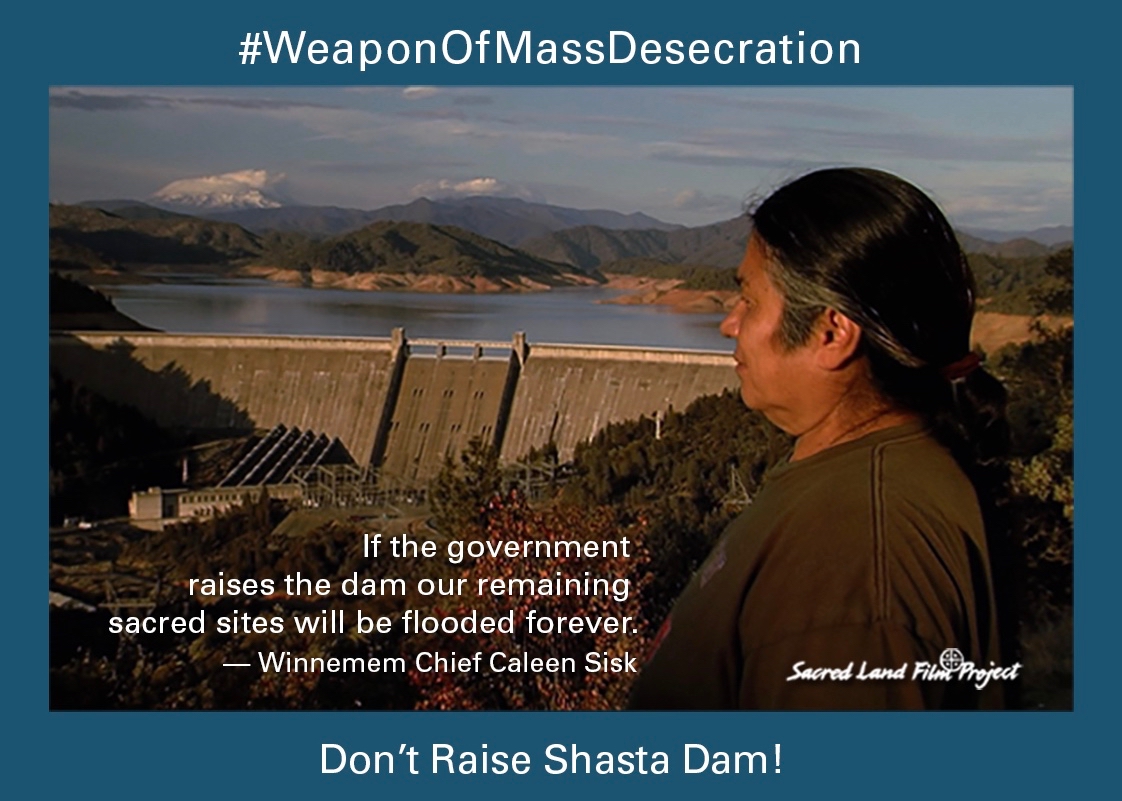
Located midway between Albuquerque and Gallup, Mount Taylor, at nearly 12,000 feet, is a startlingly beautiful, sacred place. Visible from 100 miles away, the mountain has long been a pilgrimage site for 30 Native American tribes, with special significance for the Acoma and Navajo people. Centuries before the mountain was named for President Zachary Taylor, it was known to the Acoma as Kaweshtima, or “place of snow.” Mount Taylor is rooted in Acoma history and tradition and is an intimate part of the tribe’s cultural identity. It is one of the four sacred mountains encircling the Navajo Nation. Mount Taylor is still used for a variety of cultural practices and holds value for many tribes. Currently, the mountain is under threat from exploration for uranium. Mining and milling in the Grants area has already left a toxic, radioactive legacy, and expanded uranium mining would have a devastating impact on cherished cultural resources, including pilgrimage trails, shrines and archaeological sites.
To read more about Mount Taylor, click here.
On April 20 the Winnemem Wintu Tribe filed a lawsuit against the Department of Interior, the U.S. Forest Service, the Bureau of Reclamation and the Bureau of Indian Affairs asking for redress for decades of broken promises and destruction of sacred sites. Continuing the 2004 War Dance at Shasta Dam a traditional ceremony was held near the Sacramento River on the eve of the lawsuit filing. There was good media coverage of the event, including an NPR report on Capital Public Radio. Will Doolittle filmed the event and posted a YouTube video of Winnemem leader Caleen Sisk Franco speaking at the State Capitol in Sacramento after the lawsuit filing.
Rising above East Africa’s Rift Valley, the verdant hills of the Gamo people abound with sacred sites—a testament to the long presence and enduring traditions of the Gamo community. Despite a long presence of both Orthodox Christianity and Islam, traditional animist beliefs have endured among the ethnic groups of southern Ethiopia, including the Gamo. In recent years, the growth of fundamentalist Christianity has led to clashes with Gamo traditional leaders, including violent riots that have taken place when shrines have been threatened or destroyed and churches built on traditional sacred ground such as hilltops and forests. Fortunately, Ethiopia and the international conservation community have recognized that the area is rich in biodiversity and that the spiritual reverence that communities like the Gamo have long held for the land is essential if the health of the environment is to be maintained. Hereditary leader Makko Wareo, the Father of Mailo Mountain, described his community’s relationship with the land: “Good milk means the cows thrive. Honey is the bees. We know the good that derives from these highlands, which those who lived long before us established and maintained symbiotic relation with the mountains. We look after the mountain and our children who herd the cattle face no harm on the mountains. They are looked after. It is a mutual respect that has sustained us this far.”
The Land and Its People
An ancient people speaking an Omotic language, the Gamo protect remnant forests, burial grounds and traditional assembly places across Ethiopia’s vast southwestern plateau. Today, the highlands are home to about a million people, of which the Gamo are the main ethnic group. Subsisting on small holdings and communal grazing areas rich with sheep and cattle, the Gamo cultivate a variety of crops, including cereals and fruit trees and the all-important staple enset (“false banana”). Most Gamo live in traditional “beehive” huts in small family clusters and they are known internationally for their beautiful, detailed weaving.
Now wholly located within the semiautonomous Southern Nations, Nationalities and People’s Region, the Gamo Highlands spreads over 1,600 square miles, rising above lakes Abaya and Chamo. Gughe Mountain, at 9,842 feet, is the highest peak along the undulating chain that overlooks the Rift Valley extending south to Kenya.
The highlands region contains a diversity of plant and animal life, encompassing several ecosystems including Afroalpine grasslands and evergreen Afromontane forests. The monsoonal rains and deep aquifers feed the Sago, Zage, Maze, Domba, Deme, Kulano, Gogora, Saware, Wajifo, Baso, Harre, Kullafo, Sile and Elgo rivers and provide water for the people and the fertile fields in the lowlands. Essentially an unusual form of wetland, the highlands are home to 792 plant species and a rich bird population as well as aardvarks, porcupines, vervet monkeys, baboons, jackals, mongoose and hyenas. There are great sections of rare native bamboo forest, especially on the flanks of Gughe Mountain.
The Gamo culture is bound intimately with the land. According to Desalegn Desissa, a plant ecologist who has studied the area, the Gamo’s “traditional activities depend on a harmonious relationship with the local environment, which frequently contributes to minimi